Corn Smut: Controlling The Delicious Corn Disease
Corn smut is a fungal disease of corn. At the same time, it's considered a delicacy in Mexican cuisine. In this guide, we discuss this edible plant disease and how to control or prevent it.

Contents
The first time I tasted corn smut was in a food hall in Mexico City while visiting friends. Before placing our orders, they urged me to try huitlacoche (pronounced weet·luh·ko·chay), a delicacy in Mexico and a unique ingredient that is difficult to find back home. As a lover of edible fungi, I eagerly gave it a try. I immediately loved the earthy flavor and delicate texture of huitlacoche and have been searching for it in the U.S. ever since.
Most people know the saying, when life gives you lemons, make lemonade. For the Aztecs and other Indigenous peoples of North America, that philosophy applied to a fungus called Ustilago maydis that infects young maize.
This fungus stunts corn kernel development and transforms them into grayish-blue galls. Rather than discarding affected crops, they discovered the fungus was edible and highly nutritious. Corn smut contains more protein than unaffected corn and includes lysine, an amino acid typically lacking in standard corn protein.
Sometimes called Mexican truffle or Mexican caviar, corn smut works well as a meat substitute and has become more widely available and appreciated outside of Mexico.
Ustilago maydis thrives under specific weather conditions, and most gardeners do not intentionally cultivate it when growing sweet corn. However, because it is edible, the presence of corn smut means the harvest is not necessarily lost if your corn becomes infected.


What Is Corn Smut?

Corn smut, also known as common smut, results from infection by the fungal pathogen Ustilago maydis, a member of the smut fungi phylum Basidiomycota. This group of plant pathogens has a very narrow host range and relies entirely on its host plants for survival. U. maydis grows only on corn (Zea mays) and its non-domesticated ancestor, Zea mays subsp. parviglumis.
Smut fungi uniquely target the immune systems of their host plants and manipulate host metabolism to support their own growth and reproduction. Corn smut occurs worldwide and causes significant economic losses for farmers who do not cultivate or sell smut-infected corn as a specialty crop.
Life Cycle
Ustilago maydis has a complex disease cycle that includes a saprophytic stage, when the fungus absorbs nutrients, and an invasive stage, when it infects host plants. This dimorphic fungus initially develops as a saprophytic haploid sporidium containing one unpaired chromosome.
Sexual reproduction occurs when two haploid cells fuse to form a dikaryon. This structure produces a specialized infection apparatus that allows the fungus to invade host tissue. Once inside the plant, the fungus proliferates and differentiates within tumors or galls, where it produces black, diploid teliospores.
When the galls rupture, they release teliospores into the air, allowing wind to carry them over long distances. These spores can overwinter in soil and crop debris. Under favorable conditions, typically dry weather followed by wet weather during the corn growing season, teliospores germinate and undergo meiosis. This process produces the haploid phase and restarts the disease cycle.
Symptoms Of Corn Smut
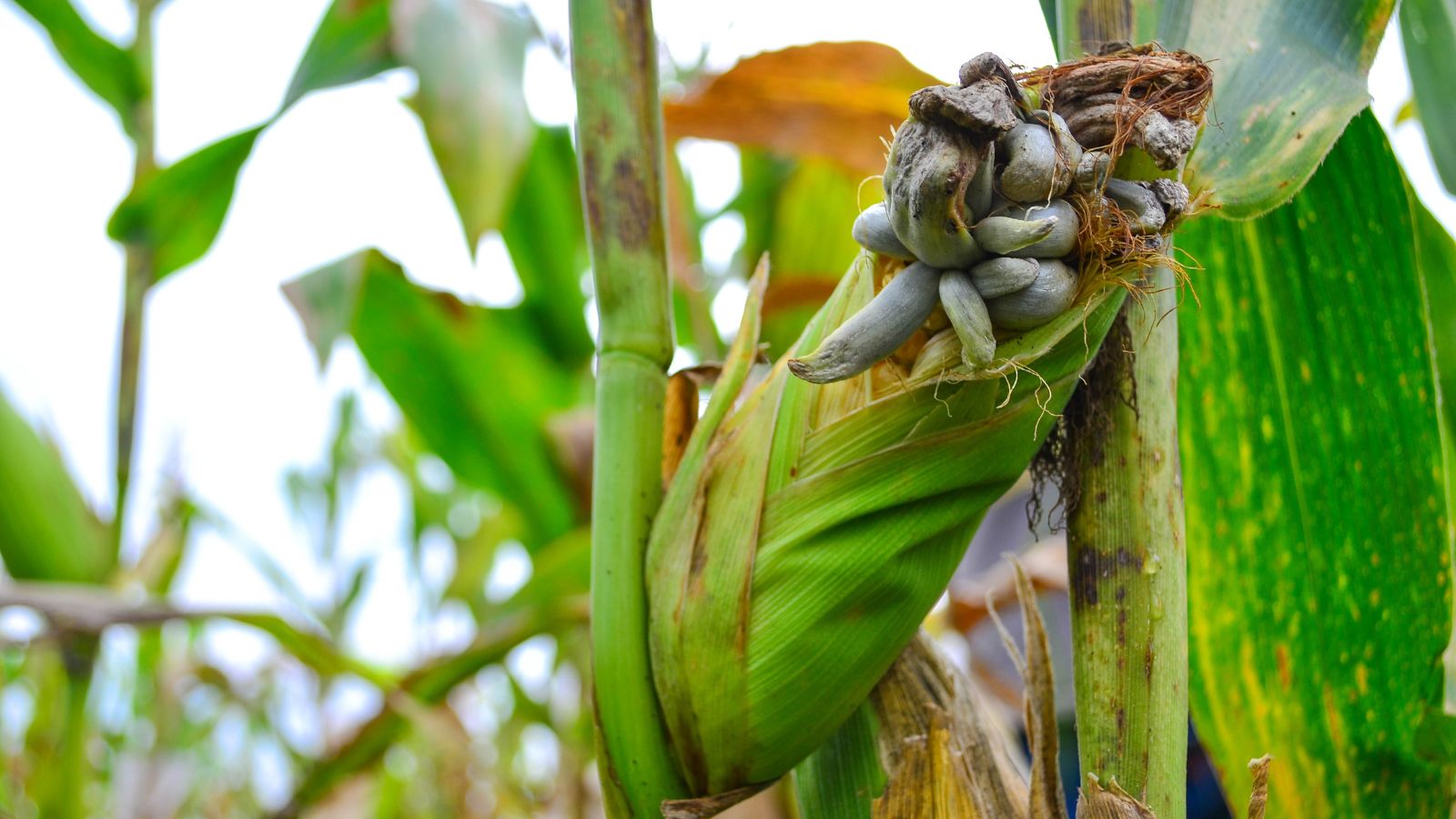
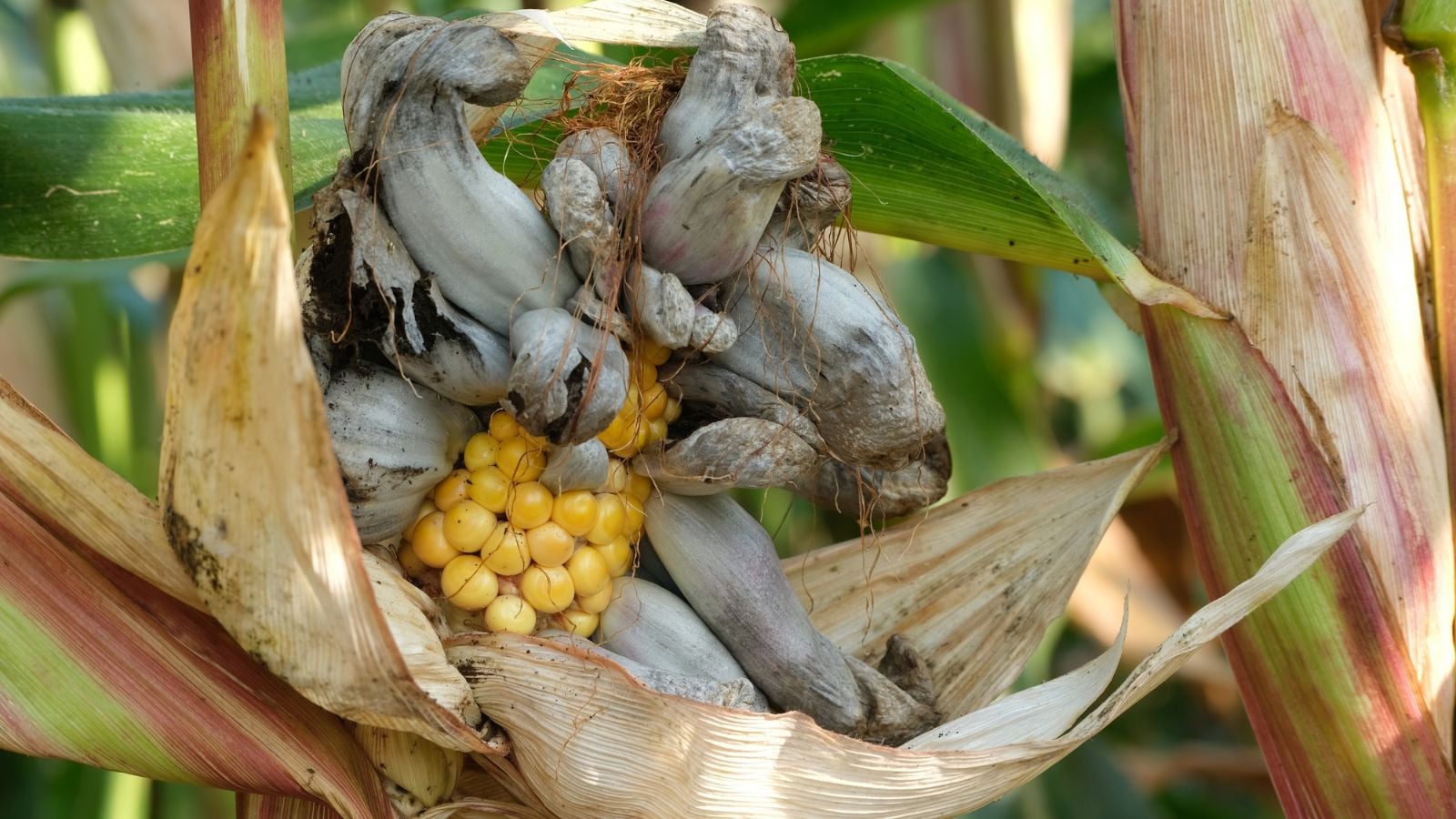
The fungus affects the aboveground parts of corn plants. Galls begin as small swellings and whitish gray, irregular kernels. These kernels continue to enlarge and can reach up to four to five inches in diameter. As the galls mature, they turn black as spores develop, then eventually rupture and release spores into the wind, infecting nearby plants.
The scientific name “ustilago” comes from the Latin word ustilare, meaning to burn, a reference to the fungus’s sooty teliospores. The infection is not systemic, meaning it does not spread throughout the entire plant. Instead, it remains localized where the fungus attaches. For this reason, corn ears often show a mix of healthy and infected kernels. Corn smut galls may also appear on corn leaves, although these are not recommended for consumption.

Controlling And Preventing Corn Smut

Corn smut becomes more common when corn pollination occurs during hot, dry weather followed by heavy rain and prolonged wet conditions. Excess nitrogen in the soil can also increase the severity of infection. No fungicides prevent corn smut. Spores of the common smut fungus overwinter in soil and remain viable for several years until favorable weather conditions return.
Crop rotation helps disrupt the disease cycle, as this fungus survives only on corn hosts. Legume plants make a good rotation crop between corn seasons.
Integrated pest management practices help maintain a clean garden or field. Remove corn debris promptly and clean cultivation tools and machinery regularly. Common smut typically affects 1 to 5% of field corn. Avoid mechanical damage to plants, as wounds make corn more susceptible to infection, including corn smut.
A small number of infected plants usually does not pose a serious problem if detected before the galls mature and release airborne spores.
Harvesting
You can intentionally cultivate huitlacoche through artificial inoculation before corn pollination. Soak corn silks in a water solution containing common smut spores. Successful inoculation produces visible galls within two weeks.
Harvest galls 16 to 18 days after inoculation for peak flavor. Naturally occurring galls tend to grow larger than cultivated ones because natural infections affect only a few kernels, while inoculation induces tumors in nearly every kernel.
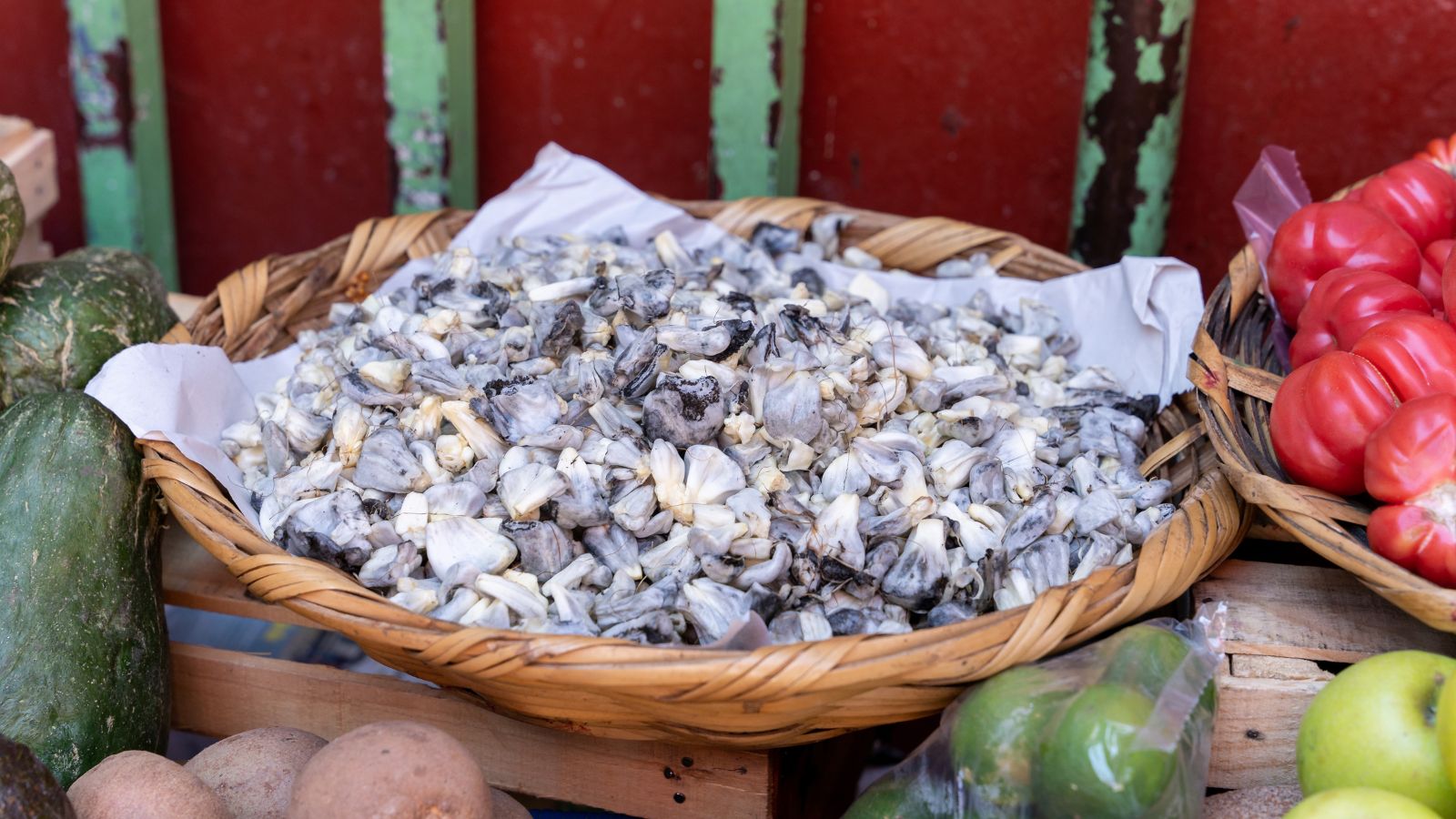
To harvest huitlacoche, look for young plants with immature galls. Pluck or cut the mushroom-like galls from the cob and use them immediately. These galls perish quickly and usually last only a few days in the refrigerator before bursting. Fresh huitlacoche sells for $15 to $20 per pound in the U.S. due to its rarity and transport challenges. Some CSAs and farmers’ markets carry it occasionally during the corn-growing season.
Freezing provides the most common long-term preservation method, though it does alter texture. Many chefs and home cooks now purchase frozen huitlacoche from online vendors.
Frequently Asked Questions
Is corn fungus safe to eat?
Immature corn smut galls resulting from the fungus Ustilago maydis or common smut is safe to eat and considered a delicacy. Although leaf galls may be present on a plant, leaf galls are not recommended for eating. Corn can be affected by multiple smut diseases including another pathogen called head smut. This smut disease causes a systemic infection throughout the plant and is not edible.
Is corn smut the same as huitlacoche?
Yes, corn smut is another name for huitlacoche, an abnormal growth on corn plants caused by the fungus, Ustilago maydis.