The Best (and Worst) Cilantro Companion Plants
Finding the right cilantro companion plants can make for a glorious garden experience. We'll share what you need to know in this handy guide!

Contents
Companion planting is the simple practice of growing two or more plants close together for mutual benefit. This benefit can include pest control, attracting beneficial insects, providing shade, or acting as sacrificial plants. There are several great cilantro companion plants for healthier fruits and vegetables, too.
Botanically known as Coriandrum sativum, cilantro belongs to the carrot family, Apiaceae. It is grown for its leafy greens, known as cilantro in American English, and for its seeds, which are called coriander. In many other English-speaking countries, both the leaves and the seeds are referred to as coriander.
Cilantro is widely used in Thai, Indian, Mexican, and Chinese cuisine. It is eaten fresh in salads and salsas, added to soups, stews, and curries, or used as a finishing herb garnish. Many people enjoy the bright, citrusy, parsley-like flavor of cilantro leaves, while others are genetically predisposed to perceive a soapy or metallic taste.
Even if you are not a fan of its flavor, cilantro is still a valuable companion plant in the garden. Its flowers attract beneficial insects, and its aromatic foliage can help deter pests from nearby plants you want to protect.
Long Standing Santo Cilantro / Coriander

Long Standing Santo Cilantro / Coriander Seeds


What Is Companion Planting?

Companion planting focuses on creating healthy, balanced plant communities. Some plants are a perfect match, while others are a recipe for disaster. At its core, companion planting involves growing crops together in ways that benefit one another.
Plants with strong scents can help deter pests, while others release aromas that may enhance the flavor of neighboring crops. A classic example is planting spring onions or leeks near carrots to repel carrot flies and discourage them from laying eggs in the soil.
Some of the most obvious companion planting combinations involve crops with similar growing requirements. The herb thyme grows well alongside other Mediterranean herbs such as rosemary or sage, which prefer free-draining soil and full sun. Likewise, brassica vegetables thrive together in alkaline, moisture-retentive soil with partial shade.
That said, plants from the same family can also share pests and diseases, meaning entire crops may be affected at once. Interplanting with species from different plant families can help disrupt pest cycles or attract predatory insects that reduce pest populations.
Companion plants can also play a supportive role during early growth stages. Sowing radish and carrot seeds together creates a useful row marker, as radishes germinate quickly while carrots take longer to emerge. Tall plants such as sunflowers, peas, and beans grown on trellises can provide shade for crops prone to bolting, including lettuce.
The key to successful companion planting is learning which combinations work best in your garden. While there is limited scientific proof that companion planting works in every case, generations of gardening experience suggest it has real value.
Good Cilantro Companion Plants
Cilantro is a cool-season, nitrogen-loving plant that prefers moisture-retentive soil.
Legume family plants, such as beans and peas, make excellent cilantro companion plants. Legumes fix nitrogen in the soil, which is an essential nutrient for strong, healthy growth. Added nitrogen from garden compost or blood and bone can leach out of the soil over time, whereas nitrogen fixed by legumes provides a more consistent supply.
Peas and beans can also offer much-needed shade for cilantro, which tends to bolt in hot weather. Once cilantro flowers, the leaves become bitter and inedible, but the flowers attract beneficial insects that help protect nearby legumes, and the seeds can still be harvested.
Other garden plants that can provide shade for cilantro include tall flowers such as cosmos, sunflowers, yarrow, coreopsis, tansy, and sweet alyssum. Tall tomato vines can also be paired with cilantro for shade, provided they are not planted near legumes, as excess nitrogen encourages leafy growth at the expense of fruit.
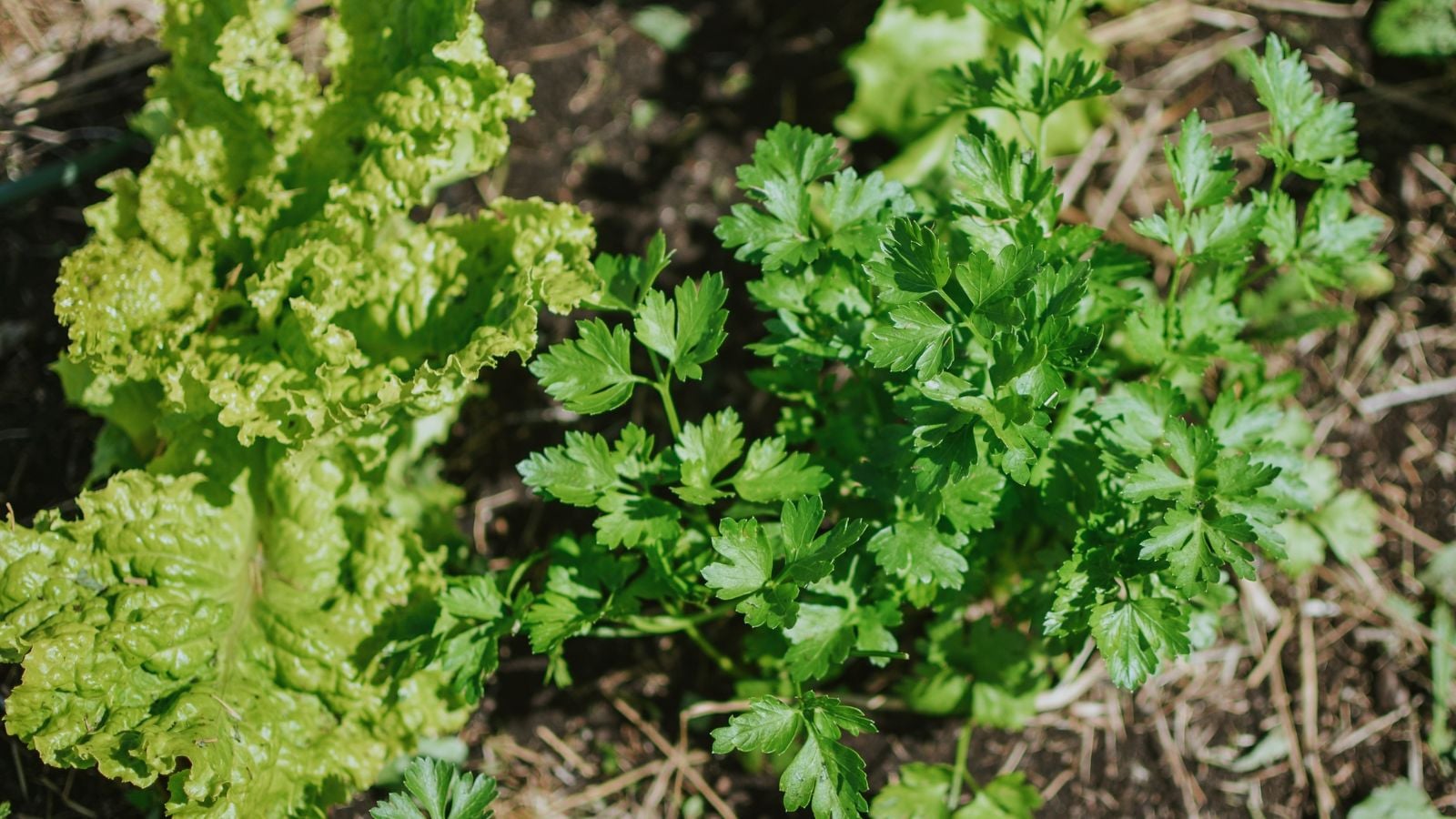
Cilantro can also be grown alongside herbs with similar growing requirements, including mint, anise, dill, parsley, and chervil. Anise, in particular, can help improve cilantro seed germination.
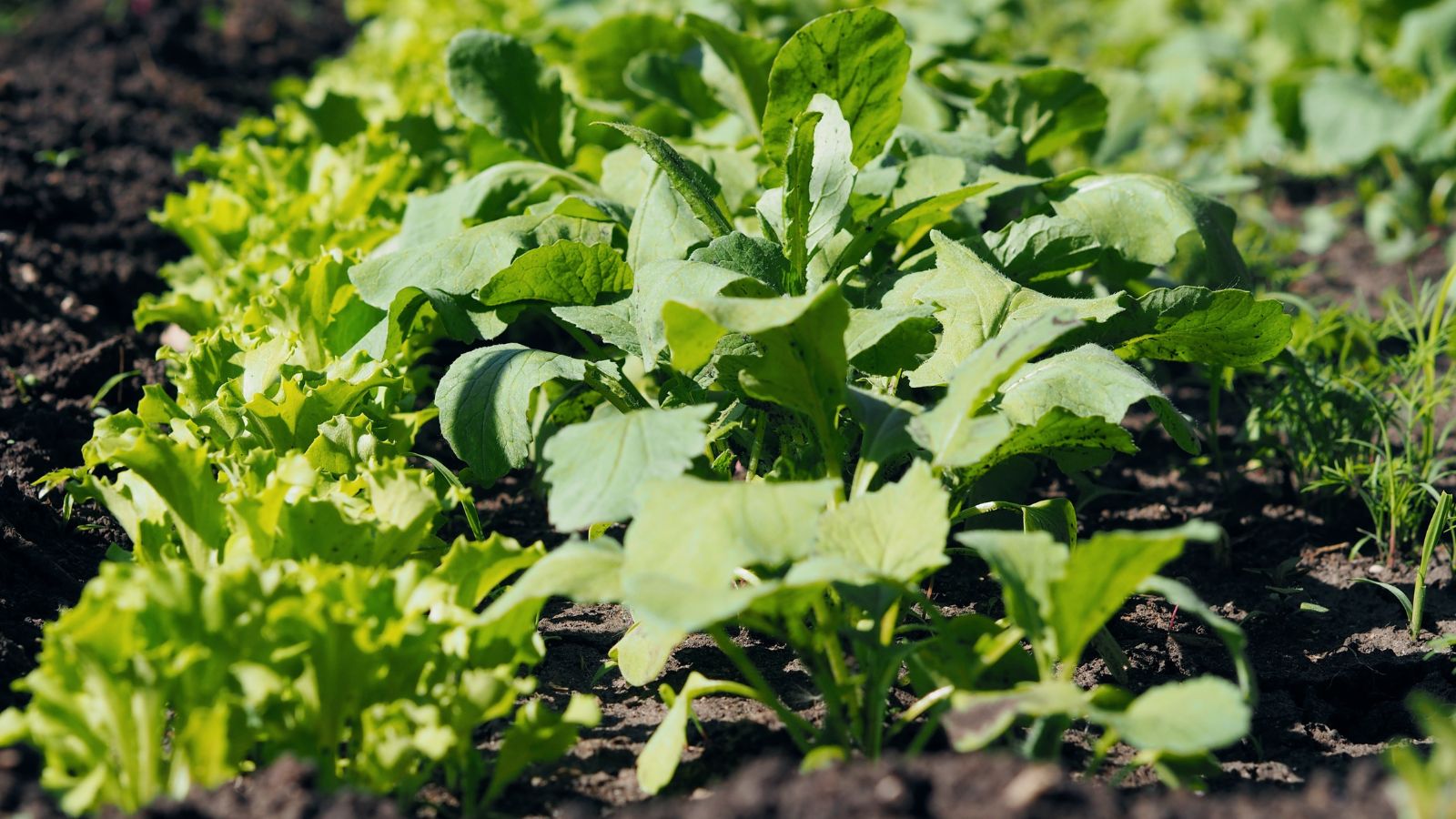
Many fruits and vegetables are good cilantro companion plants. The aromatic foliage helps repel aphids, flies, spider mites, moths, and potato beetles. Plant leafy greens such as cabbage, lettuce, spinach, and kale, as well as potatoes, tomatoes, and peppers, near cilantro to help deter these pests.
What Not To Plant With Cilantro

Garden herbs such as rosemary, thyme, and lavender, which require full sun and dry, free-draining soil, are not good cilantro companion plants. Planting cilantro under these conditions will lead to poor growth and cause the plant to bolt quickly. Likewise, excessive shade and consistently moist soil can result in root rot for these Mediterranean herbs.
Avoid planting cilantro near bulb fennel or common herb fennel. Fennel releases naturally occurring chemicals into the soil that inhibit the growth and development of many nearby plants, including cilantro.
Frequently Asked Questions
Can you plant cilantro with cucumbers?
Cilantro is a good companion plant to keep pests such as aphids away from your cucumber crops. However, its strong scent may have a negative impact on the cucumber flavor.
Can cilantro and oregano be planted together?
Cilantro and oregano planted together in the garden will not grow well because they have different watering and sunlight requirements.
Are cilantro companion plants also coriander companions?
Yes, coriander companion plants are the same as for cilantro as they’re the same species. The botanical name for both plants is Coriandrum sativum.
How do you keep a good supply of cilantro in the garden?
Herbs like cilantro can be sown every few weeks from mid-spring to early autumn providing a constant supply of cilantro in the garden. Once flowers have turned brown, stems can be cut and dried to save the seed for future sowing.