Callisia Fragrans: The Beautiful Basket Plant
Callisia fragrans, also called basket plant, is the perfect subtropical houseplant for beginners. We'll teach you how to grow your own!

Contents
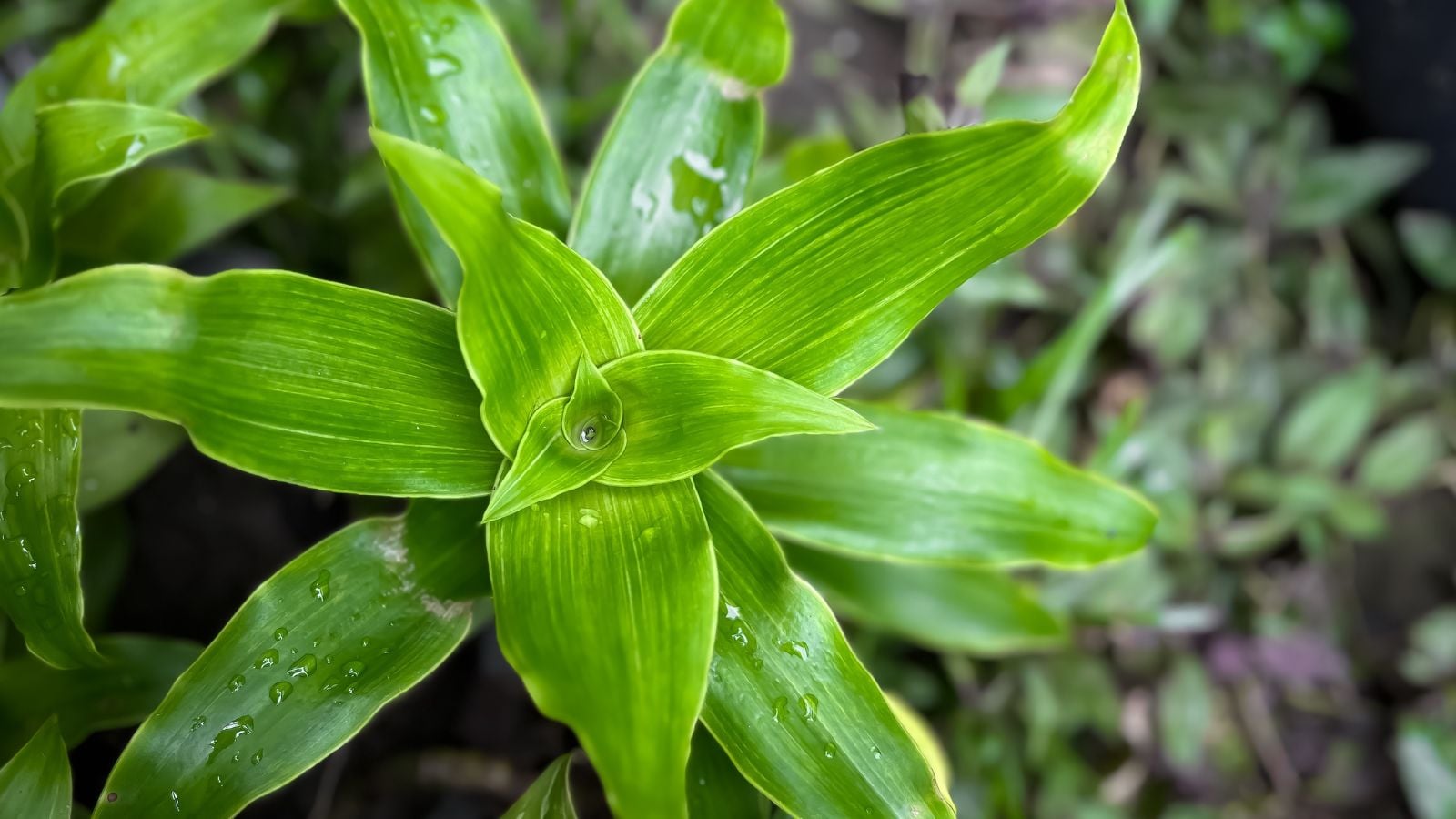
Callisia fragrans, also called the basket plant, is a great subtropical for beginners. Pairing the look of a bromeliad with a draping stem tendency, it’s visually stunning.
Generally green or variegated green and cream in color, these plants have a secret. When exposed to lots of light, they may pick up purple hues in their leaves. In fact, there have been plants which are more purple than green!
So whether you’re new to gardening or an old hand, the basket plant’s a perfect choice. Houseplant lovers celebrate, for we’re about to explore what you’ll need to grow this one!
Espoma Bio-tone Starter Plus Organic Plant Food (4 lbs.)

The Ultimate Starter Fertilizer with both Endo & Ecto Mycorrhizae
- Grows larger root mass to help plants establish fast
- Reduces transplant loss
- Promotes bigger blooms
- Microbe enhanced all natural organic fertilizer with no sludges or fillers
For use on everything you plant. Use when planting all flowers, vegetables, trees and shrubs.
Buy at Epic Gardening ShopCallisia Fragrans Overview

|
Scientific Name
Callisia fragrans
Common Name(s)
Basket plant, false bromeliad, inch plant, octopus plant
Family
Commelinaceae
Height & Spread
6-12″ tall, stems can reach up to 35″ in length
|
Sun
Partial sun optimal, other sun conditions possible
Soil
Gritty loam ideal, can be rich with organic content
Water
Moist, do not allow standing water
Pests & Diseases
Mealybugs and scale insects. May develop root rot if overwatered.
|
All About Callisia Fragrans
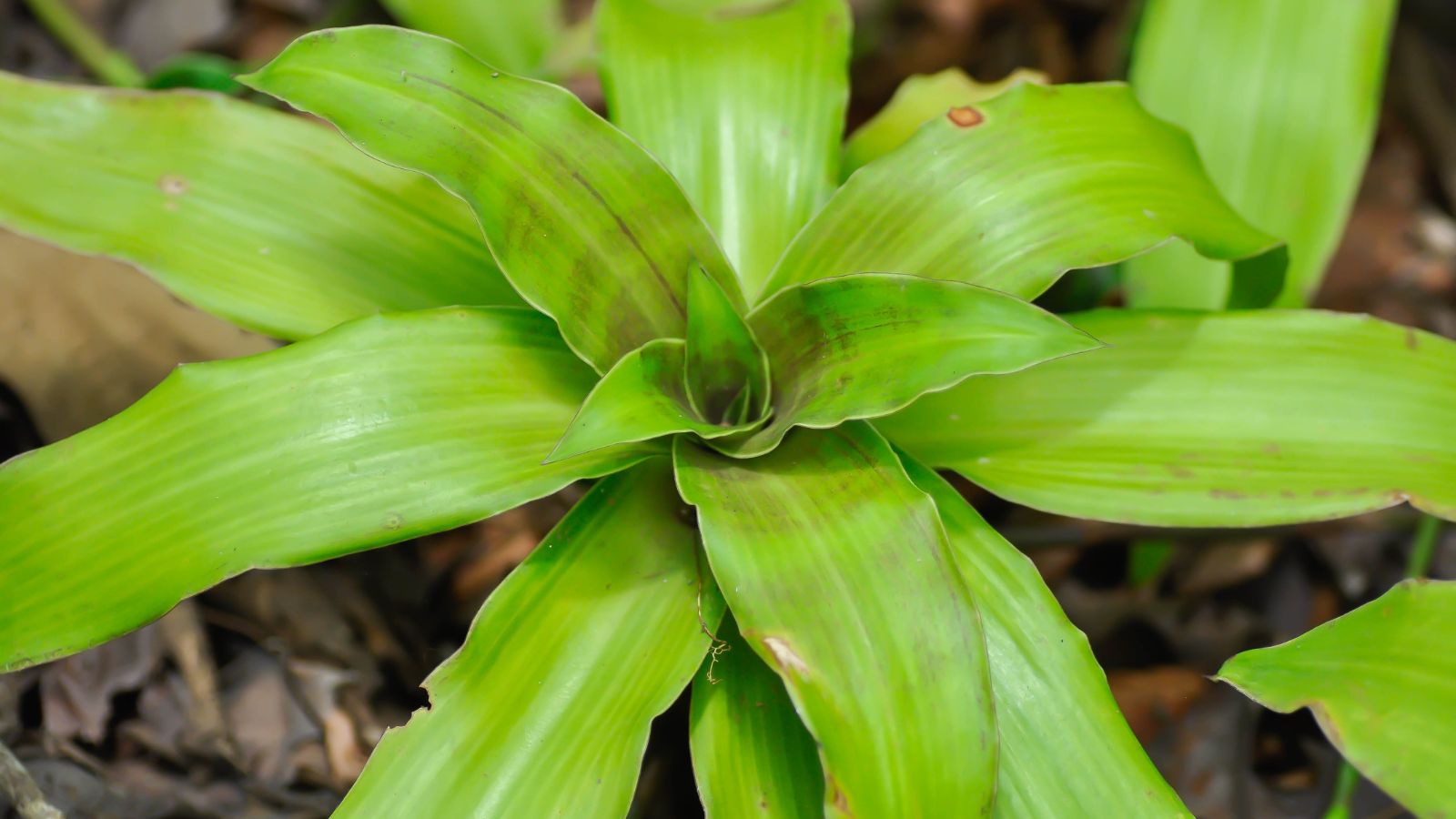
Originating in Mexico and parts of South America, this herbaceous plant is interesting. It has become naturalized in parts of the southern United States and in the West Indies. As a subtropical species, it performs best in controlled climates or in warm ones from zones 9 to 11. The cooler coastal areas of southern California are a popular growing region, too.
The name “false bromeliad” is occasionally used in reference to this plant. In bright light conditions, the leaves lay down and give it the look of a bromeliad cluster. But in partial sun to shade, it resembles a dracaena with its more upright leaf pattern.
Creeping stems will take root easily where they make contact with the ground. Because of this tendency, it’s also referred to as the inch plant. On occasion it’s also called the octopus plant due to its tendency to send out runner-like stems. Those stems can reach up to 35 inches in length!
On those stems, clusters of leaves form. These clusters look like miniature versions of its parent plant. Often, they’ll develop air roots from where the leaves join the stem. A simple snip with your pruning shears will provide you with a new plant, ready to grow.
But the most commonly-used name is basket plant. This spurs from the shape of the beautiful flowers it produces. Emerging on slender stems, the base of the flower looks like a basket. From that base appear clusters of white flowers, each on a long white tendril. These flowers are fragrant and unusual, well worth the time to cultivate them.
There’s two types of Callisia fragrans. The first, simply called Callisia fragrans, has all green leaves. Their leaves may turn purplish if exposed to lots of light. The second, Callisia fragrans ‘Melnikoff’, is a variegated variety. This cultivar’s leaves are edged with a lighter green, and may develop striping. These too can turn purple in bright light, but often maintain at least some green color.
Caring For Your Basket Plant
Mostly carefree, you’ll find that your inch plant’s very tolerant of a lot. As long as it gets water and is in the right temperature range, it’ll basically handle what it needs. But if you’re trying to develop a prize specimen, follow our tips below for perfect plant growth.
Sun & Temperature
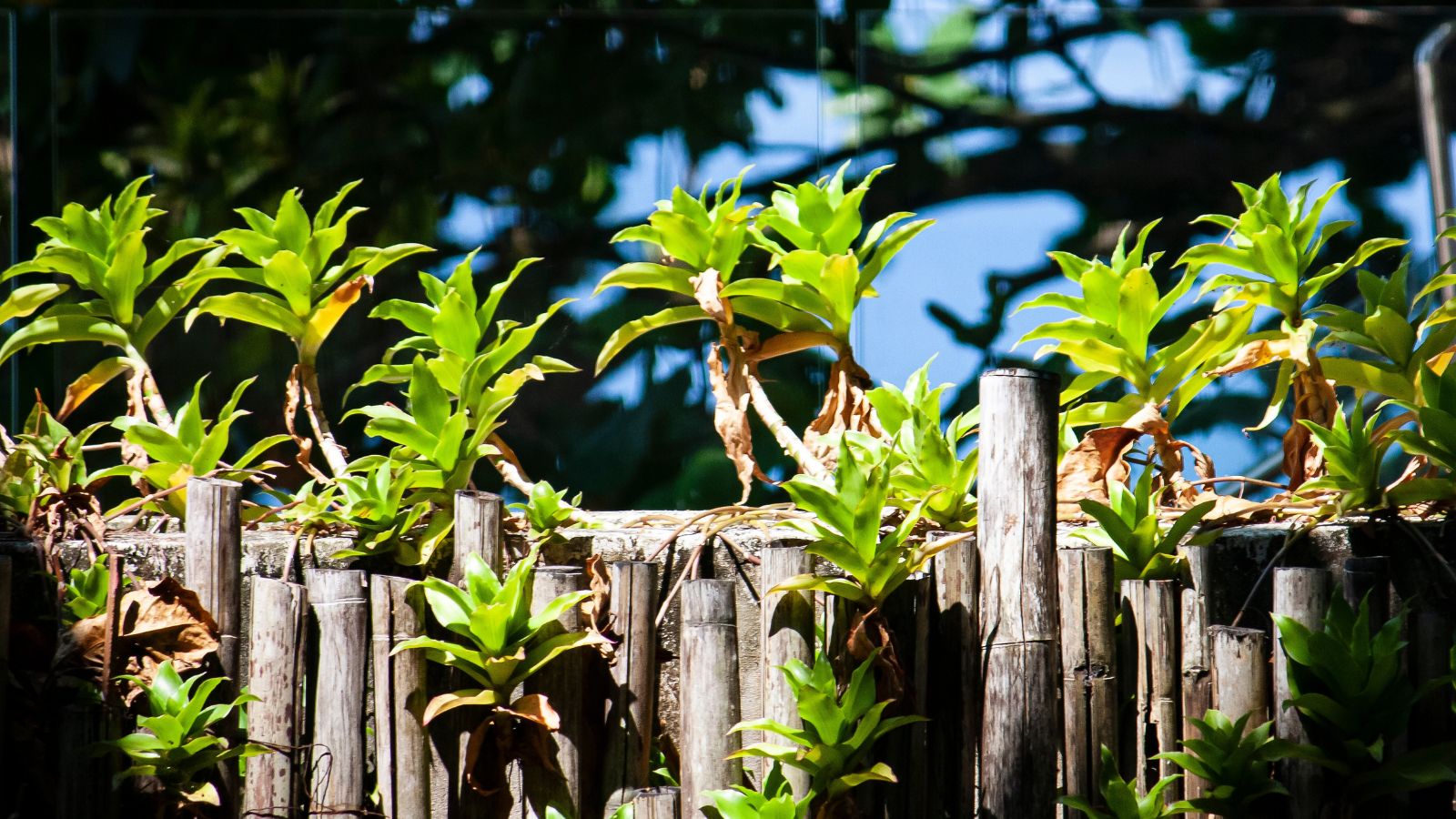
Subtropical species like this prefer warmer climates, and this plant’s no different. They thrive indoors in warm rooms, preferably at temperatures of 70°F (21°C) and above. In the winter, the temperature range should drop to between 50 to 60°F (10-16°C) for a short period (a month or two). This enables the plant to have a more natural winter “rest” period.
Bright light is essential to this plant. This is doubly true if you want to encourage purple coloration on the leaves. Be sure your plant gets at least three to four hours of direct sunlight per day, as well as lots of bright but indirect light. Ideally it’ll receive 8 to 10 hours of light per day and even more in the summer.
Water & Humidity

Even moisture is perfect for growing your basket plant. While an established plant can tolerate extended drought, young plants need a bit more water than older ones. When you water, be sure you thoroughly moisten all the soil in the pot, but ensure it’s not left in standing water. Once excess moisture has drained out, allow the soil to dry out most of the way before watering again.
Unlike many other subtropicals, this plant’s not picky about humidity. It’ll tolerate it if it’s in an area surrounded by other humidity-lovers. But it’s not necessary to provide additional air moisture. Low to moderate humidity is perfectly fine!
Soil

Gritty loam is ideal for the basket plant. You’ll want a soft soil which is easy to squeeze into a ball when wet, but which breaks apart easily. It should contain some sand and feel gritty to the touch, but not run through your fingers like pure sand would. Working some compost through it can improve the richness of the soil as well.
The inch plant can tolerate a fairly wide range of pH types. Barely acidic in the low 6’s all the way up to alkaline at 7.8 is doable. Aim for a true neutral of 6.8 to 7 for best growth.
Fertilizer

A liquid fertilizer is the easiest way to fertilize these when grown indoors. You can use a balanced but low-potency fertilizer like a 3-3-3. Alternately, select one that’s oriented towards flowering plants. Avoid going high-nitrogen, as that will spur tons of growth but little flowering.
If you prefer slow-release fertilizers, pick one which is optimized for flowering plants. Again, avoid ones which are highest on nitrogen. While your plant does need a good amount of nitrogen, it uses it just for plant growth and not flowering.
Propagation
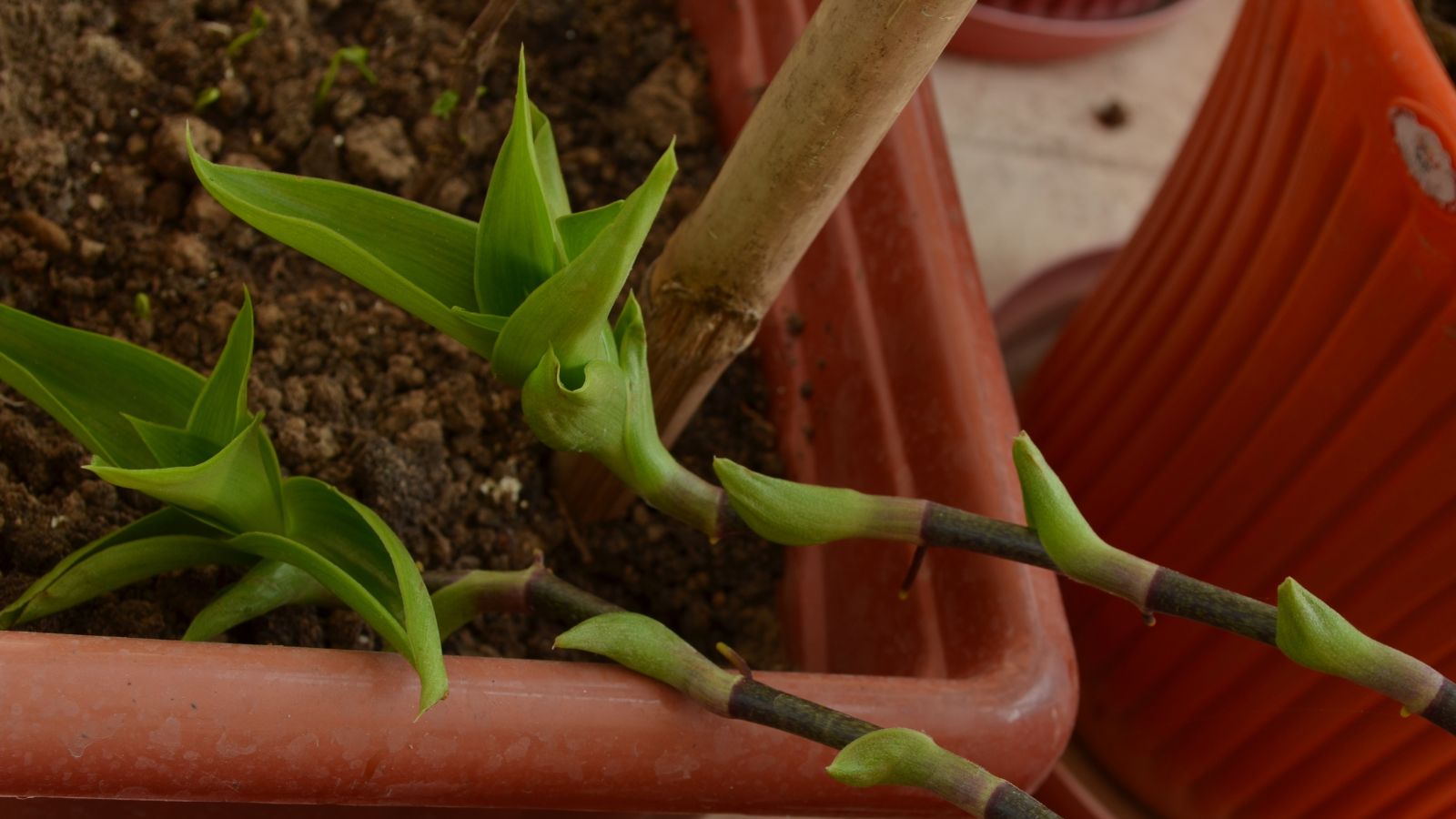
Stem cuttings are the way to go for these plants. In fact, stems that touch bare soil may try to take root on their own! You may see “air roots” forming along stems. Those will turn into full roots if planted.
No rooting hormone is necessary for Callisia fragrans. Any healthy trimmed stem can be tucked into moistened soil. Stems which have air roots already visible are ideal, but they’ll form roots from any point of the stem if they aren’t already showing. Plant them deeper than the root system, about 1/4 of an inch from the base of the leaves.
In the wild, these plants will spread out tentacle-like stems up to 35 inches away from the main plant. Roots will form at various points along the stem, and new plants form from those roots. You can clip the stem to remove “babies” if you’d like, or leave them dangling.
If you’re in a warm climate and plan on growing these outdoors, place individual plants four to six feet apart so they have spreading room. They will fill in the available space and set roots from their creeping stems.
Repotting
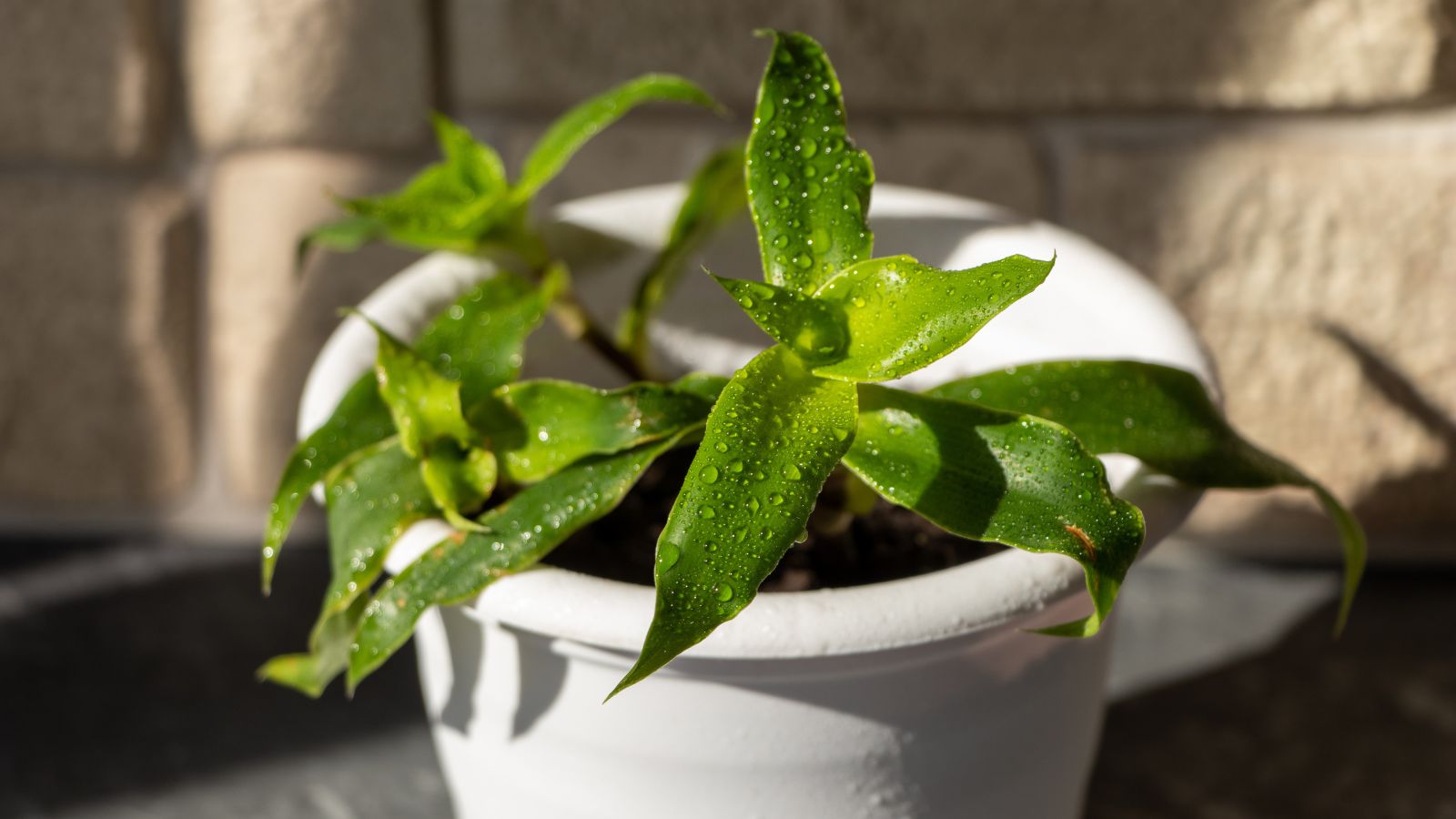
An annual repotting is a good idea for your callisia plants. While the main plant rarely grows large enough to require more than a five to six-inch pot, it does spread quite rapidly. Freshening up the potting soil is more important than worrying about the pot size. But if you do want to increase the size of the pot, go up by no more than one inch in width.
These work well in hanging baskets or cascading over the side of decorative pillars. If planting in one of these methods, you’ll still want to freshen up the soil each year.
If a plant begins to lose its lower leaves, it’s time to replace the plant. While these are fairly long-lived, they do eventually get old and need replacing. You can always take a cutting from it to replace with!
Pruning

Pruning is mostly to maintain your plant’s size. If the stems get too long for where you’ve placed the plant, trim off the tips just before a leaf node. You can use that cutting to start a new plant if you wish. You can also thin out excess growth to encourage the remaining growth to be more vigorous.
If planted in the ground, these can rapidly spread to fill an area. Prune back stems to keep them in check. If they’ve set down roots, you can prune back everything up to the rooting point.
Problems
For a beginner, this is probably one of the easiest plants to grow. Virtually no diseases are common for Callisia fragrans, and very few pests, too. Let’s talk about those few which exist!
Growing Problems & Diseases

Most diseases are not a problem for your plant. But overwatering can create conditions that will lead to root rot. Avoid leaving your plant in standing water, such as a plant saucer. Ensure its soil is well-draining and a little on the sandy/gritty side.
Overwatering can cause the leaves to turn brown, as well. This typically forms on the tips of the leaves, and may be unappealing to look at. While you can trim off the leaf tips, it’s best to avoid that sort of damage from the start!
Pests

Generally, the only pests you’re likely to see are mealybugs. On very rare occasion, other forms of scale insects can appear, but it’s mostly mealybugs. They’re easy to handle if they show up.
For both, start with a cotton swab dipped in rubbing alcohol. Touch the dampened tip of the swab to the pest. It’ll usually come right off the plant. Use either an insecticidal soap or neem oil to prevent more from appearing.
Frequently Asked Questions
Is basket plant invasive?
In some of the most southern points of the United States and southward into Mexico, yes. Areas which are in growing zones 9 to 11 allow for outdoor growing easily, as they seldom get too cold. In zone 9, a cold snap during the winter may cause damage to the plants but they’ll come back from it in the spring. Because of its rapid growth habits, it can certainly become invasive in those regions!
Is callisia fragrans safe for pets?
The ASPCA does not list callisia fragrans on their list of most poisonous plants. However, it may cause contact dermatitis in both humans and their pets. Avoid getting the sap from this plant directly on the skin when possible. Keeping this plant away from pets and children is recommended.
Is basket plant used medicinally?
In folk remedies, particularly in eastern Europe, it’s been used as a medicinal plant. It has a reputation as an antiviral and antimicrobial. It also has been used for treatment of skin diseases, joint disorders, and burns. But as it may cause skin irritation in an allergy-like reaction, use caution. Only use this under advisement of a skilled practitioner or medical professional.





