How to Create Bright, Indirect Light for Thriving Houseplants
Many popular houseplants need bright, indirect light to thrive, but understanding what that actually means can be confusing. Gardening expert Madison Moulton explains how to create the right light conditions using windows, curtains, placement strategies, and supplemental lighting.


Contents
“Bright, indirect light” might be the most common care instruction for houseplants, and it’s also one of the most misunderstood. What exactly counts as bright? How do you make light indirect? And how do you know if you’ve actually achieved the right conditions or if your plant is slowly struggling in inadequate light?
The confusion is understandable. Light is difficult to assess without experience or measuring tools. What looks bright to your eyes might actually be quite dim from a plant’s perspective, and what feels like gentle filtered light might still be too intense for certain species.
Bright, indirect light for houseplants essentially means abundant illumination without direct sun rays hitting the plant’s leaves. It’s the kind of light you’d find under a tree canopy on a sunny day (plenty of brightness diffused through leaves above, but no harsh direct sun burning foliage).
Creating these conditions indoors requires understanding how light moves through your space and making strategic adjustments to windows, plant placement, or artificial lighting.
Epic Seed Starting Grow Lights Standard

Epic Seed Starting Grow Lights Standard
Taking up just two square feet, our grow light is perfect for countertops without being an eyesore. Our standard grow light kit includes a watertight, built-in bottom tray that makes water easy and mess-free.
Buy at Epic Gardening ShopSouth-Facing Windows
South-facing windows receive the most intense light in the northern hemisphere, with direct sun streaming through for most of the day. This makes them both the best and worst options for houseplants, depending on how you manage that intensity.
Unobstructed south-facing windows provide too much direct light for most houseplants. Succulents and cacti might handle it, but the vast majority of common houseplants will scorch under that intensity. Leaves bleach, develop brown patches, or curl inward, trying to protect themselves from excessive sun.
The advantage of south-facing windows is that you have so much light to work with. These windows give you the most flexibility in creating bright, indirect light for houseplants because you’re starting with an abundance of light that you can then diffuse or redirect.
Sheer Curtains

The simplest way to convert direct light into bright, indirect light for houseplants is hanging sheer curtains or blinds that filter incoming sun. This diffuses harsh rays while still allowing abundant light to reach your plants.
Choose curtains made from lightweight, translucent fabric that softens light without blocking it completely. White or light-colored sheers work best since they reflect some light while diffusing the rest. You should still be able to see shadows through the curtains when the sun is bright.
Keep them closed during peak sun hours (typically midday through late afternoon for south windows) when direct sun is strongest, then open them in the morning or evening when light is gentler. Or leave them closed all day if your plants need consistent diffusion.
Some people use adjustable blinds instead, angling slats to bounce light toward the ceiling rather than straight at plants. This creates ambient brightness throughout the room while preventing direct rays from hitting foliage.
Move Plants Away From Windows

Distance from the window naturally reduces light intensity. What’s bright, direct light right at the glass becomes bright, indirect light for houseplants a few feet into the room as the angle changes.
For south-facing windows, positioning plants a few feet back from the glass often creates ideal, bright, indirect conditions for houseplants. The exact distance depends on your specific window size, any outdoor obstructions, and the season (winter sun sits lower and penetrates deeper into rooms than summer sun).
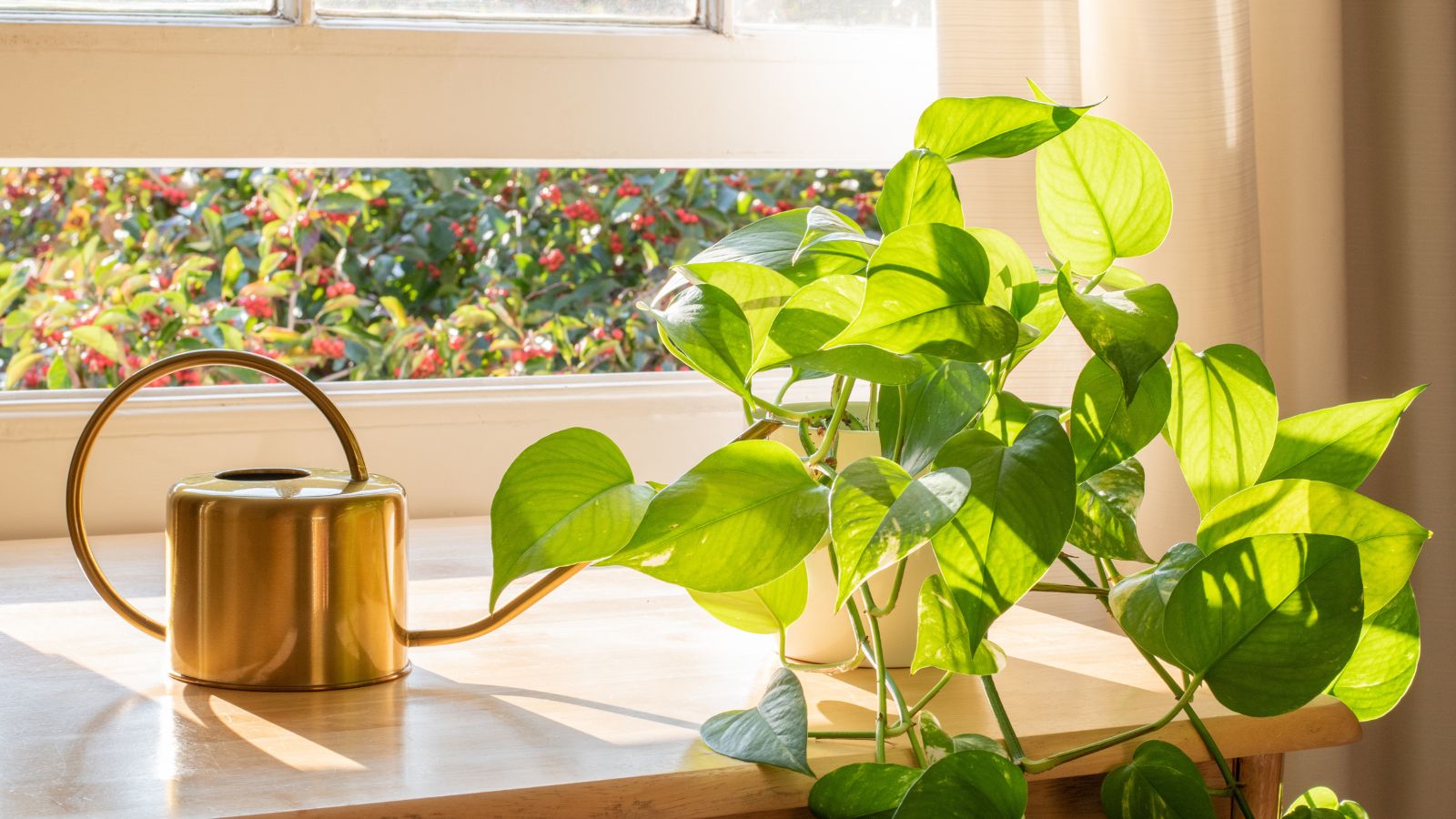
This approach works well if you don’t want to deal with curtains or if you’re growing plants that need very bright light but not direct sun. Pothos, philodendrons, and many flowering houseplants do well positioned back from south-facing windows where they get abundant ambient light without direct exposure.
Pay attention to how your plants respond. Stretching toward the window or producing smaller, paler leaves suggests they need to move closer.
East-Facing Windows

East-facing windows receive direct morning sun followed by bright indirect light for the rest of the day. This exposure is often ideal for houseplants without any modifications needed.
Morning sun is gentler than afternoon sun because the air is cooler and the sun’s rays are less intense. Most houseplants tolerate or even enjoy a few hours of direct morning light, then appreciate the bright ambient conditions that persist through afternoon and evening.
Plants positioned right at east-facing windows typically get what they need without burning. You might not need curtains or strategic placement adjustments. Just put your plants on the windowsill or nearby, and they’ll generally thrive.
The limitation is that east windows provide less total light than south windows. If you’re growing high-light plants or dealing with very small windows, east exposure might not be quite bright enough without supplemental lighting. But for the majority of common houseplants (monsteras, snake plants, peace lilies, pothos, and countless others), east windows hit the sweet spot between too much and too little light.
West-Facing Windows

West-facing windows are trickier than east. They receive direct afternoon and evening sun, which is more intense than morning sun and can cause problems for light-sensitive plants.
The afternoon sun that hits west windows carries more energy than morning rays. It’s also shining into rooms at a time when indoor temperatures are already at their peak, creating combined heat and light stress that plants find challenging.
For bright, indirect light from west windows, you’ll likely need curtains or some diffusion method during peak afternoon hours. The same sheer curtains that work for south windows are effective here, filtering that intense late-day sun into something more manageable.
Alternatively, position plants a few feet back from west windows where they receive reflected and ambient light without direct late-day exposure.
West windows work well for plants that tolerate brighter conditions, or that actually benefit from some direct sun. Succulents and some flowering plants do fine with the intensity that west exposure provides. Just watch for signs of stress, like bleached leaves, brown edges, or wilting despite adequate water, and adjust placement or add filtration if needed.
Use Grow Lights

When natural light isn’t adequate or isn’t coming from the right direction, artificial lighting solves the problem. Modern grow lights effectively supplement or replace window light, giving you complete control over the conditions your plants experience.
Grow lights are especially useful for supplementing natural light in dimmer rooms or during winter when day length and light intensity both decrease. Plants near windows might thrive in summer, but struggle in December without supplemental lighting to maintain brightness levels.
You can also use grow lights to create bright, indirect conditions for houseplants in rooms with no suitable windows at all. Bathrooms, offices, or interior spaces away from exterior walls can support houseplants perfectly well with proper artificial lighting.