How to Plant, Grow, and Care For Bluebells
Are you looking to plant English bluebells in your garden? These European natives are some of the easiest bulbs to grow – a prime example of a ‘plant it and forget it’ flower. Gardening expert Madison Moulton discusses everything you need to grow a few bluebells, or your own woodland field of flowers, right in your backyard.

Contents
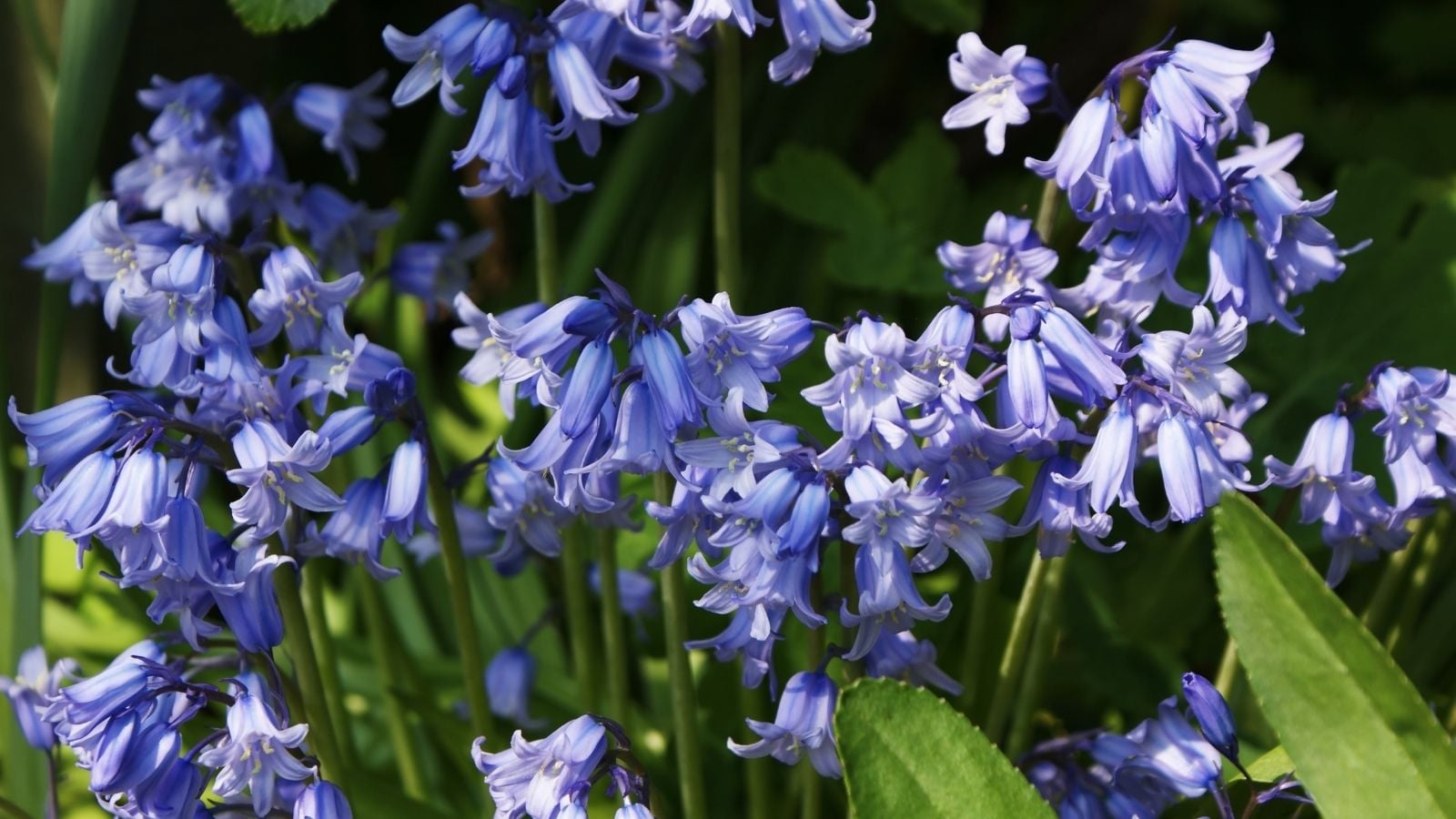
If you want to recreate a calm, natural woodland feel in your garden, bluebells are an excellent choice. These striking blue bulbs turn European forest floors into carpets of color each spring and create the same effect in pots or flower beds.
Botanically known as Hyacinthoides non-scripta, this bulb is commonly called the English bluebell, common bluebell, or wild hyacinth. These woodland plants should not be confused with Hyacinthoides hispanica, or Spanish bluebells, which are a different species within the Hyacinthoides genus.
Their ease of growth and tolerance for shade make bluebells well-suited to a wide range of gardens, including those tended by beginners. Plant them on their own, mix them with other spring flowering bulbs, or naturalize them across a larger area for a dramatic seasonal display.


Bluebell Plant Overview

|
Plant Type
Bulbous perennial
Family
Asparagaceae
Genus
Hyacinthoides
Species
Hyacinthoides non-scripta
Native Area
Europe
Hardiness Zone
USDA 4-9
Fully Mature
3-4 Months
|
Season
Spring
Exposure
Dappled Sun
Plant Spacing
4-6 inches
Planting Depth
2-4 inches
Height
12 inches
Watering Requirements
Moderate
Pests
None
|
Diseases
Bluebell Rust
Maintenance
Low
Soil Type
Well-draining Loam
Soil pH
Neutral
Plant With
Spring Flowering Bulbs, Hostas
Don’t Plant With
Thirsty Plants
Attracts
Bees, Butterflies
|
What Are Bluebells?

Although known today as Hyacinthoides non-scripta, bluebells have carried many different names throughout history.
These bulbs, native to western Europe, were originally named Hyacinthus non-scriptus by Carl Linnaeus, the founder of binomial scientific naming. This genus is commonly known as hyacinths, a group of bulbs that remain popular in gardens today.
Fifty years later, two German scientists reassigned the plant to the genus Scilla, another bulb group found across European woodlands. Scientific uncertainty continued, and another fifty years later, a different German botanist moved the species into the Endymion genus. Because of this taxonomic back and forth, the plant may still appear under the names Endymion non-scriptus or Scilla non-scripta.
In 1934, French botanist Pierre Chouard reassigned the species to the genus Hyacinthoides, meaning ‘like a hyacinth’, where it remains classified today.
Most wild bluebells grow across the United Kingdom, where they hold deep cultural significance. Numerous folklore stories have been passed down through generations, including the belief that bluebell woodlands are inhabited by fairies, which earned the flowers the nickname fairy flowers.
According to legend, these fairies were not friendly. Bluebells were said to ring in order to summon them, and any human who heard the bells would face an untimely death. Children were also warned that picking bluebells could cause them to disappear, never to be seen again.
Despite these dark tales, bluebells remain widely loved throughout the UK and Europe and are often regarded as an unofficial national flower. Walking through a flowering bluebell woodland is a treasured springtime experience, provided the fairies are left undisturbed.
Cultivation

While often used as garden plants, most bluebells grow in the wild. More than 50% of wild bluebells are found in woodlands across England. Although their exact origins remain unclear, many believe these bluebell woodlands began forming after the end of the last ice age.
Because of their age, with some woodlands known to be hundreds of years old, these areas are usually protected to prevent decline. In some regions, these bulbs are considered endangered in their natural habitats. As a result, it is illegal to remove bluebell bulbs from the wild or sell them under the Wildlife and Countryside Act of the United Kingdom.
Although they belong to the same genus, english bluebells and spanish bluebells are not the same plant. This distinction matters, as spanish bluebells tend to be more invasive in certain regions than their english counterparts.
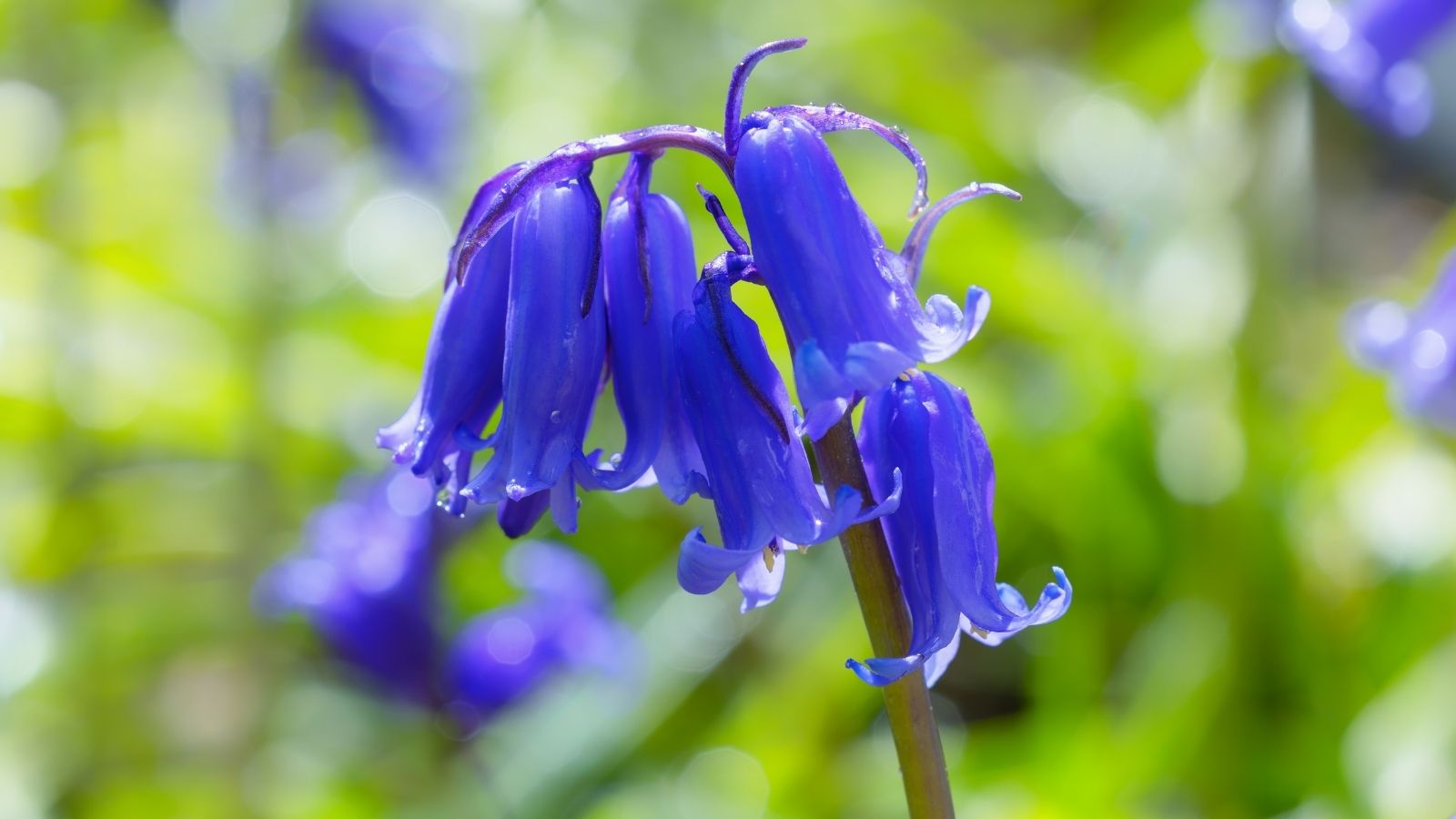
The two species look similar but are easy to tell apart in spring by their flowers. English bluebell flowers are darker and arch over, while spanish bluebell flowers are lighter in color and remain upright. English bluebells are also slightly shorter than spanish bluebells.
Keep these two plants well separated, as they readily hybridize to form Hyacinthoides × massartiana.
Plant Uses
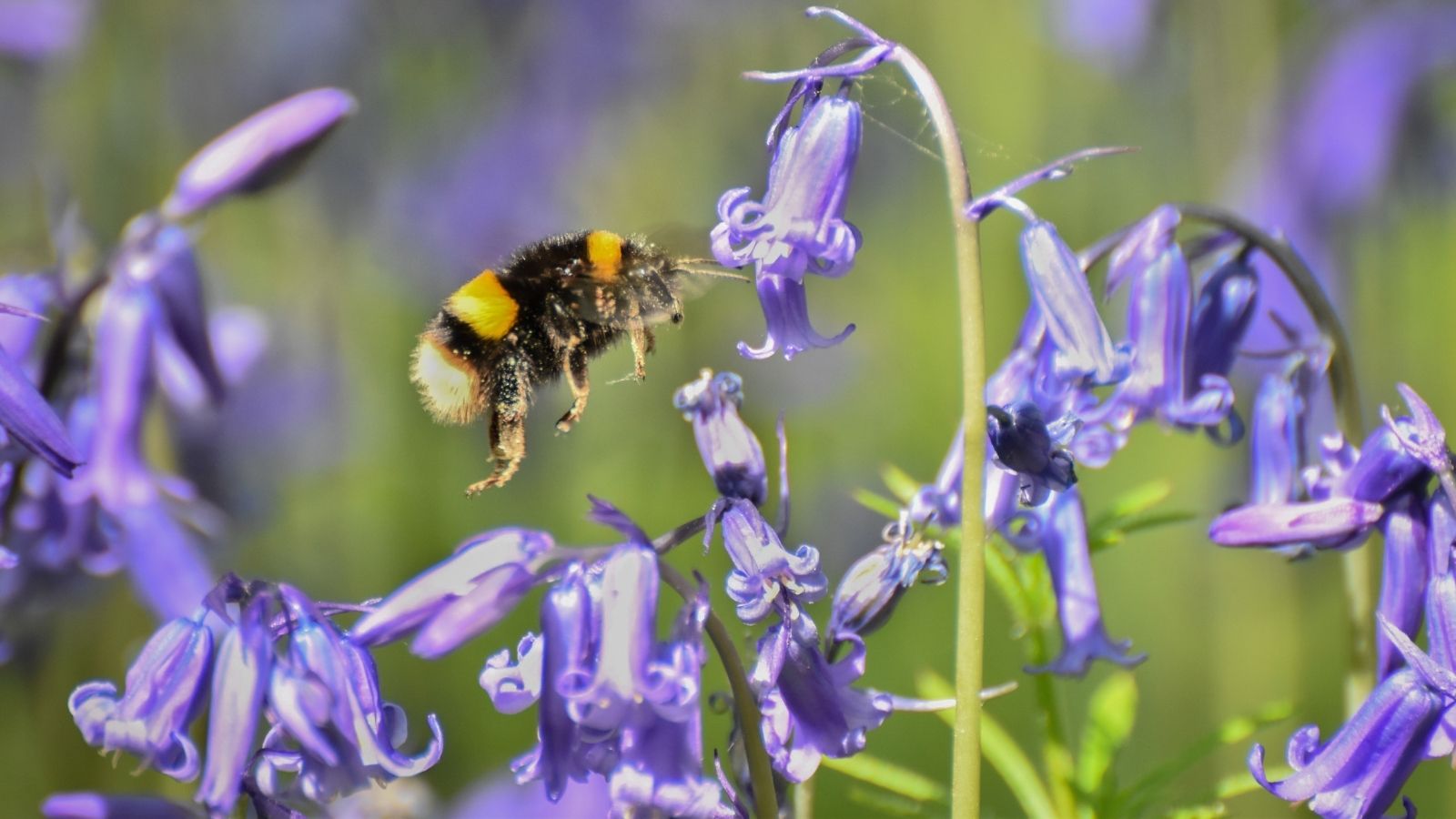
Bluebells can fill a garden in many different ways, making it hard to choose the best approach.
To recreate the sweeping carpets of blue seen in European woodlands, mass planting works beautifully for bluebells. The soft blue tones create flowing waves of color throughout spring and look most striking when planted in large groups. This is also the easiest style to maintain long-term. Allow the flowers to self-seed and, within a few years, you will have a densely blooming bluebell display.
If space is limited or you prefer a quicker result, bluebells also work well in mixed beds. They add pops of blue to spring borders, a color that is surprisingly rare in the garden. When planted alongside bulbs that flower at the same time, such as tulips, they create layered and visually interesting combinations.
Because bluebells are shorter than many other plants, they make excellent fillers throughout the garden. When planted en masse in tightly packed groups, they can even function as ground cover, helping retain soil moisture and suppress weeds.
Bluebells also thrive in partial shade, making them ideal for planting beneath trees where many other plants struggle. Their delicate blue flowers stand out against shade-loving foliage plants like hostas, with the rich green leaves providing the perfect backdrop for bluebell blooms.
For gardeners with limited space or no garden at all, bluebells grow well in containers. Choose pots deep enough to accommodate their root systems, use a well-draining potting mix, and water consistently. With the right care, container-grown bluebells will reward you with spring blooms year after year.
Planting

Bluebells are best planted in fall to prepare for flowering in spring. You can buy bulbs from a local nursery, purchase potted plants for transplanting, or sow seeds directly into the ground or trays. Seed-grown plants take several years to mature before flowering.
Plant bulbs with the root side facing down. Bulbs planted upside down will not grow. Set bulbs a few inches deep and cover with soil.
Transplant container-grown bluebells at the same depth they were growing in their pots. Make sure the soil at the base of the planting hole is loose and well aerated to encourage the deep root system to grow downward.
For a tidy, structured look, space bulbs about five inches apart. This spacing allows room for growth while supporting a more formal garden design.
For a natural woodland effect, grouped planting works best. Plant bulbs in loose clumps to mimic how bluebells grow in the wild. Another simple approach is random planting. Scatter the bulbs by hand over the planting area and plant them wherever they land.
If you are not in a rush, growing bluebells from seed creates the most natural-looking display. Scatter seeds over the soil surface and keep the area consistently moist until germination. Allow established plants to set seed and spread naturally to increase coverage in future years.
How to Grow
To grow bluebells successfully in your garden, you need the right balance of light, water, soil, climate, and fertilization. Understanding each of these key growing factors will help you encourage healthy plants and maximize flowering throughout the season.
Light
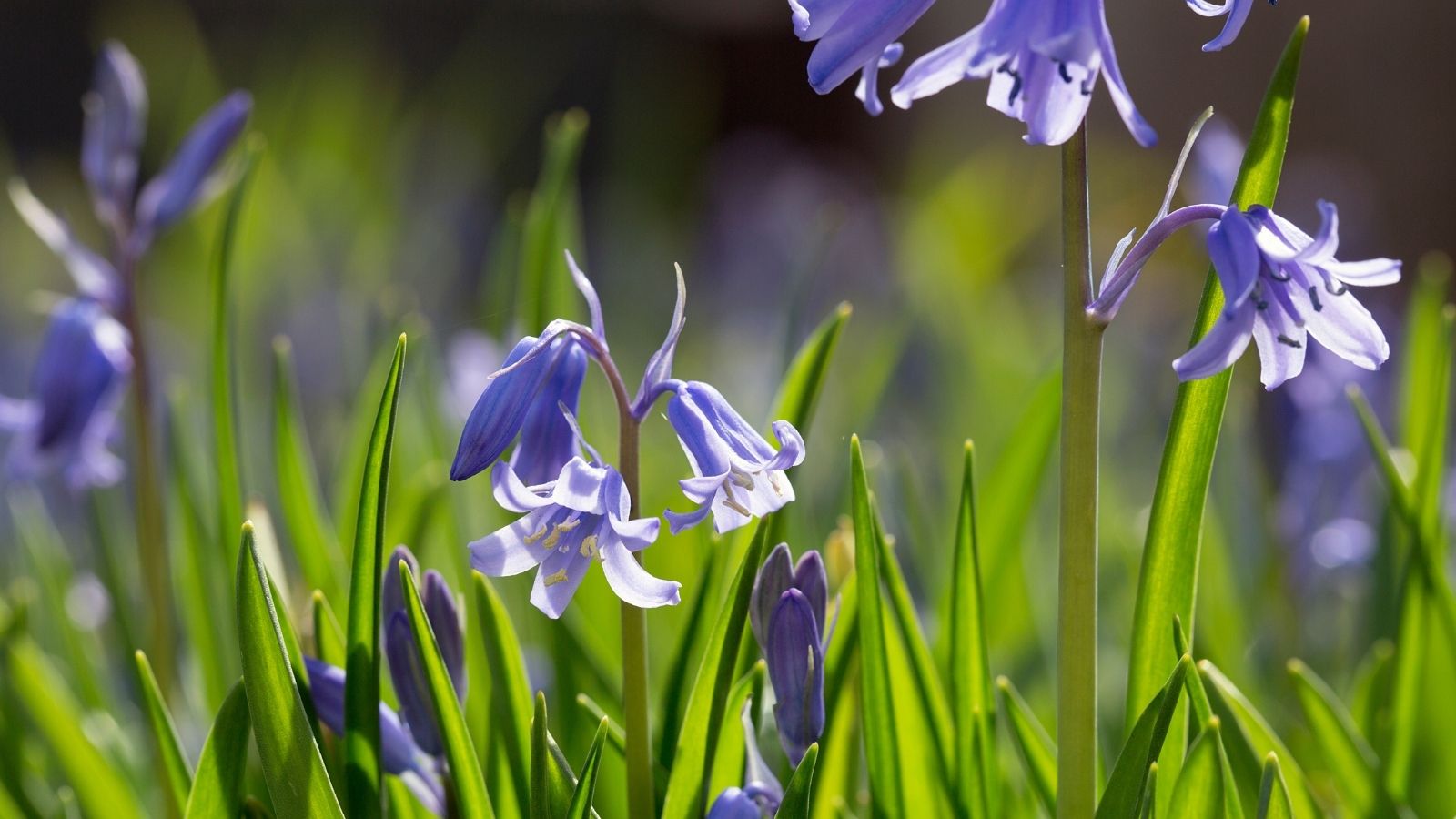
To best replicate natural growing conditions, plant bluebells in areas with dappled shade. They thrive beneath trees with open canopies, reflecting their woodland habitat. Locations that receive morning sun followed by afternoon shade also work well.
While dappled light is ideal, it is not essential. These bulbs tolerate a wide range of light conditions. They grow successfully in open fields where they receive full sun for much of the day and can also tolerate full shade. However, areas with at least some light throughout the day perform better than deep shade.
When growing bluebells in containers, you can move the pots to adjust light exposure based on plant performance.
Overall, bluebells adapt well to most lighting conditions and grow reliably in almost any garden setting.
Water

Bluebells are not particularly thirsty plants. They need consistently moist soil for optimal growth, but excess moisture can cause bulbs to rot.
After planting, water deeply to encourage strong root development. When new growth emerges in spring, reduce watering. Water the soil as soon as the top two to three inches are dry.
Apply a thin layer of mulch to help retain moisture in the soil. This also mimics woodland conditions, where fallen leaves create a layer of organic matter that traps moisture around the bulbs.
Over time, the root system grows deep into the soil, allowing plants to access moisture that does not evaporate as quickly. Once bluebells are fully established in the garden after a few growing seasons, they require far less supplemental watering.
Soil

Like most bulbs, bluebells grow best in nutrient-rich, well-draining soil. Drainage is one of the most important factors, as poor drainage will cause bulbs to rot and kill the plant. Heavy clay soils are unsuitable unless amended generously with compost to improve structure and drainage.
Beyond drainage, bluebells are not particularly demanding when it comes to soil conditions. They tolerate sandy soils and moderately fertile soils and can survive in less than ideal conditions for long periods.
Bluebells prefer slightly acidic soil but also tolerate mildly alkaline conditions. Aim for a soil pH between 5.5 and 7.5 for reliable growth and healthy flowering.
Climate and Temperature
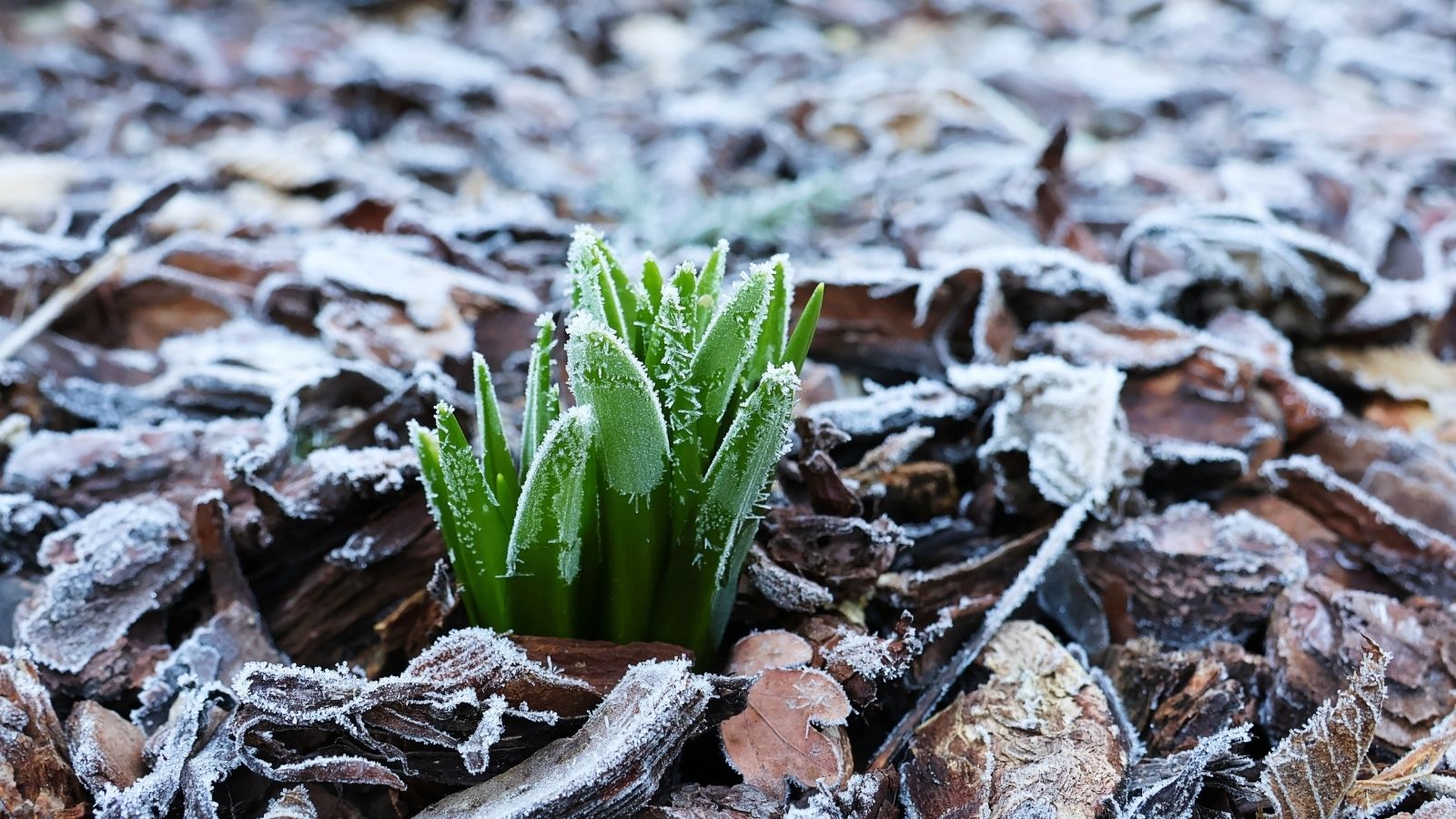
English bluebells are quite hardy and tolerate cold conditions, surviving temperatures as low as -20°F (-29°C) for short periods. As temperatures drop, the foliage dies back while the plant prepares to emerge again the following spring.
They perform best in USDA Zones 5 through 8 but can also grow in Zone 4 or Zone 9 with some care. When planted in the dappled shade they prefer, excess heat is less of a concern, provided the soil remains consistently moist.
Fertilizing

Once growth begins, you can apply a specialized flower fertilizer that is high in phosphorus and potassium and lower in nitrogen. This encourages maximum bloom production during the flowering season.
If you plant bluebells in nutrient rich soil, fertilizer is not essential. Soil amended with compost or other organic matter, even when applied as a mulch during the season, provides all the nutrients plants need to grow and flower well.

Care & Maintenance

If you want to limit spreading or keep bluebells looking tidy, deadhead flowers regularly before they set seed. If you plan to propagate from seed, deadhead only during the first weeks of flowering and leave the final blooms on the plant to mature.
As foliage begins to die back after flowering, avoid cutting it too early. The leaves send nutrients back to the bulb underground, where they are stored for the following season’s growth. Leave the foliage in place until it withers naturally, then remove and compost it.
Propagation
There are two ways to propagate bluebells: sowing seeds or dividing bulbs. Growing from seed is the simplest approach and results in the most natural-looking display in the garden. Dividing bulbs requires a bit more effort but delivers faster results.
Propagating From Seed

Bluebell seeds are ready around mid to late summer. In the wild, these seeds spread by wind, creating the sweeping fields of flowers seen in natural woodlands. If you want to recreate that look, allowing plants to self-seed is the easiest way to establish carpets of bluebells.
If you prefer to plant bluebell seeds elsewhere in the garden, collect them once mature and replant them manually. Mimic natural propagation by sprinkling seeds over well-composted soil and keeping the area cool and consistently moist until germination. You can also start seeds in trays if planting in pots.
Seeds take several months to germinate and typically flower only after two to five years. There is also a risk of producing plants that are not pure English bluebells if hybridization has occurred nearby. To guarantee an exact match to the parent plant, divide bulbs or purchase seeds from a reputable nursery.
Seeds can also be started indoors in trays, although this method requires more attention. Sow several seeds into trays filled with a soilless seed starting mix, either purchased or made using coconut coir and perlite.
Cover trays with a plastic bag and keep the soil moist for about a month. After this period, move the tray into the refrigerator for around six weeks to replicate natural cold stratification and trigger germination.
Once chilled, return the tray to indoor growing conditions and continue regular care until germination occurs. This process often takes several months and may take longer than a year before seedlings are strong enough to transplant into the garden.
Propagating by Division

If your plant is already established and you want faster results from propagation, bulb division is the best option. This method also guarantees an exact copy of the existing plant, rather than a hybrid that can occur when growing from seed.
Check your planting area for signs of bulb offsets pushing up toward the soil surface. When bulbs begin to sit closer to the surface rather than fully below it, they are ready to divide. Late summer is the ideal time for this process, once the foliage has completely died back.
Gently dig up the entire plant by loosening the soil around it with a fork. Work carefully to avoid damaging the main bulb or any nearby bulbs.
Once lifted, shake off the excess soil. The offsets should be easy to see. Separate them from the main bulb by hand to prepare them for replanting.
Loosen the soil in the new planting area and remove any debris. If the soil quality is poor, amend it generously with compost before planting. Replant the offsets immediately after separating them to prevent the bulbs from drying out.
Varieties

The Hyacinthoides genus includes all bluebells, with the most common being the English bluebell, Hyacinthoides non-scripta, referenced here.
Their Spanish counterparts, Hyacinthoides hispanica, are larger and produce unscented flowers. Spanish bluebells spread far more aggressively than English bluebells and can quickly naturalize if left unchecked.
Problems increase when Spanish and English bluebells grow in the same area. These two species readily hybridize to form Hyacinthoides × massartiana, a plant that shares traits from both parents. This hybridization contributes to the decline of native English bluebells and is one reason they are considered endangered in the United Kingdom.
If you want to avoid unwanted spread in your garden or surrounding environment, planting only English bluebells is the safest option.
You may also encounter the Virginia bluebell, native to North America. Despite the shared common name, it is an entirely different plant known botanically as Mertensia virginica.
Common Problems
When planting bluebells, pests and diseases rarely pose a problem. These plants show natural resistance to many common garden pests and diseases. Woodland animals such as deer and rabbits also tend to avoid them, reflecting their native habitat adaptations.
In rare cases, you may encounter bluebell rust. Infected plants develop yellow spots on the leaves, often dotted with small brown pustules. Prune affected foliage promptly or apply an organic fungicide according to package instructions. This disease usually causes minimal long-term damage and does not significantly impact overall plant health if addressed early.
Frequently Asked Questions
Are bluebells toxic to pets?
Bluebells are toxic to pets and humans. All parts of the plant contain glycosides that are toxic when ingested, particularly to dogs, horses and cattle. Keep these plants away from any nearby pets and from children. They can look similar to other edible bulbs, like some types of onion, but should never be ingested.
Can bluebells be white?
Spanish bluebells can be blue, white, or pink, but English bluebells usually remain blue. However, white English bluebells are not unheard of. Occasionally, a rare genetic mutation occurs that causes the blooms to turn white. The likelihood is about 1 in 10 000 though, so if you do happen to find white bluebells, they are more than likely the Spanish variety.
When do bluebells flower?
Bluebells typically flower in mid to late spring, with the last blooms peaking out at the end of May. If you’re not looking to propagate from seed, you can extend the last of the flowering season by cutting the flower stalks and bringing them indoors. They may not last as long as some other cut flowers, but it will allow you to enjoy them for just that little bit longer.
Are bluebells perennials?
Bluebells are bulbous perennials that will continue to flower each year once established.
Will bluebells grow from seed?
Bluebells are excellent flowers to grow from seed, if you have a bit of patience. Seeds develop as the flowering season comes to a close, after which they can be removed from the plant and replanted or stored.
Alternatively, leave your seeds on the plant and let them spread around the bed naturally. But, this process is not for the faint-hearted. It can take several months just for the seeds to germinate, sometimes almost a year. It will then take another few years, usually two to five, for the plants to produce flowers. But once you’ve got a field of blue in your backyard, you’ll know it was well worth the effort.
What’s the difference between English bluebells and Spanish bluebells?
The first difference between these two plants is their size. English bluebells are much shorter while Spanish bluebells stand quite tall. If you don’t have two plants to compare sizes though, take a look at the flowers.
English bluebell flowers fall to one side and droop over. They are also a dark blue in color, as opposed to Spanish bluebells with pastel blue flowers. These stand upright and do not droop over as the others do.
Can I grow bluebells in pots?
Bluebells are ideal plants for containers. The bulbs can be planted quite close together, either with other bluebells or different compatible bulbs like tulips or amaryllis, for a container overflowing with spring color. Ensure the potting soil is well-draining, or amend it with coconut coir and perlite to improve drainage.
The pot you choose should be deep enough to accommodate the roots and it should have plenty of drainage holes. Plant the bulb with the roots facing down about two inches deep in the soil. Once covered, press down gently on the soil with your hands to ensure soil contact with the bulb.
Water deeply and thoroughly once planted and keep well-watered, especially when flowering. While they do not like to sit in water, bluebells do prefer moist soil. As containers dry out quicker, this means you will likely need to water more often. Place the pot in a spot with dappled sun or partial shade for the best results.





