15 Best Plants for Your Vertical Garden
Growing vertically brings loads of advantages, from improving plant health and boosting yields to maximizing growing space and offering high vertical interest. From crops to living walls to long-lived flowering vines, gardening expert Katherine Rowe highlights the best plants for your vertical garden arrangement.


Contents
Vertical gardens take many forms, from living wall installations to trellises, arbors, obelisks, and simple tripods. Fences, porch rails, and hanging baskets become vertical focal points with a lovely plant screen and take advantage of untapped growing space.
From ornamental vines to shade-loving tropicals, growing vertically brings visual interest. It boosts curb appeal and supports garden style with multi-dimensional beauty. Lifting plants off the ground is also a way to boost crop yields from healthy fruits and vegetables.
Vertical setups can involve DIY materials, adapting existing structures, or purchasing ready-to-go supports. For the best results, install the support structure at planting to avoid root disturbance down the road.
Whatever your vertical garden setup, we explore the best vertical garden plants to incorporate for specific growing goals. Mix and match for a diverse, complementary selection based on similar growing requirements.


Vining Crops

When it comes to growing vegetables vertically, one of the most rewarding benefits is seeing them develop as they hang from the stem. Vertical crops have the added advantages of:
- Saving space: Growing vegetables on a tripod trellis, A-frame, or arbor makes them a fit in any garden space, from small sites like balconies and patios to raised beds and large containers. It increases the surrounding bed space to allow for interplanting with companions and other crops.
- Reducing diseases: Lifting leaves, stems, and fruits of vining crops increases air circulation and limits the spread of common fungal problems like powdery mildew. Conditions are less damp and less crowded, with minimal irrigation splashing on leaves to spread spores. There’s also a faster dry time after rains or watering sessions with improved airflow.
- Easier pest and disease scouting: Pests and diseases may be easier to detect on upright specimens. Insects are more visible with fewer hiding places, and damage is more obvious. Pruning away damaged material is within reach.
- Balancing sun exposure: Upright leaves and stems share the benefit of all-over sunlight as it moves throughout the day. Harnessing the rays for photosynthesis, many fruits also need sun to develop healthy skins to protect their tender flesh. Vertical crops also provide strategic shade to those below who benefit.
Squash


|
botanical name Cucurbita spp. |
|---|---|

|
sun requirements Full sun |

|
height 2-12′ |
Summer and winter squashes are productive vining vegetables and one of the best vertical garden plants. Some have a bushy form that needs only staking, while others are long and sprawling. The long vines are ideal for running up and over an arched tunnel or arbor.
Both summer and winter squashes suit upright situations, and the uniform fruits that develop are showy and easy to pick. Gourds like ‘Crookneck Swan’ and ‘Luffa’ are fun, as are long-developing butternuts.
Cucurbits with long vines take up a lot of ground space. Lifting them frees up room in the bed while staving off diseases they’re prone to, like mildews. Plan to support hefty fruits as they develop on the vine, as the stem isn’t strong enough to hold them.
Summer squashes like yellow, zucchini, and pattypan don’t need extra support, but weighty butternut or acorn selections may benefit from flexible netting. Purchase the fruit supports, or use twine to create a simple hammock, or even nylon pantyhose, which expands as the squash grows.
‘Tromboncino,’ also called ‘Zucchino Rampicante,’ is a C. moschata heirloom squash that’s delicious harvested young as a zucchini stand-in or with butternut qualities late in the season. Left on the vine, it develops long, curled fruits. A trellis or arch puts the pest and disease-resistant vines on display.
Watermelon

|
|
botanical name Citrullus lanatus |
|---|---|
|
|
sun requirements Full sun |
|
|
height 6-10′ vines |
Watermelons are a surprise among the best vertical garden plants, but compact varieties are prime for upright growth. Save the large, full-bodied fruits for on-the-ground growing, but for melons that weigh up to about 7 to 10 pounds, trellises, A-frames, or tripods are a fit. They even suit pots and containers.
Install the support structure at planting, and train the vines as they grow. Use sturdy materials like a heavy-duty tomato trellis. Tripods are simple structures with strong, tall posts tied, secured, or forged at the pinnacle. Train stems up the three arms of the structure and on the lateral supports between the poles.
Tie off vines as they grow, about every four to six inches. When the fruit forms and reaches a few inches in diameter, plan to use a net, sling, or tie to lift the weight off the stem. A bonus of growing watermelons on a trellis is the uniformity of the fruit, and the pretty skin won’t show a pale ground patch.
‘Sugar Baby’ is sweet, juicy, and small enough to fit in an icebox. With firm, dark skin, the compact variety yields six to 10-pound melons. The smaller rounds develop faster than full-sized varieties for earlier enjoyment.
Tomato

|
|
botanical name Solanum lycopersicum |
|---|---|
|
|
sun requirements Full sun |
|
|
height 2-8′ |
Growing tomatoes vertically improves yields and fruit quality. Lifting the vines off the ground reduces rot and pest access as the juicy fruits develop. Disease risk lowers as air circulation and sun exposure increase. And, harvesting and pruning become easy tasks.
Trellising options for tomatoes depend on whether the variety is determinate or indeterminate. Determinate tomatoes grow to a set size and produce their fruits all at once (or nearly so). A simple stake or cage works well for determinate, bushy types.
Indeterminate vines continue to grow and fruit all season. They require more rigorous support for lengthy stems and weighty yields. From wire panels to weave trellises to single and double staking, there are versatile upright growing techniques for the productive vines.
‘Tumbling Tom’ and ‘Cherry Falls’ are two top-performing, tidy tomatoes for hanging baskets. ‘Tumbling Tom’ has dwarf, weeping stems with loads of bright red one- to two-inch fruits. ‘Cherry Falls’ has cascading clusters of cherry-red fruits on sturdy 18-inch stems. They appear early in the season for quick rewards.
Pole Beans

|
|
botanical name Phaseolus vulgaris |
|---|---|
|
|
sun requirements Full sun |
|
|
height 6-10′ vines |
Pole beans are quick-growing crops that cling and climb on vertical supports while producing bunches of the nutritious legumes. These are some of the best vertical garden plants for easy harvesting. They flower and produce all season for an ongoing harvest.
As opposed to bush types, pole beans have vines that twine as they run. At six feet long or more, they benefit from structural support. Install a support at planting to give the young vines a clasping point.
Grow them in containers and raised beds in addition to in-ground plantings. Situate them where they’ll provide afternoon shade for the lower crops that benefit. Beans make good companions to tomatoes, zucchini, lettuce, peppers, and corn, among others.
‘Trionfo Violetto’ is a prized Italian heirloom and a triumph in purple with plum pods, lavender blooms, and purple-veined leaves against deep green surfaces. Ornamental and also a delicacy, the pods are crisp and flavorful. The full, leafy vines are strong climbers for a fence or trellis situation.
Cantaloupe/Muskmelon

|
|
botanical name Cucumis melo |
|---|---|
|
|
sun requirements Full sun |
|
|
height 6′ vines |
Like watermelons, muskmelons, and cantaloupes do well with upright support. The long-maturing fruits take about 80 to 100 days, with dwarf varieties sometimes earlier. More compact vines with smaller fruits are easiest to trellis and cradle as they grow.
The melons we call “cantaloupes” with netted skins are usually muskmelons, with true cantaloupes as smooth, green fruits of European origin. Either way, the orange flesh is candy-sweet, soft, and juicy.
The productive heirloom ‘Minnesota Midget’ bears four-inch muskmelons with densely netted skins and sweet, golden flesh, tender to the rinds. Quick development and disease resistance make for strong yields with vertical growth.
‘Charentais’ is a 1920s French heirloom. The grapefruit-sized melons have smooth skins with mellow orange flesh that tastes like it should be dessert. The perfectly apportioned fruits serve one or two and are harvestable in 90 days.
Cucumber
|
|
botanical name Cucumis sativus |
|---|---|
|
|
sun requirements Full sun |
|
|
height 3-6′ |
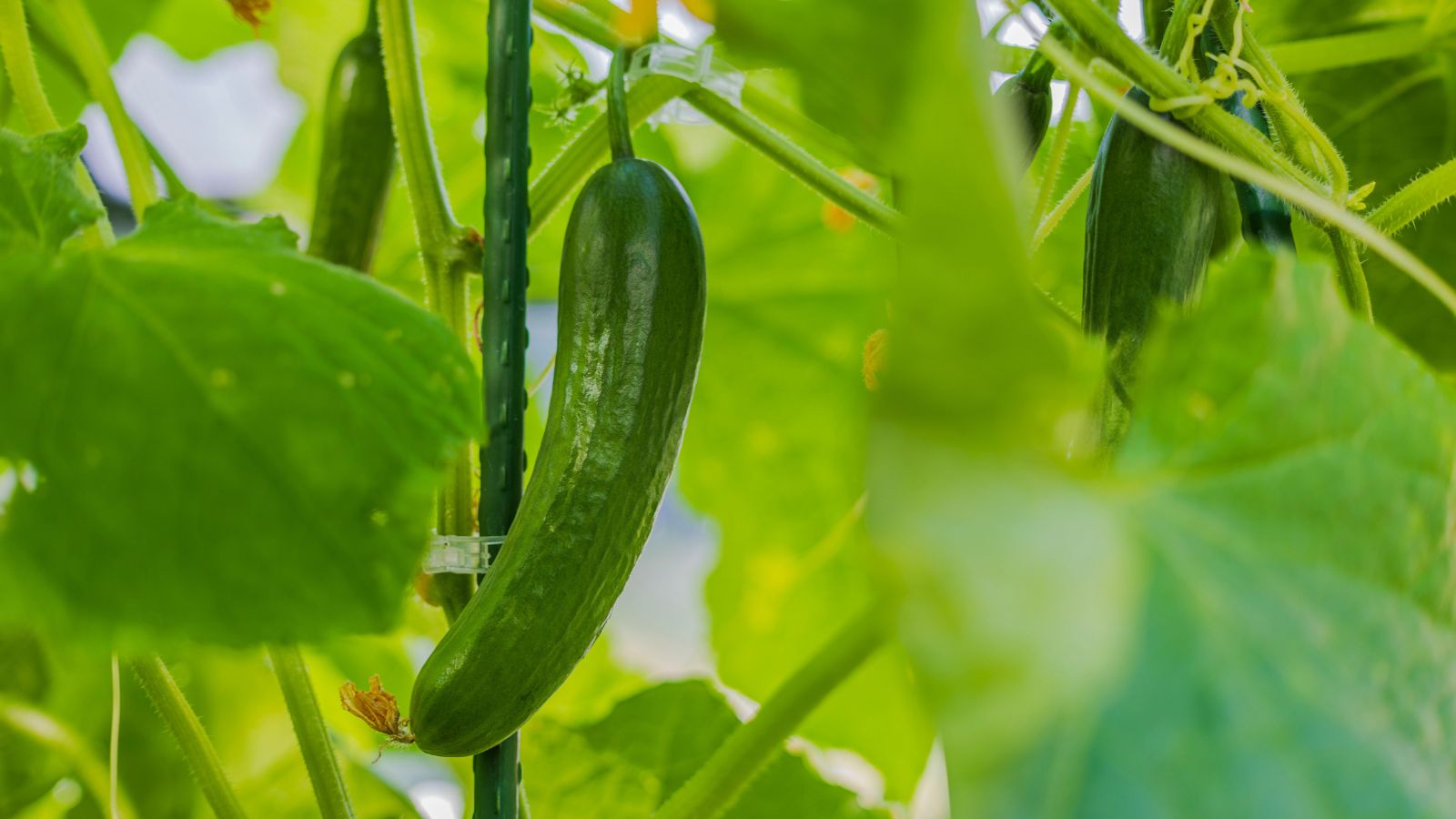
Cucumbers, with their high production of crisp, cool summer rewards, are one of the best vertical garden plants. Growing cucumbers vertically saves space and allows straight, shapely fruits to develop.
With vertical interest and added dimension, it also may fend off common cucurbit diseases and cucumber pests. Use a five to six-foot trellis with sturdy crosswires for training and tying.
Perennial Vines for Vertical Interest

Flowering vines trained to an upright structure add dimension, multi-season interest, and pollinator resources. With eye-catching appeal, handsome foliage, and an infusion of colorful blooms, long-lived perennial vines make a recurring show of color.
They’re among the best vertical garden plants. Trellises, arbors, and obelisks take the display upward.
Climbing Roses

|
|
botanical name Rosa spp. |
|---|---|
|
|
sun requirements Full sun |
|
|
height 6-50′ |

|
hardiness zones 4-11 |
Climbing roses grow in a variety of situations to soften structures and enchant with fragrance. They’re not true climbing plants, meaning they don’t twine, vine, or cling to supports on their own (save a hooking thorn). They need training and tying to a support structure to direct growth.
Without the upright support, climbing roses grow as free-standing shrubs or ramble down a slope, crawl along a wall, or form a groundcover.
Long, pliable canes set climbing roses apart from other types. Depending on the variety, they’ll have prickles (thorns) or be nearly thornless, which makes for easy training and pruning. Plan for mature size and thick, weighty canes when installing a support at planting. Anchor the structure in the ground with a strong mallet to the top or by digging it in so that it won’t lift as the roses grow tall.
Choose a disease-resistant variety for optimal landscape performance and easy-care qualities. ‘New Dawn’ is a robust climber that grows quickly in a single season. The classic rose, sweetly perfumed, has blush pink blooms. Three-inch double flowers occur from spring through frost, with abundant red rose hips persisting through fall.
‘New Dawn’ is an Earth-KindⓇ rose, a special designation by the Texas AgriLife Extension Service for roses with exceptional pest and disease resistance and requiring few extra resources to thrive.
‘Cecile Brunner’ is another Earth-Kind variety with a mannerly habit ideal for containers, pillars, and arbors, that accommodates 10 feet at maturity. It’s nearly thornless, with strong stems and silvery pink, honey-perfumed blooms.
Look to ‘Iceberg’ for a climber that thrives with a bit of neglect. The Royal Horticultural Society Award of Garden Merit recipient bears a profusion of trailing white blooms throughout the summer. Climbing ‘Iceberg’ grows quickly with long, pliable stems that train easily.
Clematis

|
|
botanical name Clematis spp. |
|---|---|
|
|
sun requirements Full sun to partial shade |
|
|
height 2-15′ |
|
|
hardiness zones 3-9 |
Clematis is a long-lived flowering vine and one of the best vertical garden plants for its spring-to-summer show. The vines captivate with violet, red, white, and pink flowers in loose clusters, open blooms, or tight bells.
The climbing vines need a support structure to grow off the ground level and are beautiful on porch railings, trellises, and along walls. Scale the support to the variety’s mature vine length. Vigorous vines like the evergreen C. armandii are gorgeous on an arbor, while smaller hybrids fit a low trellis or lattice support.
Young plants benefit from a mini-trellis to train stems in the first year after transplanting. A flexible, small-gauge material like chicken wire adds support. Attach the mini-trellis to a larger one for a seamless transition as the vines grow.
They need thin supports for the base of the leaves to cling to. Leaf stems twine and rest on supports about ¼ inch thick.
Gridded wire makes a good support, with the openings between one and several inches wide. Cattle fencing and concrete reinforcing wire are pre-fab options, with some maleability for wrapping around posts for upward growth.
In its first two seasons, clematis may “sleep” and “creep” as its roots develop. By the third growing season, the vines “leap” into graceful, full foliage with prolific blooms.
American Wisteria

|
|
botanical name Wisteria frutescens |
|---|---|
|
|
sun requirements Full sun to partial shade |
|
|
height 15-40′ |
|
|
hardiness zones 5-9 |
American wisteria is a high-climbing native vine. Though vigorous, American selections are less aggressive than the invasive Chinese and Japanese species. They bear the same beautiful draping blooms and loose foliage. The pendulous purple blossoms and pinnate leaves intertwine gracefully on long, woody stems.
Lightly fragrant blooms emerge in bunches in spring with sporadic flowering in summer. Train wisteria on walls, pillars, and arbors. The native grows in canopy cover, woodland settings, and open edges. They attract numerous pollinators and host several butterfly and moth species.
Blooms appear on new growth, and regular pruning helps control size and promote flowering.
Honeysuckle

|
|
botanical name Lonicera spp. |
|---|---|
|
|
sun requirements Full sun to partial shade |
|
|
height 8-15′ |
|
|
hardiness zones 4-8 |
Honeysuckle brings succulent trumpet flowers that beckon hummingbirds and other pollinators, including native bees. The Lonicera genus holds 180 species, some native to North America and others invasive exotics. Many of these are some of the best vertical garden plants you can grow for bright flowers.
Choosing the right honeysuckle brings a vigorous, well-behaved vine full of color and fragrance. Vining types twine around a support structure, run along a wall, or screen an unsightly area. Unsupported, they become sprawling groundcovers and make good options for slopes.
‘Major Wheeler’ is a cultivar of the North American coral honeysuckle and a top vertical plant with vibrant blooms, quick growth, and extended flowering. ‘Major Wheeler’ features scarlet and orange trumpets from summer until frost.
Grape honeysuckle, L. reticulata, is native to the Midwest and Eastern U.S. and grows naturally in woodland thickets and along streambanks. Yellow two-lipped blooms measure up to one inch long and mature to orangey-red. ‘Kintzley’s Ghost’ has pale blue-green cups that cool down the display. Round and dusty gray like eucalyptus, they’re handsome in the border until yellow blooms light up the tips of stems.
Climbing Hydrangea

|
|
botanical name Hydrangea anomala |
|---|---|
|
|
sun requirements Partial to full shade |
|
|
height 30-60′ |
|
|
hardiness zones 4-8 |
Climbing hydrangea differs from the deciduous flowering shrubs. With woody, climbing vines, the substantial perennial vines reach 30 to 40 feet high in their optimal conditions. They produce large, flat clusters of fragrant white flowers in late spring and early summer. Let them climb up a large tree trunk for natural interest.
In addition to their ornamental blossoms, the deciduous climbers bring bright vertical interest as the seasons change. Fall foliage is vivid yellow, and exfoliating reddish-brown bark adds winter appeal.
In frigid climates and those with hot, humid summers, look to the subspecies petiolaris. It’s colder-hardier than the straight species and has larger blooms.
Living Wall

A living wall enlivens an area and adds depth and layering to indoor and outdoor rooms. They offer privacy and tranquility and expand small spaces or walled gardens.
From a framed wire trellis to suspended planters and modular panels, living walls bring endless creativity. The vertical options soften and screen surrounding structures.
According to growing conditions, select plants with dynamic foliage forms and colors. Tropicals suit indoor and shaded locations. Succulents are good options for drier situations in bright light.
Begonia

|
|
botanical name Begonia spp. |
|---|---|
|
|
sun requirements Partial to full shade |
|
|
height 1-1.5′ |
|
|
hardiness zones 10-11 |
Begonias are graceful but durable, with arching stems and thick, glossy leaves in diverse shapes and colors. Clusters of pendulous blooms hang from tuberous stems. Depending on the variety, begonias perform well in tough spots like dry shade with heat and humidity.
Whether delicate pink or bold red, begonias bring lasting, waxy flowers among their distinct foliage. Incorporate rex begonias or angel wing begonias into shady plant walls for unusual texture and foliar interest. Their wing-shaped leaves feature dramatic mottling in rich tones.
Holly Fern

|
|
botanical name Cyrtomium falcatum |
|---|---|
|
|
sun requirements Partial to full shade |
|
|
height 1.5-2′ |
|
|
hardiness zones 7-10 |
Holly ferns add handsome dark green filler with their broad, glossy fronds. Each leaflet is coarse like a holly leaf, although the stems are soft and slightly arching.
Holly ferns are easy to grow in living walls. They prefer rich soils with even moisture, though they withstand dry spells in between watering sessions.
In areas with mild winters, holly ferns are evergreen with lasting seasonal interest. Hardy ferns for colder climates, like Christmas ferns (Polystichum acrostichoides), work well as perennials.
Japanese Forest Grass

|
|
botanical name Hakonechloa macra |
|---|---|
|
|
sun requirements Partial to full shade |
|
|
height 1-1.5′ |
|
|
hardiness zones 5-9 |
Japanese forest grass, or Hakone grass, adds pockets of texture and color to green walls. With a mounding, cascading habit, the narrow-bladed grass is feathery among other foliage specimens.
‘All Gold’ is a bright, golden-green selection to complement deeper plants. In heavy shade, blades are chartreuse and more gold with sun.
Hakone is a shade-tolerant grass that relies on organically rich and well-draining soils to grow. Overly wet soils cause stress and disease issues.
Coleus

|
|
botanical name Coleus spp. |
|---|---|
|
|
sun requirements Full sun to full shade |
|
|
height 6″-4′ |
|
|
hardiness zones 10-11 |
Coleus brings a tapestry of leaves that makes it one of the best vertical garden plants to add a pop of color to living walls. Depending on the variety, they do well in partial shade to sunnier exposures.
In jewel tones of pink, purple, red, and orange, coleus is an easy way to brighten the composition. Trailing varieties like ‘Burgundy Wedding Train’ in deep red and lime spill and soften the walls. Pinch or trim stems as needed to retain a full, bushy form.