11 Best Flowers for Allergy Sufferers
If you’re an allergy sufferer, but you love flowers, despair not! There are plenty of options out there that won’t cause reactions. Experienced gardener Sarah Jay lists 11 flowers that people with allergies can plant away.


Contents
Nothing ruins a bouquet quicker than allergies. And few things make time in the garden harder. But knowing the best flowers for allergies solves these problems. Planting the right plants prevents the sniffles or the inflammatory reactions that add a layer of difficulty to life.
Here, we’re covering not just flowers for cut arrangements, we’re talking flowering trees too. We include natives, and even cacti. We include at least one houseplant too, but we’ll let you read on to figure out which one. The goal here is to give you a good array of flowering plants to choose from.
Whether you want to snip those blooms from an outdoor garden and pop them in fresh water for enjoying indoors, or you want to force tree branches to bloom indoors while it’s cold outside, there is something for you.
It should be noted that most of these flowers are known to be allergy-free due to a lack of pollen. Those with mold allergies should stay away from soil-grown houseplants.


Flowering Dogwood


|
botanical name Cornus florida |
|---|---|

|
sun requirements Full sun to partial shade |

|
height 15-25’ |

|
hardiness zones 5-9 |
When we look for allergen-free plants, we’re looking for what is known as entomophilous plants, or plants that are pollinated by insects. Wind-pollinated plants are often to blame for plant-related allergies. Flowering dogwood is one such plant that is known for its allergen-free nature.
Not only does it have one of the best flowers for allergies, but it’s also a tree native to a large portion of North America. In spring, it erupts with white or pink flowers that are pollinated and form small red berries.
The tree needs partial shade in warm areas and consistently moist, well-draining soil. Make it a stunning specimen in your front yard, and watch it put on a show through the seasons.
Butterfly Weed

|
|
botanical name Asclepias tuberosa |
|---|---|
|
|
sun requirements Full sun to partial shade |
|
|
height 1-2’ |
|
|
hardiness zones 3-9 |
Milkweeds are great for hosting monarch butterflies, and they’re some of the best flowers for allergies. They lack significant pollen that can be inhaled through wind. They have stunning orange blooms that form in spring and bloom through summer.
Butterfly weed is hardy and works well in a prairie garden or in a container. If you’re planting seed, ensure you give it a period of cold, moist stratification. Then sow in trays and plant them out after hardening them off. Otherwise, directly sow them in fall to give them a natural cold period.
When you notice the horned and striped monarch caterpillar feeding on the leaves, let them do their thing. This is an act of habitat restoration for this important species. It should also be noted that gloves are a good tool for handling this plant, as the sap it produces is toxic.
Swamp Magnolia

|
|
botanical name Magnolia virginiana |
|---|---|
|
|
sun requirements Full sun to partial shade |
|
|
height 10-35’ |
|
|
hardiness zones 5-10 |
Another one of the best flowers for allergies is the magnolia. I can’t tell you how excited I get when I see the large, white blooms of swamp magnolias blooming on the trees here in Texas in late spring. They’re great for allergy-sufferers, and they smell incredible. It’s the scent of summer for me.
For this one, you’ll need a bit of room to plant it. While you can container-grow magnolias, it’s best to let them spread their roots into the ground. They need a rich soil to produce their stunning blooms and the subsequent fruit.
Swamp magnolias attract and host multiple species of butterflies, too, including the spicebush and eastern tiger swallowtails. Who says people with allergies can’t have a butterfly garden?
Tulips

|
|
botanical name Tulipa spp. |
|---|---|
|
|
sun requirements Full sun |
|
|
height 4”-2’ |
|
|
hardiness zones 4-8 |
There are so many different types of tulips out there, and all of them are perfect for planting, cutting, and simply enjoying. Like the other plants on this list, they are great for people with pollen allergies because they don’t produce a ton of it.
This fact goes for botanical tulips, parrot types, late and early varieties, as well as double and lily-flowered ones. There’s a cornucopia of tulips to pick from, and planting them inside their wide hardiness range of zones 4 through 8 (sometimes to 3 and 9) is easy.
Yaupon Holly

|
|
botanical name Ilex vomitoria |
|---|---|
|
|
sun requirements Full sun to partial shade |
|
|
height 10-20’ |
|
|
hardiness zones 7-9 |
Another important native species, yaupon holly produces one of the best flowers for allergies. Though it has a slim hardiness range, it thrives in highly variable conditions, making it one of the most adaptable on this list. Due to its insignificant blooms, it doesn’t trigger reactions related to pollen.
In winter, after the flowers have been pollinated, red berries form that birds absolutely adore. Grow one of these and you’re likely to see flocks of them feeding in the dead cold, as other plants sleep. It hosts Henry’s elfin butterfly and the holly azure butterfly.
One cool aspect of this tree is that its leaves can be dried and used in a high caffeine tea. If you have room for one of these in your yard, you won’t regret planting it.
Cacti

|
|
botanical name Cactaceae family |
|---|---|
|
|
sun requirements Full sun to partial shade |
|
|
height Varies |
|
|
hardiness zones Varies, often in tropical and subtropical regions |
If you don’t have a dust allergy, cacti are a great choice. They don’t produce wind-borne pollen, and their flowers are particularly showy. If you have ever managed to see a cactus bloom, you know what I’m talking about. If you’re highly sensitive to pollen, it’s worth growing them in a container and leaving them outdoors when they bloom.
When it comes to the cactus family, you have so many choices at your disposal. There are hundreds (if not thousands) of retailers who sell them. With forms that range from button-like to branching, there is certainly a cactus out there for everyone.
Try a prickly pear if you want a native option. Grow the endangered star cactus (Astrophytum asterias) if you’re into cultivating rare plants. If you want something easy to cultivate indoors, look for a Christmas cactus that requires bright, indirect light. Some of these produce toxic sap, so beware and wear protective gear when handling.
Orchids

|
|
botanical name Orchidaceae family |
|---|---|
|
|
sun requirements Bright, indirect light |
|
|
height Varies |
|
|
hardiness zones Varies |
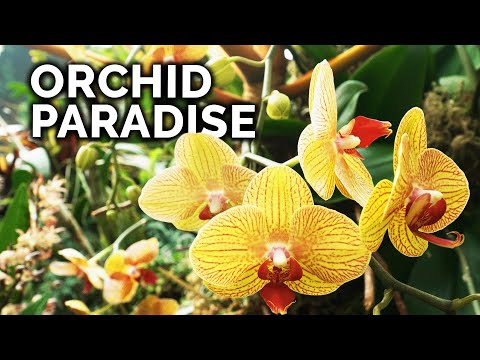
Much like cacti, orchids are some of the best flowers for allergies due to their low pollen count, and their need to be pollinated by insects. Another great aspect of growing these is that many are epiphytic or lithophitic, which means they have aerial roots that attach to trees or rocks. This lowers the risk of a reaction to mold or fungus that lives in soil.
There are terrestrial types as well that grow in the ground, but most of the ones you’ll find in the store are happy in a cup of bark or attached to a tree mount. Their care requirements are different from most houseplants, but once you get them down, they aren’t hard to grow.
With orchids, the chance to grow rare and endangered plants is there, as long as you can locate a good breeder with a good reputation. But there’s nothing wrong with heading to the grocery store to snag a moth orchid that will love your west-facing window.
Winecup

|
|
botanical name Callirhoe involucrata |
|---|---|
|
|
sun requirements Full sun |
|
|
height 6-12” |
|
|
hardiness zones 4-8 |
While it’s easy to see the pollen in a winecup when it blooms in spring, it will remain within the cup waiting to be picked up by an insect. Allergy sufferers who like to grow natives in a wilder space of the garden can rely on this one to provide lots of food for beneficial insects while not prompting allergic reactions.
The blooms keep opening on winecups through summer, making them a perfect option for a pollinator garden. Plant the seeds directly in the garden in fall to give them the proper cold period. Then watch them emerge as the weather warms. They put on a show!
Wild Foxglove

|
|
botanical name Penstemon cobaea |
|---|---|
|
|
sun requirements Full sun |
|
|
height 1.5-2.5 feet |
|
|
hardiness zones 5-8 |
Just because pollen gives you the sniffles, doesn’t mean you can’t have a thriving cottage garden. Wild foxglove, a southern North American native, is one of the best flowers for allergies, as it is yet another that requires insects for pollination.
If you have rocky, dry soil, wild foxglove will do just fine there. Its pale white to purple blooms open in spring and fade quickly, but the display is worth the wait, as they’re one of the first to pop when spring arrives. These plants have evolved alongside bees and hummingbirds, which really love to feed on their nectar and pollen.
Downy Phlox

|
|
botanical name Phlox pilosa |
|---|---|
|
|
sun requirements Full sun to partial shade |
|
|
height 1-2’ |
|
|
hardiness zones 3-9 |
This gorgeous prairie dweller also relies on insects for pollination, making it one of the best flowers for allergies. Its petal colors range from deep pink to lavender, and these open in late spring and keep opening through midsummer. The stems have soft, whitish hairs, which, along with the flower shape (the cavity is tubular), indicate they reproduce via moth pollination.
One of my neighbors has a lovely terraced garden with downy phlox planted in the back. As the season rolls on, the plants grow taller and taller, producing more and more flowers as older ones fade and seed out. They’re very showy all the way up to the hottest parts of the year.
And if you can’t find this one, any phlox will do! This one is just the top of the tops when it comes to being allergy-free.
Bottlebrush Buckeye

|
|
botanical name Aesculus parviflora |
|---|---|
|
|
sun requirements Partial to full shade |
|
|
height 8-12’ |
|
|
hardiness zones 5-9 |
We covered trees and several herbaceous perennials, but we’ve yet to discuss shrubs that produce the best flowers for allergies. Enter bottlebrush buckeye, a wildly beautiful southeastern North American native bush. Not only are its flowers minute, without excess pollen, but they’re vigorous in the shade, spreading to form dense colonies over time.
If you don’t like how vigorous buckeye gets, it can handle heavy shearing. But if you let it do its thing, you’ll provide habitat for eastern swallowtails and hummingbirds. In the heat of summer, these flowers are open, giving everyone who feeds on them a break from the searing sun.
Add to all of these benefits its drought tolerance, and there’s not much reason to skip this one if you have the space and the conditions it needs.