How to Plant, Grow, and Care For Bartlett Pear Trees
Sweet, juicy Bartlett pears are darlings of the fall harvest season. They are delicious, nutritious, and rewarding to grow. Join gardening expert Melissa Strauss to talk about growing your own!


Contents
‘Bartlett’ pear trees are beautiful and practical additions to the home garden. They combine great ornamental value with the practicality of producing delicious and nutritious fruit. Speaking of that fruit, is there anything better on an autumn afternoon than a perfectly ripe pear?
Pears are versatile and delicate, with a texture all their own. They’re great for snacking on fresh, and equally as good baked into a pie. They’re an ideal addition to any charcuterie board and pair well with cheese. And nothing compares to a pear poached in spices, with a scoop of vanilla ice cream.
Bartlett Pear Overview

|
Plant Type
Deciduous Tree
Family
Rosaceae
Genus
Pyrus
Species
Communis
|
Native Area
Europe and Asia
Exposure
Full sun
Height
12’-30’
Watering Requirements
Moderate
|
Pests & Diseases
Pear psylla, codling moth, aphids, scale, borers, fire blight, pear scab, rust, powdery mildew, canker
Maintenance
Moderate
Soil Type
Rich, well-drained, loamy
Hardiness Zone
4-9
|
What Is It?
‘Bartlett’ pear trees are the most popular and widely grown pear variety in North America. Their lovely form, paired with the sweetness and fragrance of their fruit, is (in my opinion) unparalleled. When I think of the perfect, sweet, ripe fruit, ‘Bartlett’ is the lovely green variety that comes to mind.
Characteristics

‘Bartlett’ pear trees are vigorous, upright trees known for their excellent productivity. Aside from their fruit, these trees make wonderful ornamental additions to the landscape. In spring, this tree bursts into a cloud of sweetly fragrant, white blossoms.
Blossoms give way to smooth, teardrop-shaped fruits. They start out green and take on an attractive, rosy glow as they ripen. The foliage is dense and attractive. It’s glossy green in the summer and changes to burnished gold in autumn.
These are not the largest pear trees, but they can grow to as tall as 30 feet under the right conditions. They have a full, rounded canopy that is healthiest when you prune it to remain open.
Native Area

The ‘Bartlett’ pear tree is not native to North America. The species, Pyrus communis, is native to Europe and parts of Western Asia. This cultivar was first developed in England in the 1700s.
Later in that century, it made its way to the United States by way of Enoch Bartlett. Unaware that it was already known in Europe, he named it after himself. Other names include Williams pear and Williams’ Bon Chretien pear.
Planting

You can plant most fruit trees in spring or fall, and each has its advantages. In the fall, you have warm soil and cool air. This combination encourages strong root development and less top growth. Your tree will establish deep roots right away, and the thick flush of summer foliage won’t take all the nutrients.
A fall-planted tree will typically require less water. The cooler weather, paired with commonly rainy weather, reduces shock. They also mean less evaporation, so less need for supplemental water. They will go into spring with solid roots, ready to flourish. This is the ideal time for milder climates, like zones 6 and higher.
In cooler climates like zones 3-5, spring planting is ideal. This gives your tree as much time as possible to grow before the harsh winter. Your tree won’t run the risk of young roots dying from a deep freeze. You’ll also find a better selection in the spring at nurseries.
Transplanting

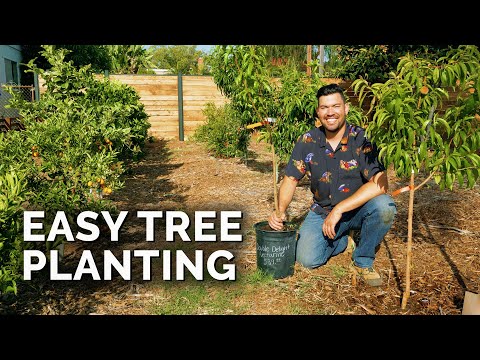
If you’re planting a potted tree, dig a hole that is as deep and twice as wide as your root ball. Loosen the roots to help them spread easily. If the soil is poor, this is the time to amend it with some compost or manure. Trees adapt best to native soil, but sandy soil won’t contain enough nutrients.
For bare-root trees, soak the roots for two hours before planting. Dig a hole that will accommodate your spread-out root system. Create a mound of soil in the bottom of the hole and spread the roots out over it.
Position the tree so that the graft union is two to three inches above the soil level. Gently backfill, firming the soil as you do, to hold the roots in place.
Water your newly planted tree deeply to get the roots growing deep. This settles the soil around the roots and helps keep it firmly in place. Apply two to four inches of mulch to cover the roots. Leave three inches of space between the trunk and the mulch to prevent rot.
Young pear trees may need support to keep them upright. It may be beneficial to stake your tree, especially if you live in a windy area. Tie the trunk loosely to the stake so that it can flex slightly. This also encourages stronger root development.
Growing from Seed

‘Bartlett’ pear trees do not breed true from seeds, so it’s typically not done. The fruits from a tree grown from seed are likely to be smaller and less flavorful. Grafting and layering are more common ways to grow this tree if you want a clone.
A pear tree grown from seeds will take seven to ten years to bear fruit. That’s an awfully long time to wait. Grafted trees typically produce fruit in about three to five years.
How to Grow
This variety has its challenges, but overall, it is not a difficult tree to grow. It’s highly popular, so it’s easy to find good nursery stock. There is plenty of information available on potential issues you may run into. Once established, ‘Bartlett’ pear trees are heavy producers of high-quality fruit.
Light

‘Bartlett’ and all pear trees require full sun if you want a healthy harvest. Six to eight hours of daily sun are necessary for the tree to produce ample blossoms. If it doesn’t bloom well, it won’t set a lot of fruit. The more sun, the better.
Full sun also ensures that your fruit ripens evenly and on time. It helps keep the leaves dry, which is also an important factor. Dry foliage is less prone to fungal diseases. Plant on the South or Southeast side of your home if possible.
Water

Pear trees like moderate, consistent watering. They don’t like to dry out, but they won’t tolerate soggy soil. Water is particularly vital during the young stages and when they are fruiting.
In the first two years, water your ‘Bartlett’ pear once or twice a week during dry spells. Soak the soil to a depth of 12-18 inches to encourage the roots to grow deep. This amounts to between five and ten gallons of water. Adjust for the amount of rainfall your region receives.
For an established tree, unless you are in a period of drought, your tree will need little supplemental water. In most climates, there is enough natural rainfall to support this plant. The most important time to pay attention to water availability is during fruit development. Your tree needs one inch of water per week during this time.
Soil

The ideal soil situation for your ‘Bartlett’ pear tree is loamy, fertile, and well-draining. Heavy clay soil is difficult because it doesn’t like wet feet. Sand dries too quickly, which also presents a problem. While these are adaptable, the right foundation will make a difference in growth, fruit quality, and resistance to pests and diseases.
If you have compacted or poor, sandy soil, work compost or well-rotted manure to improve fertility and structure. Avoid overdoing it, though. Pear trees prefer native soil. When you amend, dig deep, go down two to three feet.
Temperature and Humidity

‘Bartlett’ pear trees perform best in temperate regions with cold winters and mild summers. They need between 800 and 1,000 chill hours, which is significant. This means that the tree needs to spend this many hours between 32-45°F (0-7°C) in order to break dormancy and set fruit.
These are typically hardy to zone 5, tolerating temperatures down to -15°F (-26°C). Prolonged exposure to temperatures above 95°F (35°C) will stress the tree and can reduce the fruit quality. Moderate humidity is fine, but high humidity can increase the risk of certain diseases. In regions with low humidity, you may need additional irrigation.
Fertilizing

Fertilizing your tree should aim to deliver steady, balanced nutrition that will support all parts of the plant. You don’t want to encourage too much lush growth, as that can take away from fruit quality. Timing is more important than the type of fertilizer.
The most important time to fertilize is in spring before bud break. This supports growth, blossoms, and fruit set. A light feeding mid-summer can help bulk up fruit, but avoid giving too much nitrogen. This isn’t the time for additional green growth. In fall and winter, your tree will go dormant, and fertilizer is unnecessary.
For young trees, such as years one to three, use a balanced fertilizer, such as a 10-10-10 formula. Once established, switch to a lower nitrogen formula like a 5-10-10 ratio. ‘Bartlett’ pear trees are vulnerable to fire blight, and higher nitrogen increases that risk.
Maintenance

One of the most important maintenance tasks with any fruit tree is thinning the fruit. ‘Bartlett’ pear trees are heavy bearers, and leaving all the fruit intact is hard on your branches. Thinning it out will help preserve and prolong the life of the plant.
Around June, you will have a natural fruit drop. This typically happens about four to six weeks after full bloom. Once this occurs, what’s left are fruits that are likely to mature. From there, you want to thin clusters to one pear per spur. This should equate to one fruit every six to eight inches of branch.
Select the largest, healthiest fruits and remove the rest. You can twist them off with your fingers or snip with harvesting snips. By doing this, you redirect energy to the fruits left on the tree. This will result in bigger, more flavorful pears.
Pear trees respond best to light, regular pruning. While some fruits prefer a single, harder pruning in winter, this one is better off with two lighter ones. In late winter, before bud break, is the best time for structural pruning. In summer, a light pruning is appropriate to remove suckers and waterspouts, and control excess growth.
Propagation
Because it doesn’t breed true from seeds, the best ways to propagate this tree are by grafting cuttings and layering. Both are effective and will produce a tree that fruits in about three years.
Grafting

The most common method of propagation is grafting. It’s not a difficult process, but it does require access to a hardy rootstock. This creates a more vigorous and disease-resistant tree. Grafting involves cutting a scion from the chosen tree and grafting it into the trunk of your rootstock.
Grafting is best done in the early spring, with old wood. To graft a branch into rootstock, you create a tongue-and-groove situation. The rootstock needs to have a split in the top. The scion gets trimmed into a wedge and inserted into the split. Then, you wrap the graft with grafting tape and allow the two to grow together.
Layering

The second effective method of propagating a ‘Bartlett’ pear tree is through layering. This is easier to do at home and will grow a clone of the parent tree. However, it will have its own rootstock, which is not always a good thing.
The steps are fairly simple and straightforward. Choose a healthy branch that looks like it will grow into a well-shaped tree. Score all the way around the branch in two places, about two inches apart. Scrape the bark off in between these two spots so that you have a bare space; this is where the root will grow.
You can use a layering ball or plastic to carry out the next step, and you’ll need a potting medium. Moist peat moss works well. Cover the bare space on the branch with the medium, and then cover it with the layering ball or plastic and secure it in place.
Keep the potting medium moist, and roots will begin to grow from that spot. Once your branch has substantial roots, remove the branch just above the roots and plant it in its own pot.

Harvesting and Storage

Harvest your pears in late summer to early fall. For ‘Bartlett’ pear trees, September is the most common time to harvest. When you notice the fruit shift from a darker green to a greenish yellow, it’s time to check them.
To see if they are ready, gently lift the pear to a horizontal position and give it a gentle pull. If it comes away easily, they are ready to harvest. If you have to pull hard, it needs more time.
The key is to harvest them before they ripen all the way. Pears continue to ripen off the tree, from the inside out. If you leave them on the tree until they blush and look ripe, the inside will be mushy.
Once you’ve harvested them, you can ripen them at different speeds depending on how many you have and can eat. If you store them at room temperature, they should ripen in a few days to a week. Any that you want to keep from ripening you can store in the refrigerator.
Refrigerated, your pears will slow the ripening process by several weeks. When you’re ready to eat them, move them out of the fridge, and they will ripen in a few days.
If you need them to last longer, it’s best to can them or cook them in some way. You can also freeze them as they hold their texture well when frozen.
Common Problems
While they are the most popular pears in the U.S., these trees do have some issues to watch out for. In general, a healthy tree is one that will tolerate more stress. More stress leads to a weaker tree, though, so it’s good to keep an eye out for these issues.
Pests

Pear psylla, aphids, and scale insects are all sap sucking insects that like pear trees. In small numbers, they’re not usually harmful, but a serious infestation can be. It’s particularly important to keep a close watch on younger trees.
The primary issue with these sap suckers is that they can spread viruses and leave behind a sweet, sticky excrement. It’s called honeydew, and often plays host to black sooty mold. This interferes with photosynthesis, weakening the tree.
Codling moth larvae enjoy the fruit and will tunnel through your pears, leaving ugly holes. Once they move in, the fruit is unfit to eat. Borers are another tunneling insect, but these bore into the branches and trunk. They cause stress and can harm the tree.
The sap suckers all have natural predators that you can attract by adding nectar plants to the garden. If you end up with a bad infestation, neem oil is a good solution for these.
Codling moths are a bit more complicated. You can use traps for the adult moths, which works if you don’t have a severe infestation. Always clean up fallen fruit and debris that can harbor pests. If needed, horticultural oils can help with these.
Borers are unique, and the best thing to do is maintain a healthy tree. If you find their entry holes, you can use a long wire, feeding it into the holes and spearing the borers.
Diseases

The most serious disease that affects ‘Bartlett’ pear trees is Fire Blight. This bacterial infection causes branches to blacken and die off. Blossoms wilt, and branches may bend into a hook shape. To deal with this disease, make sure to keep clean tools and remove any affected tissue as soon as you notice it.
Pear scab is a less serious fungal disease that can cause scabby lesions on leaves, twigs, and fruit. It reduces overall vigor and fruit quality. Copper-based fungicides are effective in treating scab.
Other fungal diseases that affect pear trees include rust, black rot, powdery mildew, and botrytis. To avoid these, keep up with care and pruning. Maintain an open canopy to allow sunlight and air into the center of the canopy. Treatment with neem oil or copper-based fungicides is effective if physical control is not.
Frequently Asked Questions
What can you plant pear trees with?
Pear trees pair well with other fruit trees like apples and hardy figs that are suitable for the same climate.
Are pears safe for pets?
Yes, in small amounts, but the seeds and core are not. Pear seeds contain small amounts of cyanogenic compounds.
How do you overwinter pear trees?
Pear trees go dormant in the fall. You can protect your tree by covering or painting the trunk to protect against sun scorch. Mulch helps to insulate the roots from extreme temperature swings.
Share This Post

15 Gorgeous Trees to Plant in Fall: Selection and Planting Techniques
Fall is the season for planting! That’s right, it is fall and not spring. Fall-planted trees grow more roots than spring-planted ones, and they perform better during the growing season. Pick from one of these 15 gorgeous trees from longtime landscaper Jerad Bryant.



Fall Apple Tree Care Guide
Fall apple tree care seeks to prepare and protect your tree for dormancy, as well as support its long-term health. Join gardening expert Melissa Strauss to discuss steps to prepping your apple tree in the fall. You'll have a successful dormancy and a prosperous season ahead.

Edible Landscaping: Fall-Fruiting Plants for Ornamental Appeal
Edible landscaping makes your garden both beautiful and practical. What could be better? Join Florida gardener Melissa Strauss to discuss fall fruiting plants that are both ornamental and edible.

The Right Time to Prune the Most Popular Fruit Trees
Pruning fruit trees is essential for maintaining their health, shape, and productivity. Join gardening expert Melissa Strauss for tips on timing it right so that your fruit trees are productive and healthy in the next season.

11 Fruit Trees You Should Prune Right After Harvest
It’s typically best to prune fruit trees in late winter and early spring before new growth occurs. This is dependent on the type of tree; some grow year-round, while others are deciduous and frost-tolerant. These 11 appreciate pruning right after harvest instead of during the dormant season.

Can You Grow an Apple Tree From Seed?
Eat an apple and you’ll find a bunch of seeds inside! Plant these seeds, and apple trees will grow. But, how long will it take for them to grow apples? The answer may surprise you. Join former nurseryman Jerad Bryant in answering the question: Can you grow an apple tree from seed?

How to Grow Dragon Fruit From Seed: A Beginner Guide
Dragon fruit might look tough to care for, but growing this tropical cactus from seed is surprisingly easy, even for beginners. Gardening expert Madison Moulton explains the complete process of growing dragon fruit from seed, from extracting seeds to harvesting your first fruit.