How to Plant, Grow, and Care for Balsam Pear
Balsam pear is popularly known as bitter melon, but in the US it can be invasive. Gardener's need to be careful with where they grow this plant and how they care for it. But with careful management, you can grow this crazy food vine in your own garden.

Contents
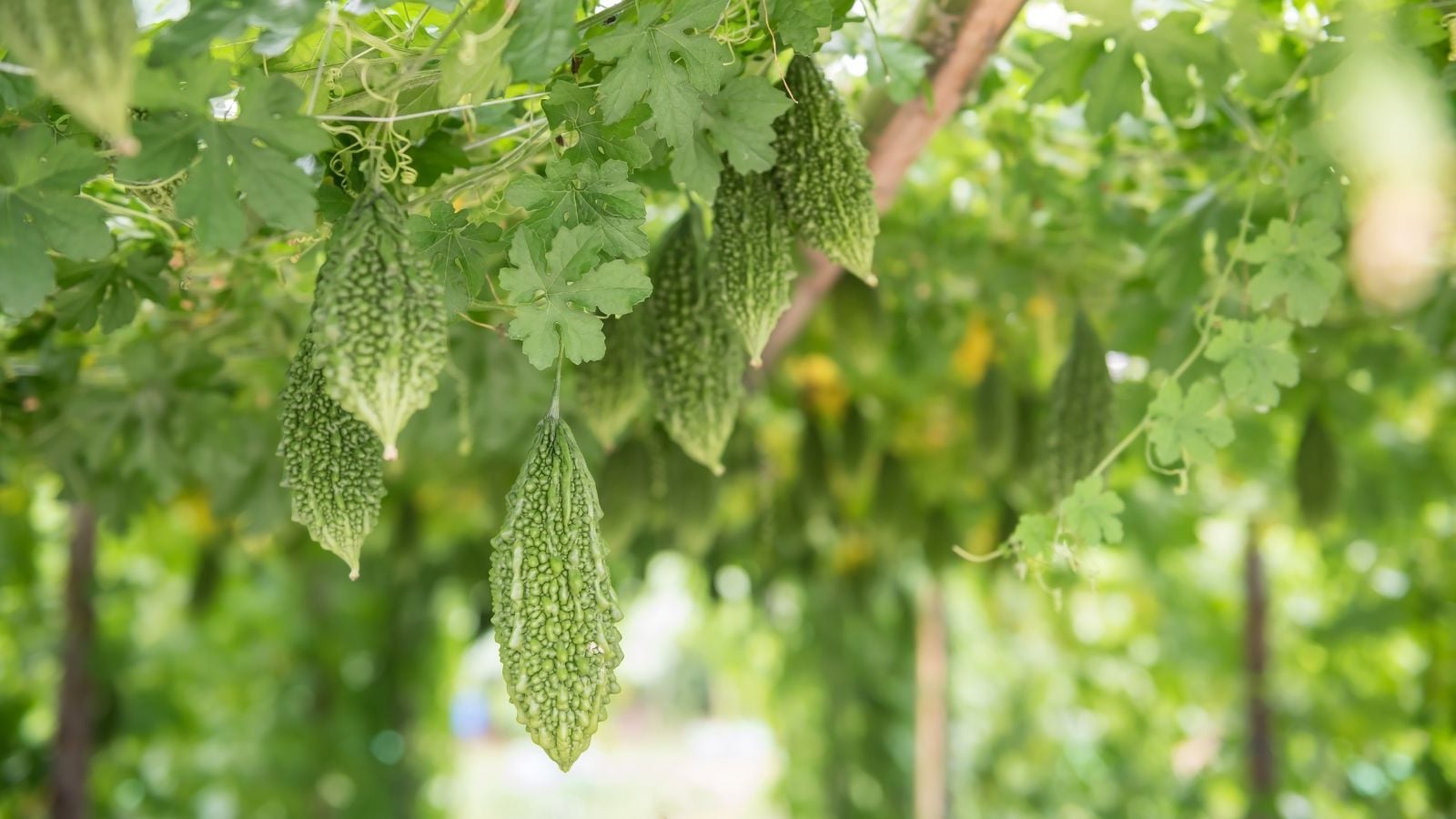
If you did not grow up around balsam pear plants, it can be surprising to learn that this bumpy, sometimes spiky fruit is edible. When ripe, it is bitter, semi-hollow, and widely enjoyed. Known by many names, including balsam apple, bitter gourd, and Momordica charantia, this fruit may be green, white, or orange and plays an important role in Chinese and Indian cuisine.
Momordica charantia plants are eaten throughout much of Asia and are becoming more popular worldwide. This nutrient-dense plant is widely used in traditional medicine as a folk remedy for various ailments and to support overall health.
Momordica charantia is a vigorous grower that can easily overtake a yard. Fallen fruit readily sprouts and spreads into nearby areas, so growing balsam pear in a contained space is often the best approach. Some regions of the United States consider this plant invasive, making it important to monitor its growth carefully.
Balsam pear produces fruit in a range of colors, all of which are edible. Knowing the specific variety helps determine the correct harvest time. While the fruit is commonly used in cooking, the leaves are often brewed into a medicinal tea. This species produces tender, edible fruit that stands out for its distinctive and exotic character.


Quick Care Guide

|
Scientific Name
Momordica charantia
Days to Harvest
40-65+ Depending on the variety
Light
6+ Hours to full light for vines; shaded area for roots
Water
Water 1 inch per week; more if roots are in direct sunlight
|
Soil
Fertile well-draining soil; pH 5.5-6.7
Fertilizer
Balanced (ex. 10-10-10)
Pests
Aphids
Diseases
Powdery mildew, Fusarium wilt
|
All About Balsam Pear

Balsam pear makes an excellent garden plant. Given the opportunity, it will twine and sprawl through the garden while producing a striking, conversation-starting harvest. This dangling vegetable belongs to the cucurbit family. Like its familiar relatives, squash and cucumber, it grows on long, thin vines with large, semi-hollow fruit and deeply lobed, spade-shaped leaves that shade the developing crop.
Indian varieties of Momordica charantia have dark green skin and a very bumpy, spiky appearance. Chinese varieties tend to be smoother on the outside and, while still bitter, are more tender and require less cooking time than their Indian counterparts.
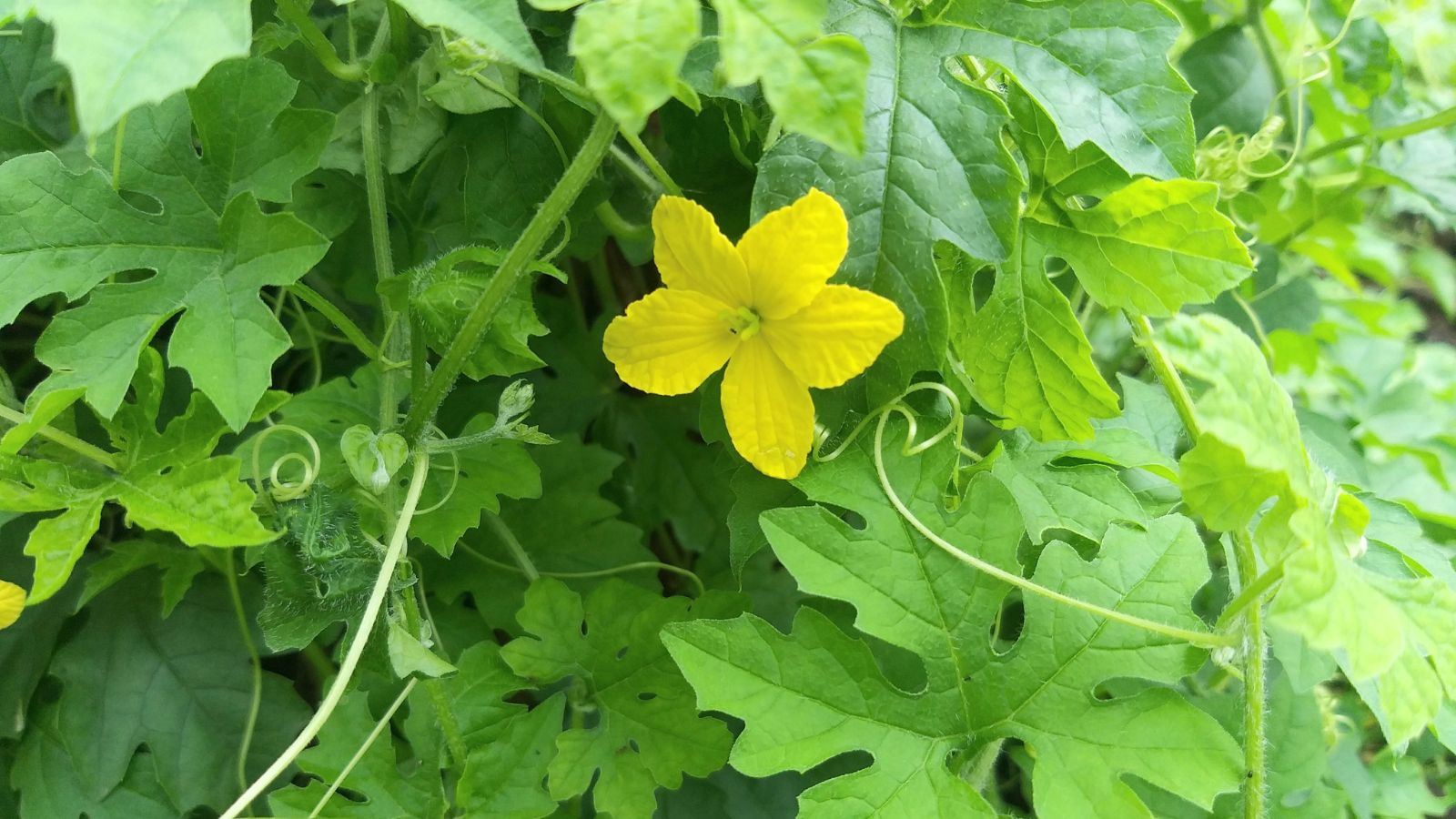
Bitter melon vines can reach 13 to 16 feet in length, with leaves ranging in size from a quarter to about the size of a child’s face. The deeply lobed leaves add an elegant look, especially when small yellow flowers emerge beneath them.
Balsam pear produces both male and female flowers, and pollen must transfer from male to female flowers for fruit to develop. By mid to late summer, after about two months of growth, plants begin producing steadily and continue until temperatures drop below 70°F (21°C). The seeds range in color from red to tan and measure about the size of a dime.
Gardeners use balsam pear in two primary culinary ways. The fruit is most commonly cooked in stir-fries and curries, while the leaves are sometimes used to flavor soups or brew traditional teas. Bitter melon is often associated with digestive support and has a long history of use in folk remedies related to ulcers, blood sugar balance, and overall wellness.
Planting

Bitter melon, or Momordica charantia, is best planted from late spring to early summer. It thrives in heat and cannot tolerate even light frost. Wait until all risk of cold snaps has passed and consistently warm weather has arrived. Momordica charantia prefers temperatures above 80°F (27°C), so plan planting accordingly.
Start seeds by placing them in soil or between moist paper towels and keeping them evenly moist for two to four days. Once the seeds split open and a white taproot appears, transfer them from the paper towel into soil. Bitter melon grows best in well-fertilized soil with excellent drainage.
Choose a planting site that receives at least six hours of direct sunlight per day, although more sun encourages stronger growth and better fruiting. Momordica charantia naturally sends out long vines, allowing green or bright orange fruit to hang freely without touching the ground. Bitter melon also grows well in containers, especially when planted near the base of trees. Vines often climb through branches to reach sunlight, keeping foliage warm while roots remain cool.
If no tree is available, provide a sturdy trellis or fence to support the vigorous vines as they grow.
How to Grow
Balsam apple grows vigorously and often needs minimal intervention once established. Its vines seek out favorable conditions to produce mature green and orange fruit, while the abundance of bright yellow flowers attracts bees that assist with pollination. Providing proper care helps ensure a generous harvest of flavorful fruit.
Light
Momordica charantia is a subtropical plant and thrives in warm conditions with consistent moisture. While the vines prefer full sun, the roots grow best in a more sheltered environment. Think of a subtropical landscape where mature plants grow over and around one another. Vines and leaves reach upward toward the sun, while roots remain shaded and benefit from retained soil moisture.
Replicating these conditions in the home garden supports healthy growth. Provide plenty of sunlight for the vines while keeping the root zone cooler and evenly moist to mimic the plant’s natural growing environment.
Water

Watering is essential for this subtropical plant. Bitter apple is not drought-tolerant and requires consistent moisture to grow well. Water at least one inch per week at the base of the plant. Although drip lines and soaker hoses work well, hand watering allows for better control. Thoroughly soak the soil around the roots while keeping the foliage dry. Water the area two or three times per session to ensure deep moisture penetration.
If Momordica charantia roots sit in open, direct sunlight, plan to water a second time during the week to prevent stress from drying out.
Soil

Momordica charantia is not particularly picky about soil and adapts quickly as long as the soil contains added compost and drains well. It prefers a soil pH between 5.5 and 6.7, which suits most garden soils. In areas with highly alkaline soil, growing bitter melon in containers makes it easier to control pH and growing conditions.
Temperature

Balsam pear grows best in zones 9 through 11, so gardeners in cooler climates may want to grow it in a greenhouse. When growing balsam pear in a greenhouse without natural pollinators, you need to pollinate the plants by hand.
Collect pollen from the male yellow flowers and gently transfer it to the female yellow flowers, taking care not to detach the flowers from the vine. A small paintbrush or cotton swab works well as a pollination tool.
Fertilizing

Momordica charantia is not a heavy feeder, but it benefits from fertilizer as flowering begins. Apply a balanced fertilizer such as a 10-10-10 when the first yellow flowers appear to support healthy fruit development.
When planting balsam apple seeds, incorporate compost or well-rotted manure into the initial potting mix. Momordica charantia uses nitrogen to support vigorous vine growth.
Pruning/Training
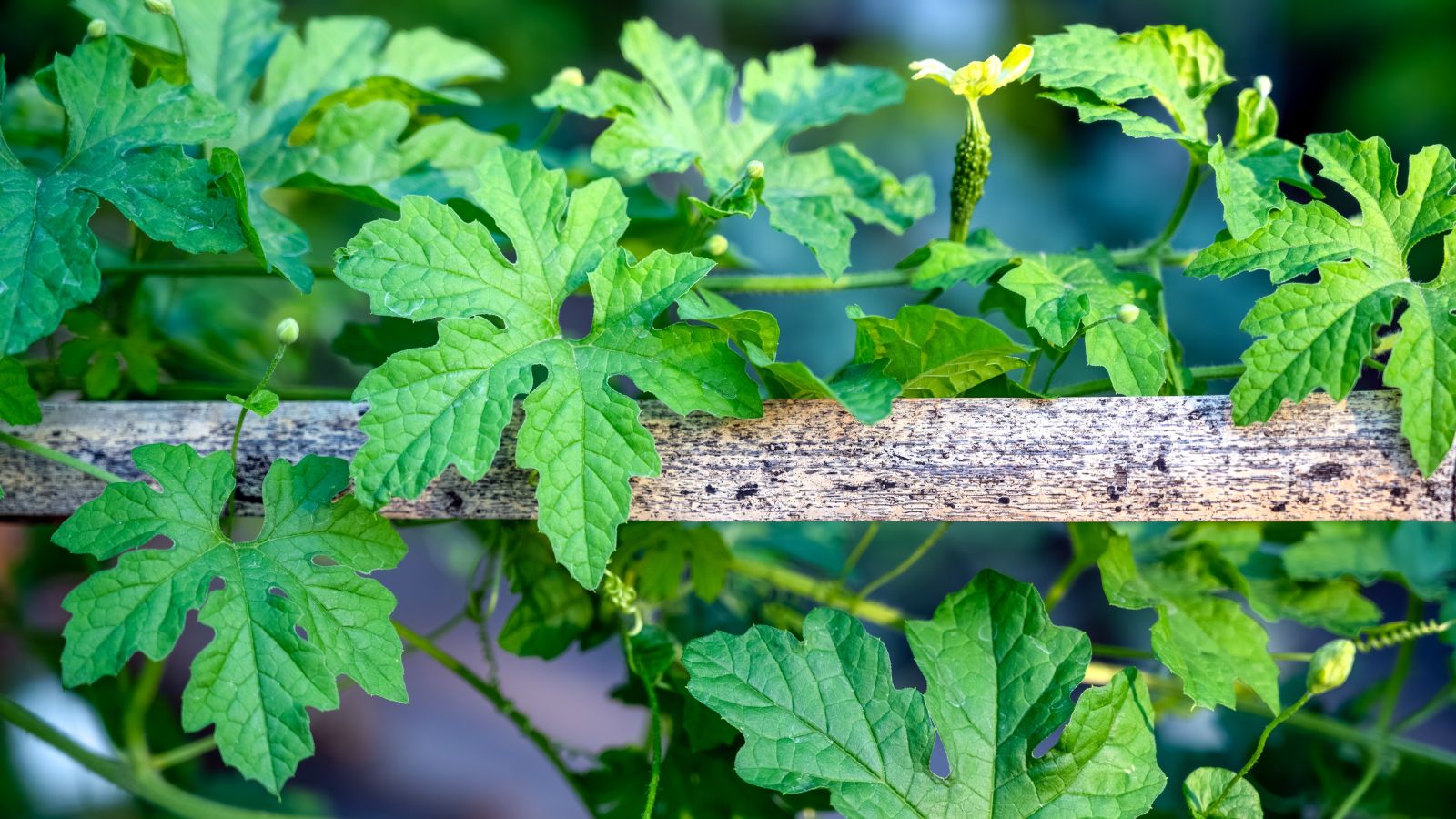
Pruning balsam pear is not required, but it is strongly recommended. This edible fruit produces many vigorous vines that can quickly overtake the garden. To keep plants tidy and improve fruit size, many gardeners prune Momordica charantia to make growth more manageable.
For aesthetic pruning, train vines up string or a trellis, spacing them about one foot apart. Adequate spacing improves airflow and helps reduce pest pressure. Remove any vines that trail along the ground.
To improve fruit size and flavor, trim the tips of actively growing vines to five to six leaves past the last developing fruit. This practice reduces the total number of fruits but encourages larger, better-tasting harvests.
Propagation
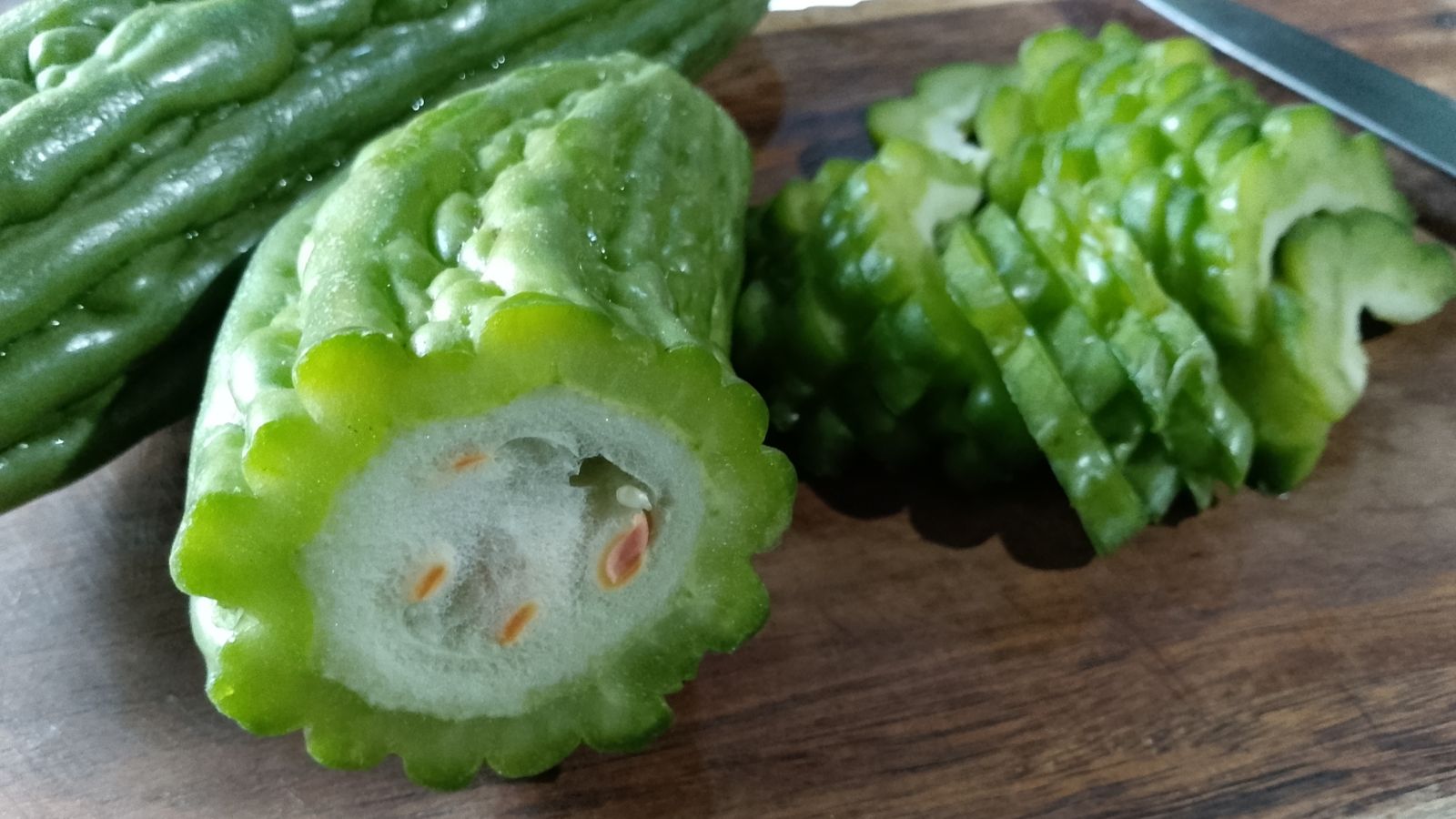
Momordica charantia is grown exclusively from seeds. You can source seeds that are either tan or red in color and germinate them using the methods described above.
Harvesting
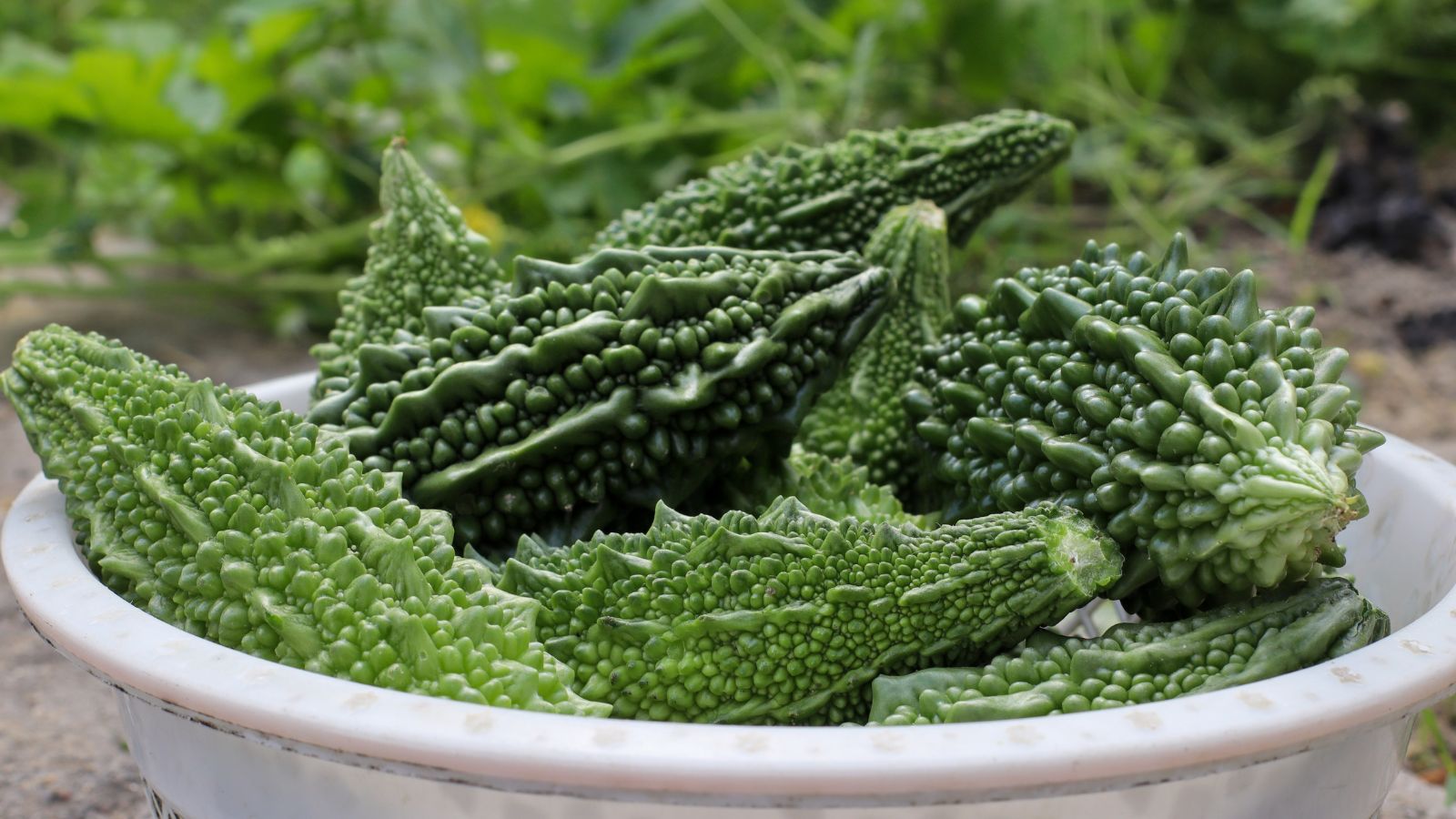
Momordica charantia can ripen quickly, but signs of ripeness vary by variety. Some fruits are ready while still green, while others mature to orange or white. Knowing which variety you planted is essential so you can harvest at the right time.
Each variety shows different signs of maturity, but most balsam apple types produce ripe fruit about 10 days after the yellow flowers drop. Watch the skin color closely.
Common Chinese varieties have a soft green color at maturity and should be harvested before the fruit turns deep green. A common Indian type reaches maturity only once the fruit becomes dark green. Other cultivars ripen to bright orange or pale white. Understanding the expected mature color of your variety helps ensure proper harvest timing.
To harvest, support the ripe fruit with one hand and snip the connecting stem just before it meets the vine. Take care not to damage the vine, as additional fruit may still be developing.
Storing
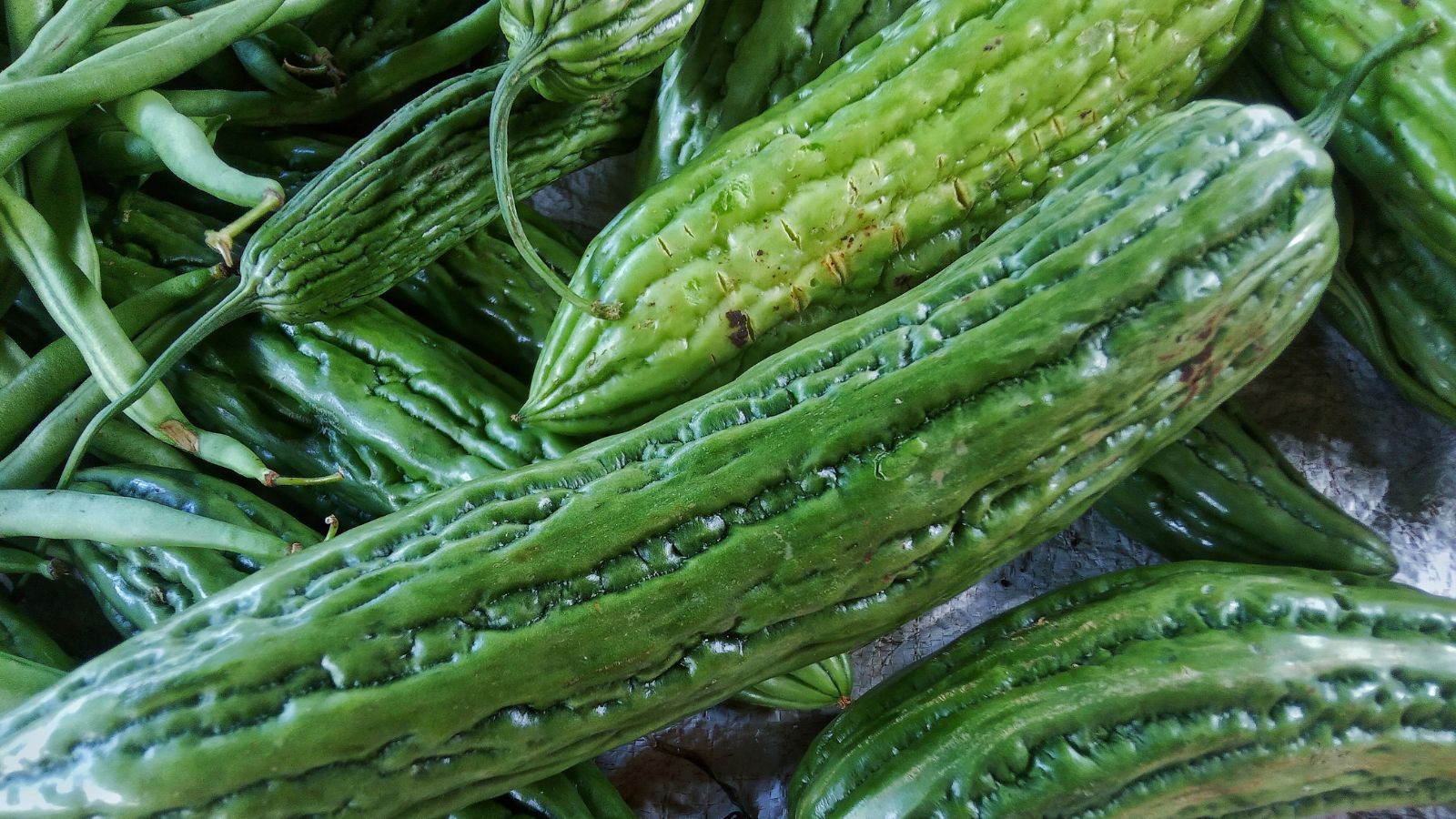
After harvesting, store the fruit in brown paper bags in the refrigerator to extend shelf life. The fruit keeps for only three to five days, so plan to use it quickly. You can also slice Momordica charantia, remove the seeds, and freeze the prepared pieces for longer storage.
To reduce the bitterness of bitter melon, many cooks use salt. Salting draws out some of the bitter juices, making the fruit more palatable. After salting, place the fruit in a colander so the liquid can drain away. Before cooking, rinse off excess salt and moisture.
Some people soak bitter melon in saltwater in the refrigerator overnight, but a few hours of salting usually softens the bitterness enough to make the fruit enjoyable to eat.
Troubleshooting
There are a few problems associated with growing Momordica charantia. Most of them have to do with environmental factors.
Growing Problems
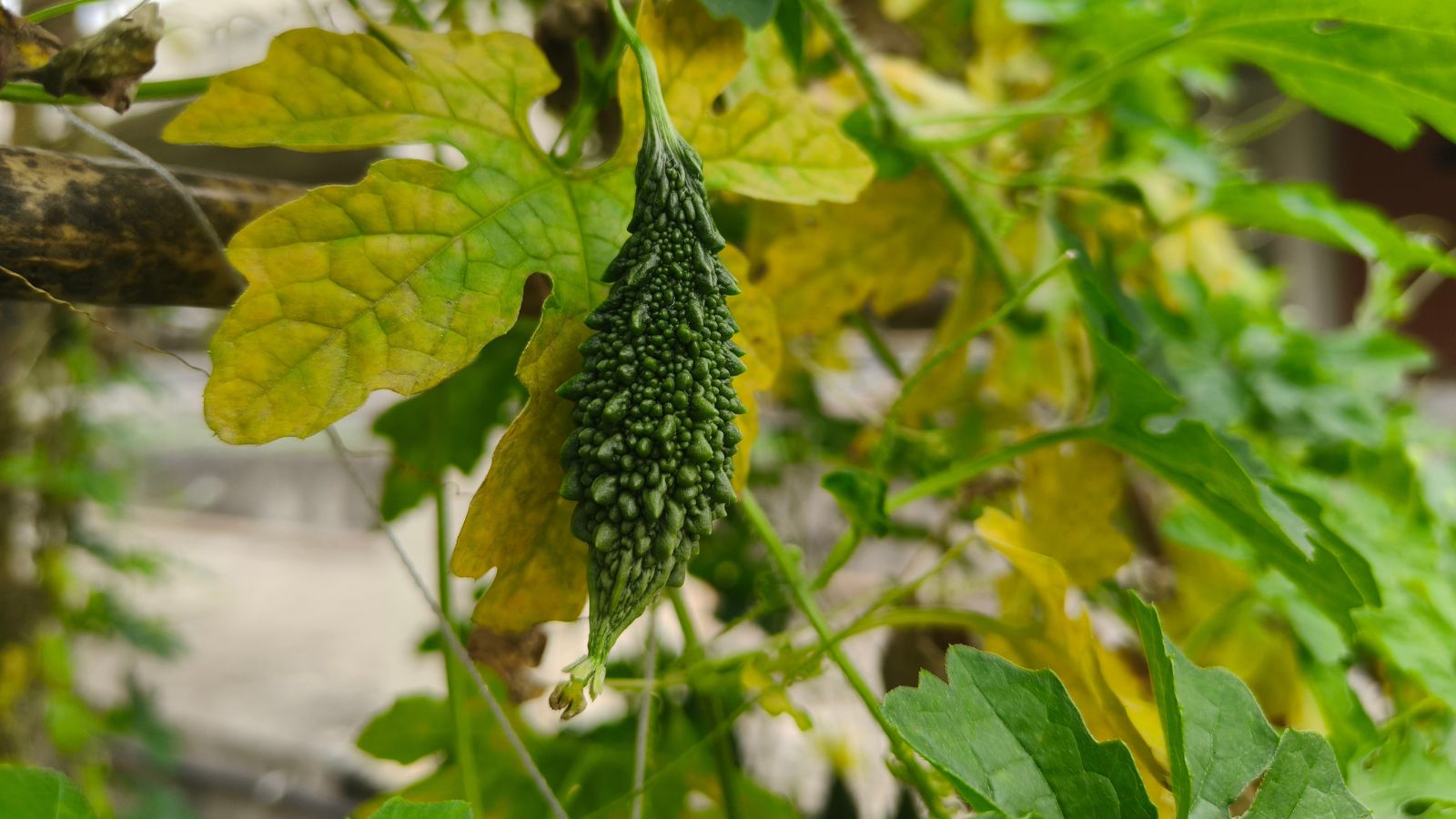
The most common issue when growing Momordica charantia is failure to produce fruit. This problem usually occurs when pollination does not take place. For fruit to develop, pollen from the male flower must transfer to the female flower, which has the small developing fruit attached.
To hand-pollinate, remove a male flower from the vine and gently rub its stamen onto the stamen of a female flower that remains attached to the plant. You can also use a fine paintbrush or cotton swab to collect pollen from a male flower and apply it to the interior of the female flower.
Another common problem is weak or slow growth. Several factors can cause this. Soil that is too alkaline can limit growth, in which case transplanting into more acidic soil can help. Slow growth can also indicate insufficient warmth. In regions with cool springs, wait until summer heat arrives or move the plant to a warmer location to encourage stronger growth and fruit production.
Pests

Several pests can attack balsam pear, and prevention is the most effective control method. Keep vines neatly pruned and well trellised to improve airflow and sunlight exposure. If pests appear, address them quickly to prevent larger infestations.
Aphids commonly affect Momordica charantia. They feed on plant sap and can transmit diseases. Control aphid eggs with insecticidal soap or neem oil. Treat severe infestations with pyrethrin. You can also plant companion flowers such as daisies to attract ladybugs, which are natural aphid predators.
Diseases

Several diseases can affect balsam apple plants, many of which thrive in warm, moist conditions. Monitor plants closely and act quickly when issues appear to keep growth healthy and productive.
Powdery mildew is a fungal disease that causes white, powdery spots on leaves, especially during warm, humid, and overcast conditions. The most effective control method is prevention through good airflow and proper spacing. Organic treatments include copper or sulfur fungicide sprays applied at the first sign of disease.
Sudden wilting and yellowing leaves on Momordica charantia can indicate Fusarium wilt. If a plant becomes infected, remove all plant material from the garden and dispose of it in the trash. Do not compost infected plants, and avoid planting susceptible crops in the same soil for several years. Some mycological soil treatments show promise in suppressing Fusarium fungi and may help reduce the risk of infection when applied at planting time.
Frequently Asked Questions
Is balsam pear poisonous?
No! It is in fact quite healthy for you!
How do you prepare bitter melon to eat?
For Chinese balsam apple: Simply slice open and remove seeds, and chop to use in stir-fries and soups. If desired, apply salt as for the Indian form to reduce the bitter flavor. For Indian balsam apple: Peel off the skin using a veggie peeler. Wash well, slice it in half and remove all the seeds. Salt all surfaces of the fruit. Let cure for 2 hours and then rinse the salt off before cooking.
Is balsam pear invasive?
Yes, it can be! Its vines rapidly snake through the garden and can easily look overgrown. Be sure to snag ripe fruits before their seeds germinate and grow new plants.





