13 European Herbs That Thrive in Autumn’s Cooler Weather
Many of the common European herbs we love to cook with are well-suited to cool autumn weather. Gardening expert Melissa Strauss takes a look at some of these tasty plants that you can count on to look great in your autumn garden.


Contents
Many of our favorite European culinary herbs are well adapted to the type of cool weather that autumn ushers in. Summer heat can cause your herbs to flower, which is good for pollinators, but not for cooking. The cooler, gentler conditions cause these plants to produce more tender, flavorful leaves.
Allowing your herbs to flower (also called bolting) negatively impacts their flavor. Autumn’s shorter days and cool nights help to prevent herbs from bolting. This plays a major role in maintaining their superior flavor.
The cool air also slows down the evaporation of essential oils, which results in a softer leaf texture and a stronger flavor. The soil tends to retain more moisture in the fall, also. This reduces stress and allows your autumn herbs to focus on lush, green growth.
Since most European herbs are adapted to temperate climates, autumn weather is comfortable for them. It also happens to coincide with some important holidays. This means extra freshness to support many hearty fall cooking traditions. Here are some of the European herbs that will thrive in your autumn garden.


Chive


|
botanical name Allium schoenoprasum |
|---|---|

|
sun requirements Full sun to partial shade |

|
height 10”-24” |

|
hardiness zones 3-9 |
Chives are a cold-hardy, perennial herb in the onion family, native to Europe. They’re valued both for their mild onion flavor and attractive, grass-like appearance. They grow in clumps of slender, hollow, green stems.
In late spring to early summer, chives produce round clusters of purple-pink, edible flowers. This makes them highly attractive to pollinators like bees and butterflies.
Chives’ leaves and flowers are edible, with the leaves used fresh as a garnish or mild seasoning. Cool autumn weather enhances their flavor. The blossoms are often used as a garnish. They also make an excellent companion plant as their scent deters some common pests. They’re found across most of Europe and are also native to some parts of Asia.
French Tarragon

|
|
botanical name Artemisia dracunculus sativa |
|---|---|
|
|
sun requirements Full sun |
|
|
height 18”-36” |
|
|
hardiness zones 4-9 |
French tarragon is the most popular culinary form of tarragon. It’s best known for its strong, sweet, herbal flavor with licorice undertones. It has the complex flavor chefs prefer for classic dishes like béarnaise sauce and chicken tarragon.
The narrow, dark green leaves are most aromatic when used fresh. You can also infuse them into butter or vinegar.
French tarragon forms clumps of upright stems topped with slender leaves. It rarely flowers and almost never sets seed. Because of this, you can only propagate it by division or cuttings. It will die back to the ground after a freeze, but it prefers the cool weather in spring and autumn.
Rosemary

|
|
botanical name Salvia rosmarinus |
|---|---|
|
|
sun requirements Full sun |
|
|
height 2’-6’ |
|
|
hardiness zones 8-10 |
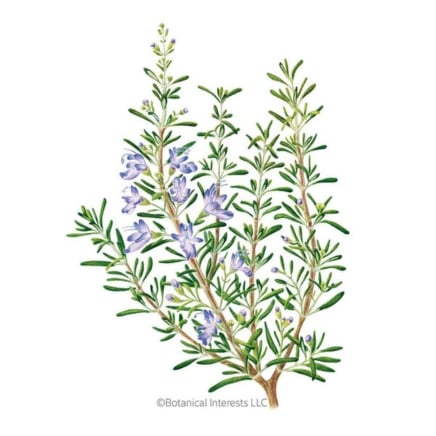
In warmer climates, rosemary is a beautiful autumn herb that smells positively delicious. It’s native to the Mediterranean region, where it is accustomed to hot summers and cool, moist winters. This is one of my favorite garden herbs because it looks nice all year round. It’s both practical and ornamental and works well in the autumn garden.
Rosemary resembles a conifer with stiff stems and needlelike leaves. It’s wonderful for adding to meat dishes, potatoes, breads, and a wide array of other dishes. Drainage is important for this autumn herb, as it is susceptible to root rot. Plant it in a space with good air circulation.
Oregano

|
|
botanical name Origanum vulgare |
|---|---|
|
|
sun requirements Full sun |
|
|
height 6”-3’ |
|
|
hardiness zones 4-10 |
Oregano is a hardy, semi-evergreen herb that is native to the European Mediterranean region. It is a central ingredient in many cuisines of the area. It forms low, spreading clumps of aromatic leaves with a zesty, slightly spicy flavor. Depending on the variety, some are sweeter, and others are zestier.
I prefer to use oregano in its dried form. The leaves can be a bit tough when they’re raw. It likes dry soil that is poor to moderately fertile. Don’t fertilize too much, or it will be less flavorful.
Harvest leaves frequently to keep it bushy and attractive. Cool temperatures will bring renewed vigor and flavor to these autumn herbs.
Roman Chamomile

|
|
botanical name Chamaemelum nobile |
|---|---|
|
|
sun requirements Full sun |
|
|
height 3”-12” |
|
|
hardiness zones 4-9 |
Roman chamomile is a low-growing, perennial European herb in the daisy family. It’s well known for its delicate foliage and small, daisy-like flowers. Spreading by creeping rhizomes, it forms soft mats of fine, feathery leaves. Its flowers, with white petals and yellow centers, bloom in summer. They’re often used for teas, home remedies, and aromatherapy.
Roman chamomile has a mild flavor, sometimes described as slightly bitter. It’s considered soothing, and some use it for relaxation, digestive comfort, and skin care. It works well as a container plant, but also makes a wonderful ground cover.
Its creeping habit creates a living carpet. You can even mow it to keep it looking dense and lush. It also enjoys the low-stress temperatures of autumn.

Lemon Balm

|
|
botanical name Melissa officinalis |
|---|---|
|
|
sun requirements Full sun to partial shade |
|
|
height 1’-3’ |
|
|
hardiness zones 3-7 |
Lemon balm is a fragrant, perennial autumn herb in the mint family. It has a bright, lemony scent and flavor. Native to Southern Europe and the Mediterranean, it grows 1–2 feet tall and has soft, toothed, heart-shaped leaves. In summer, it produces small white to pale yellow flowers that are highly attractive to bees. Its genus name, Melissa, actually means “honeybee” in Greek.
You can use the fresh leaves in teas, salads, desserts, and drinks (such as lemon balm tea or as a fresh garnish), while the dried leaves are popular in herbal blends and potpourri. Medicinally, lemon balm has been traditionally used for calming nerves, aiding digestion, and supporting sleep. It’s happiest in the cool temperatures that autumn brings.
Lemon balm is widely invasive across North America. If you live in a region where it tends to invade natural areas, plant yours in a container.
Fennel

|
|
botanical name Foeniculum vulgare |
|---|---|
|
|
sun requirements Full sun |
|
|
height 3’-6’ |
|
|
hardiness zones 4-9 |
Fennel is an aromatic, perennial autumn herb in the carrot family. It’s valued for both its culinary and ornamental qualities. Native to the Mediterranean, it has feathery foliage and produces tall, upright stems.
On top, clusters of small, yellow, umbrella-shaped flowers bloom in summer. These flowers attract a wide range of pollinators and beneficial insects. It’s also a host for swallowtail butterfly caterpillars.
Fennel’s flavor is distinct and sweet. It has strong anise or licorice notes, and nearly every part of the plant is edible. Fennel is best grown in containers or away from other plants. It is allelopathic, and the roots produce a chemical that can inhibit the growth of other plants. It is also invasive in western portions of North America.
Mint

|
|
botanical name Mentha spp. |
|---|---|
|
|
sun requirements Full sun |
|
|
height 1”-3’+ |
|
|
hardiness zones 3-11 |
Mint is a fast-growing autumn herb. It’s prized for its refreshing flavor and fragrance.
There are many species and hybrids, and all are similar in their care needs. Two of the most common are spearmint and peppermint. Spearmint has a milder, sweeter flavor. It’s often used in teas, salads, and savory dishes. Peppermint has a stronger, menthol-heavy taste popular in candies, desserts, and teas.
Mint leaves are rich in essential oils, which give them their cooling effect and distinctive scent. The plant produces spikes of purple, pink, or white flowers in summer. The flowers are attractive to bees, butterflies, and other pollinators. The scent of the leaves also repels some insects. Mint can be aggressive in the garden, so growing it in a container is wise.
Thyme

|
|
botanical name Thymus vulgaris |
|---|---|
|
|
sun requirements Full sun |
|
|
height 6”-12” |
|
|
hardiness zones 4-9 |
Thyme is a low-growing, woody, perennial herb in the mint family. It’s native to the Mediterranean region of Europe and enjoys the cooling temperatures of autumn. It’s valued for both its culinary and ornamental qualities. The tiny, aromatic gray-green leaves have a warm, earthy flavor. The scent is strong with subtle clove, mint, and lemon notes.
Thyme is a classic seasoning in soups, stews, roasted meats, vegetables, and Mediterranean dishes. It produces clusters of small pink, lavender, or white flowers that are rich in nectar. It’s an excellent pollinator plant for bees and butterflies if you allow it to flower.
Winter Savory

|
|
botanical name Satureja montana |
|---|---|
|
|
sun requirements Full sun |
|
|
height 6”-18” |
|
|
hardiness zones 5-11 |
Winter savory is a European autumn herb in the mint family. It’s closely related to oregano and thyme, and has a strong, peppery flavor with hints of pine and mint. The flavor is robust and holds up well to cooking. Both the leaves and flowers are edible, and have the best flavor in spring and autumn.
In the garden, winter savory forms a small shrub. It has woody stems and a compact habit. This herb prefers well-drained, moderately dry soil and is drought-tolerant once established. It’s also often used in traditional medicine as a digestive aid.
Sage

|
|
botanical name Salvia officinalis |
|---|---|
|
|
sun requirements Full sun |
|
|
height 1’-3’ |
|
|
hardiness zones 4-9 |
Sage is a cold-hardy, evergreen perennial herb, also in the mint family. It’s native to the European Mediterranean region, and long valued for its strong flavor. Its velvety leaves are a classic seasoning for roasted meats, stuffing, sausages, and root vegetables.
Sage also has medicinal uses. It’s brewed as a tea for sore throats, digestion, and calming.
When sage flowers in late spring to early summer, it produces spikes of purple-blue blooms. They are highly attractive to bees, butterflies, and other pollinators. It’s both ornamental and practical in the garden. This autumn herb also makes a nice container plant.
Catmint

|
|
botanical name Nepeta racemosa |
|---|---|
|
|
sun requirements Full sun |
|
|
height 10”-3’ |
|
|
hardiness zones 3-9 |
Catmint is a perennial, European herb prized for its soft, aromatic foliage and blue-violet flower spikes. It’s closely related to catnip, but catmint is generally more ornamental. It has showier flowers, more orderly growth, and a milder scent.
Unlike catnip, which can flop over and reseed aggressively, most catmints form tidy clumps or mounds. They bloom for months, making them excellent choices for borders and pollinator gardens. It’s not the most popular autumn herb in the kitchen, but it does have its uses, and it blooms well in the cooler weather of autumn.
Lovage

|
|
botanical name Levisticum officinale |
|---|---|
|
|
sun requirements Full sun to partial shade |
|
|
height 2’-4’ |
|
|
hardiness zones 4-8 |
Lovage is a tall autumn herb in the carrot family that has a similar appearance and flavor to celery. It’s native to Southern Europe as well as Western Asia. Its celery-like flavor contains hints of parsley and anise. It’s a versatile herb once common in medieval and cottage gardens.
The leaves of this herb are often used fresh in soups, stews, salads, and broths. The hollow stalks are also edible and often blanched and eaten like celery. The seeds are aromatic, similar to fennel or caraway. These are sometimes used in baking or making liqueurs. It thrives in the cooler weather of fall and spring.