Asparagus Companion Plants: Maximizing Your Spears
If you select the right asparagus companion plants, they can be beneficial in many ways! This guide covers what to plant and what to avoid growing near your asparagus patch.

Contents
Perennial gardening is a great practice to take up if you’re interested in growing a sustainable crop. Instead of sowing seed each spring, perennial garden plants replenish themselves year after year. Aside from adding nutrients to the soil and pruning back plants in winter, a perennial garden is great for those who consider themselves lazy gardeners. Planting asparagus is one way to create the center of a good perennial garden, but you’ll probably want some asparagus companion plants, too.
Asparagus has spindly leaves and stalks that come up from the soil surface in spring. This lovely perennial will provide multiple harvests over many years in your vegetable garden. Although it used to be in the same family as onions and lilies (Allium), it is now classed in its own family (Asparagaceae). The order Asparagales hosts asparagus (Asparagus officinalis) and also plants in the orchid and aster families.
Like some perennials, asparagus takes time to grow and cultivate. Harvests won’t occur for up to three years from the initial planting. So, why not bolster your asparagus garden with plants that will support its growth?
If you have asparagus fronds in your garden, you’ve spent a lot of time up to now creating a space for this highly rewarding plant. Read on to learn more about companions for asparagus, and how you can carry out asparagus companion planting.


What Is Companion Planting?

Companion planting is an age-old practice where farmers select specific crops and place them next to one another in a garden for varying benefits. Companions improve crop yields or trap unfavorable pests. They may also attract beneficial insects.
Some ground cover companions reduce weeds and mark off areas of a garden. Overall, companion plants improve soil nutrients for each other and create a system of mutuality and exchange that replicates natural systems of cooperative support.
One of the best and oldest examples of companion planting is the tribal practice of farming ‘three sisters’ crops. Their farmers plant beans, corn, and squash together.
- Corn stalks support climbing beans and provide shade for both beans and squash.
- Beans fix nitrogen into the soil, and help corn and squash’s roots, improving both plants’ flavor.
- Squash keeps pests out of beans and covers the ground, which prevents weeds.
- Corn is a faster-growing plant that helps farmers identify each planting area after they’ve planted it, while bean and squash seeds are still germinating.
Three sisters is an example of how companion planting can become a way of gardening, and how farmers create a micro-ecosystem of mutual support and reciprocity. This is essentially what companion planting is: a beneficial system that you can set up for plants.
Besides fertilization and checking for pests, you can pretty much let plants do their thing in a garden of good companions. The same goes for asparagus companion planting. By selecting plants like tomatoes and avoiding garlic and potatoes in your bed, you’ll get a high yield and avoid asparagus beetles.

Good Asparagus Companion Plants

So, how should you go about asparagus companion planting? Tomato is the most well-known asparagus companion plant, as the two are symbiotically linked. Tomato plants release solanine chemicals in the soil that repel asparagus beetles. Asparagus beetles can devastate your harvest for the growing season. Asparagus, on the other hand, repels nematodes that can damage the roots of tomato plants.
Eggplants
Eggplants are also good companions for asparagus. Like tomatoes, eggplants are nightshades with solanine compounds that can deter asparagus beetles. Plant tomatoes and eggplant in the area where you harvested stalks in early spring, adding extra compost to boost soil nutrients.
Basil and Parsley
Certain herbs also support asparagus growth. Basil and parsley do the good work of attracting good insects and repelling the asparagus beetle. Basil will also keep tomato hornworms out of tomato plants, further supporting tomatoes’ ability to repel pesky beetles. When flowering, basil also attracts pollinators.
Parsley is host to swallowtail butterflies, which are an essential pollinator in many areas of the United States. Since basil and parsley have similar moisture requirements, they can be planted side by side.
Plant herbs like parsley and basil in rows on one side of the border of your asparagus bed near tomatoes in an alternating fashion. This will help repel insects that dislike the aromatic oils of both, and attract insects that help your garden grow.
Cilantro and Dill
Cilantro and dill have shallow root systems that won’t disrupt asparagus growth, and they appreciate the shade asparagus plants provide. You can plant them in rows on the other end of your asparagus bed to eventually provide free pollen to beneficial insects that help asparagus flowers produce.
Those pollinators also attract birds that eat seeds and help produce more asparagus plants. Better yet, birds eat beetles or other pests. It’s win-win!
Flowers
Several flower species make good companions for asparagus. Those in the aster family are a great choice when you’re looking for asparagus allies. Petunias, marigolds, and nasturtiums also support asparagus by deterring pests. All of these aster family species keep the asparagus beetles at bay. Marigolds keep whiteflies, aphids, and nematodes away, while petunias mainly repel aphids.
Nasturtiums are cheery, fun flowers that trap pests who might be interested in your asparagus fronds. Comfrey is another blue or pink-flowered option that not only attracts pollinators but also enriches the soil in your asparagus garden.
All the flowers mentioned here will attract pollinators, and several can be eaten. Maybe you’d like to plant a fully edible, attractive garden that attracts the right insects? Then, bulk up on flowers and herbs!
Strawberries
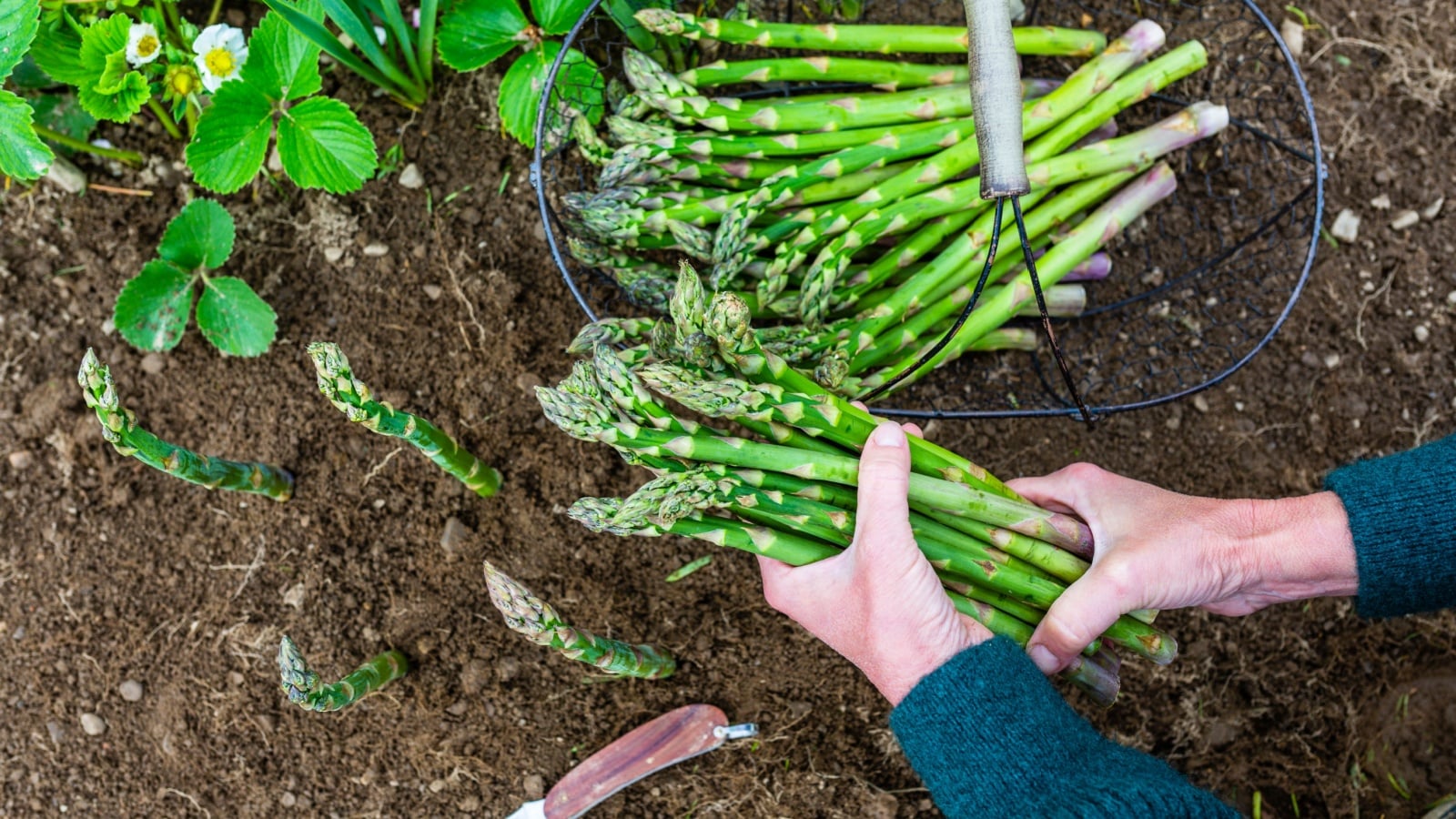
For those who enjoy intensive planting, strawberries are a lovely companion for asparagus. The only catch here is to make sure your asparagus is planted about six inches deeper than is sometimes suggested. This will keep strawberry roots at a level above asparagus roots and remove any potential for competition between the two plants.
Strawberry plants are a great ground cover and weed suppressor that asparagus plants enjoy. But if you’re companion sowing annual tomatoes nearby, keep perennial strawberries in a separate space.
Leafy Greens and Root Crops
Spinach, lettuce, or beets are great to grow near asparagus because they don’t take up too much space in the bed, and they don’t persist in the soil for long. Plant these with any of the flowers mentioned before this section, and you’ll find you have fewer insect pests to deal with and more intact greens to incorporate in your meals. Leafy greens are also great companion plants for marigolds, which deter nematodes.
Grapes
Although grapes were historically grown with asparagus during the Colonial era, there’s a lot of debate these days about whether these two plants get along. Some indicate that both require low-quality soil, making them great companions. But others suggest both plants are too large to plant together.
Because grape plants need support for vining, you might spend more time trying to keep grapes outside of your asparagus garden than you will spend maintaining a good yield. Unlike tomatoes, grapevines last more than one season. However, if you’re feeling adventurous, it might be worth a shot.
Shallow-Rooted Plants
Since asparagus roots grow deep and take a long time to develop, plant them in general in proximity to shallow-rooted plants. Some of the asparagus friends mentioned here have deeper roots, making it difficult to plant them inside your asparagus rows. It’s for this reason that many of the deeper-rooting asparagus companions will do much better on the perimeter of your raised or in-ground asparagus garden.
As you’re getting ready for the growing season, plan your vegetable garden bed, including flowers, herbs, and nightshades along the edges, with asparagus planted inside these borders.
What Not To Plant With Asparagus

The most important thing to remember is to keep asparagus away from any alliums. Members of the genus include onions, leeks, shallots, garlic, chives, garlic chives, wild onions, and ramps. Any plant in the allium category will stunt asparagus growth. Alliums take up a lot of nutrients, and they take a lot of time to grow. Their roots can disrupt the slow-growing ones of asparagus. Planting asparagus near garlic or onion will result in stunted stalks, and at worst, no stalks at all.
Potatoes and asparagus are not good companions either because both compete for deep root sections of the garden. Potatoes take a long time to grow, just as asparagus does.
Carrots will not successfully grow with asparagus because they, too, require a deeper root system than some plants. Carrots also don’t appreciate planting near herbs that asparagus loves, like dill.
Generally, deeply-rooted plants should be avoided. You want to keep your asparagus bed free of other plants, such as potatoes, which require deep roots for growth. Create a potato tower in a separate area of your farm or garden to keep these competitors apart.
Frequently Asked Questions
Can I plant asparagus and strawberries together?
Yes! Asparagus and strawberry enjoy close proximity. They are good companion plants. However, make sure your asparagus plant roots are about a foot under the soil before interplanting strawberries. This will keep root competition between these two lovely plants at bay.
Can you plant other vegetables with asparagus?
Many vegetables enjoy living their lives with asparagus. Lettuce, beets, spinach, and other shallow-rooted plants won’t compete with deep asparagus roots, and their life cycle will end before nutrients can be taken from your asparagus plant.



