
Contents
At some time in your life, you’ve probably had a hard time getting to sleep. Bad sleep means low energy, bad health, and just simply dragging yourself through the day.
It’s already been proven that surrounding yourself with nature helps with anxiety and stress, which are the two main reasons behind many sleeping issues.
But did you know that bringing a little nature to your room can also help?
Here are 13 plants that help you get to sleep.
Munstead Lavender Seeds

Introduced in 1916, ‘Munstead’ was named for Munstead Woods in England where it was a favorite of renowned garden designer, writer, and artist, Gertrude Jekyll.
‘Munstead’ flowers earlier than other lavenders and stays compact. English lavenders are preferred for culinary uses and oils. Heat- and drought-tolerant plants attract pollinators.
Buy at Epic Gardening Shop
English Ivy

While this plant is considered an invasive plant in many areas, if you’re going to use it indoors you should be just fine. The reason why it’s such a powerful plant to use in the bedroom is because it purifies the air much better than many other plants.
In fact, it’s a plant that astronauts take into space because it is just that good at air purification. One thing to remember, however: it’s poisonous. So don’t eat it and keep it away from children or pets.
Learn More: English Ivy Houseplant Care Guide
Peace Lily

Aside from being beautiful, the peace lily has many unique properties that most people are unaware of. It’s able to filter the air inside of your house of two dangerous compounds: benzene and formaldehyde.
It will also help add a bit of humidity back to rooms that are too dry, usually around 5 to 10%. If you are suffering from dry skin or a dry mouth, that might be all you need to get a little bit of relief.
On top of that, you will remove the need to run an air humidifier which will save you money on the purchase as well as electricity costs.
As it couldn’t get any better, peace lilies are also very easy to maintain. All you have to do is water them once a week.
Learn More: Peace Lily Houseplant Care Guide
Bamboo Palm

This tropical plant will add a different vibe to your bedroom compared to most of the plants in this list. All you need to do to care for his keep it moist and give it partial sunlight, and it will go to work for you by purifying your air and removing unwanted smells.
Snake Plant (Mother-in-Law’s Tongue)

This plant is one of the better plants to have if you want to purify your air. No matter what time of day it is, snake plants will be working away to remove harmful compounds from the air. It also doesn’t look too bad either!
Unlike most plants, snake plants also exhale oxygen during the nighttime instead of inhaling it, meaning that your room will be highly oxygenated as you go to sleep. This gives you a bit of extra relief on top of its air purification properties.
Learn More: Snake Plant Houseplant Care Guide
Aloe Vera

Most people know aloe vera for its many other benefits besides sleep. You can use the gel to help you skin injuries much quicker, you can use it as a drink to help you digest food more efficiently, and the list goes on.
But one of the lesser-known uses for aloe vera is as a plant in the bedroom. The reason it’s beneficial is because as the sun goes down, aloe vera exhales oxygen which increases the amount of oxygen in the air. This means you’ll have an easier time sleeping, especially if you are suffering from sleep conditions like sleep apnea.
It’s one of the easiest plans to take care of, requiring practically no maintenance at all.
Gardenia

Gardenias have one of the most pleasant sense of any flower that you can grow. They’re very similar to jasmine in both appearance and scent, along with their effect on you as a person.
Simply smelling the flowers will sedate you, making it very easy for you to get to sleep. Some people even use gardenias and jasmine in place of sleeping pills, as an eco-friendly and natural way to deal with their sleep issues.
Spider Plant
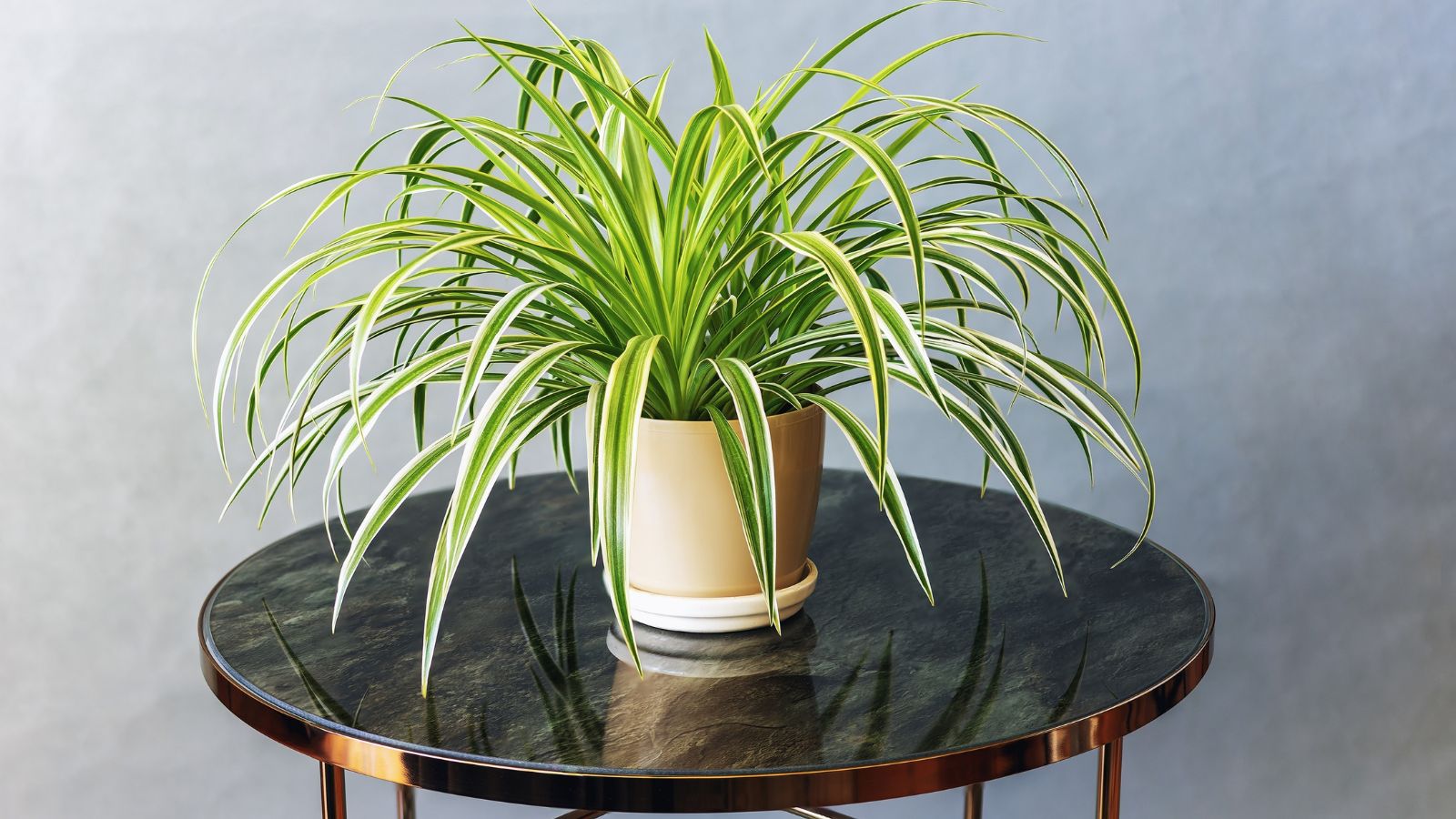
While the name is a bit weird, this plant is a powerhouse. It can remove many toxins from the air, especially formaldehyde. They are also low-maintenance so even those with “brown thumbs” can take care of them without fear of killing them. There’s really no reason why you shouldn’t have a spider plant in your bedroom!
Learn More: Spider Plant Houseplant Care Guide
Gerbera Daisies

It’s always nice when a plant that helps you with your sleep also happens to look beautiful. It’s very similar to the aloe vera plants in that as night falls it releases more oxygen into your bedroom.
Many people with sleeping disorders find this very helpful as they are taking in less air than the average person, so air with more oxygenated will help them get a bit of relief.
Golden Pothos

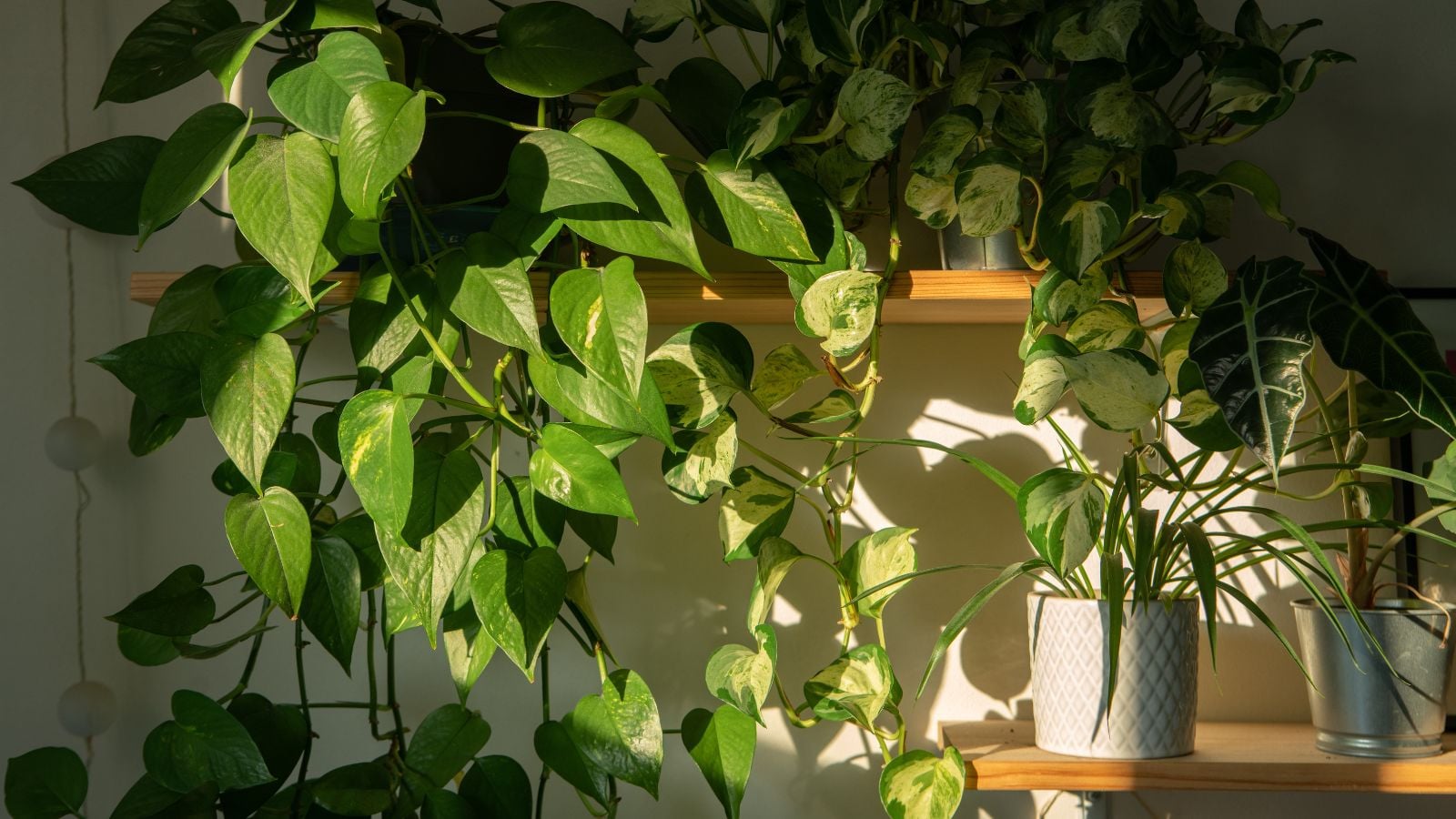
Golden pothos Is very easy to grow and you can put it in a container that you hang your ceiling. I personally like to put a couple in the corners of my ceiling to brighten up the room and because it has exceptional formaldehyde and benzene removal properties.
You may want to consider placing it near a window, especially if you keep it open and live in an area where there are cars, smog, smoke, or other particulates in the air.
Learn More: Golden Pothos Houseplant Care Guide
Jasmine

Jasmine is one of my favorite plants of all time. Whenever I walk by it on the street, I make sure to stop and smell the flowers. The sweet scent that emanates out of the white flowers of the jasmine plant have been proven to have a calming effect on people as they try to fall asleep. People who have jasmine in their bedroom tends to toss and turn less forcefully as well as get to sleep quicker.
You can also use jasmine flowers to create a great essential oil that helps with some more severe health issues like depression or anxiety.
Learn More: Jasmine Plant Houseplant Care Guide
Lavender

Most of you will recognize lavender as a popular scent in essential oils, beverages, and candles. This is because it has a calming effect on most people. In fact, this is actually scientifically proven as studies have shown that even the scent of lavender will help calm babies down and help them sleep better.
But the power of lavender extends past infancy. It’s a great scent and plant to have in the home to calm you down as you go to sleep.
Valerian

Valerian is a heavily studied plant that has scientifically proven effects on sleep and relaxation. Its roots have been used for centuries as a treatment for insomnia and anxiety. It’s also mixed into many other natural sleep remedies as an additive.
The plant is quite pretty, so it will beautify your room as well as prepare your body to sleep.
Red Edged Dracaena
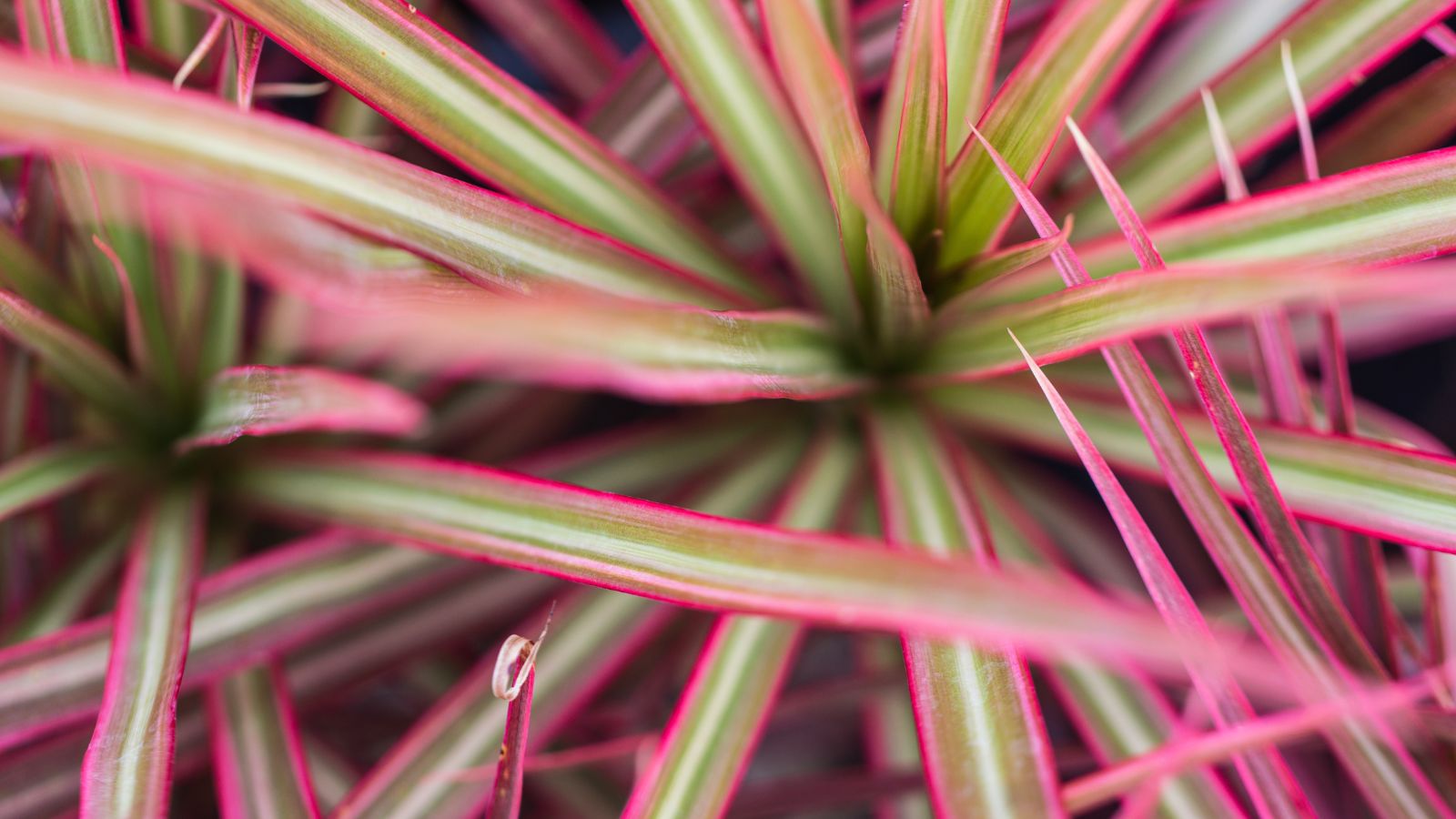
The striking red spiky leaves of this large house plant make it a wonderful way to add color and vibrancy to your room. It also removes many common toxins from the air.
However, it needs quite a bit of light to grow well, but you may not want to give it as much as it needs as it can grow up to 15 feet tall, which is a bit big for most bedrooms!
Learn More: Dracaena Marginata Houseplant Care Guide
Sources
- http://www.ncbi.nlm.nih.gov/pubmed/24858508
- http://ntrs.nasa.gov/archive/nasa/casi.ntrs.nasa.gov/19930073077.pdf
- http://www.ncbi.nlm.nih.gov/pubmed/16298774/
- http://www.ncbi.nlm.nih.gov/pubmed/20537515
- http://aktuell.ruhr-uni-bochum.de/pm2010/pm00222.html.en
- http://www.wju.edu/about/adm_news_story.asp?iNewsID=539&strBack=/about/adm_news_archive.asp
- http://www.ncbi.nlm.nih.gov/pubmed/22612017
- http://www.ncbi.nlm.nih.gov/pubmed/18053656
- http://www.ncbi.nlm.nih.gov/pubmed/16857858
- http://www.sciencedirect.com/science/article/pii/S0944711304702196
- http://www.webmd.com/allergies/news/20051107/english-ivy-fix-allergies
- http://www.ncbi.nlm.nih.gov/pubmed/15182511
Header image courtesy of Brian Khoury





